How To Train A Puppy To Walk On A Leash: Easy Guide
Start leash training with rewards, short sessions, and a calm harness before expecting perfect walks.
Learning how to train a puppy to walk on a leash takes patience, timing, and trust. A puppy does not know that the leash means “walk nicely.” At first, it may feel strange, exciting, or even scary. This guide combines reward-based training, practical steps, and lessons from real puppy training sessions to help you build calm walking habits from the start.
Why Leash Training Matters
Leash training teaches your puppy how to move safely with you. It also helps your puppy manage distractions, explore the world, and enjoy daily exercise without pulling, biting the leash, or running into danger.
A well-trained puppy is easier to handle near roads, parks, stores, and other dogs. Good leash skills can also reduce stress for both of you. Instead of fighting the leash, your puppy learns that staying close brings rewards and praise.
When learning how to train a puppy to walk on a leash, remember that the goal is not strict control. The goal is clear communication. Think of the leash as a soft line of connection, not a rope in a tug-of-war game.
Reward-based training is widely recommended by veterinary behavior experts. It avoids fear and pain while building behaviors that your puppy wants to repeat.

Choose the Right Puppy Walking Gear
The right equipment makes leash training easier and safer. Gear should fit well, feel comfortable, and match your puppy’s size and behavior.
Select a comfortable harness
A well-fitted, front-clip or back-clip harness is often a good choice for puppies. It places less pressure on the neck than a collar if your puppy pulls.
Look for these features:
• A snug fit without rubbing
• Enough room to slide two fingers under the straps
• Adjustable chest and shoulder straps
• Strong, secure buckles
• A design that does not block natural leg movement
A collar can hold identification tags, but avoid using it to correct strong pulling. Puppies have delicate necks, and sudden pressure may cause pain or fear.
Pick a suitable leash
A standard leash that is about 4 to 6 feet long works well for early training. It gives your puppy room to explore while keeping you close enough to guide safely.
Avoid retractable leashes during the first stages. They can make it harder to teach loose-leash walking because the puppy learns that pulling creates more distance.
Keep a few small, soft treats in a pouch. A clicker can also help mark the exact moment your puppy makes a good choice, but your voice works just as well.

Prepare Your Puppy Before the First Walk
Before outdoor walks, let your puppy become familiar with the leash and harness indoors. This reduces the chance that new equipment will feel overwhelming.
Place the harness on the floor and allow your puppy to sniff it. Reward calm interest. Then touch the harness to your puppy’s body, give a treat, and remove it.
Repeat this process several times. Slowly build up to putting it on for a few seconds, then a few minutes.
Follow these simple steps:
-
Put on the harness without forcing your puppy.
-
Give a treat as soon as the harness is fastened.
-
Let your puppy walk around indoors while wearing it.
-
Attach the leash and allow your puppy to drag it only while supervised.
-
Pick up the leash and reward calm movement near you.
Never leave a leash attached when your puppy is alone. It can catch on furniture or create a choking hazard.
One common mistake is moving too quickly. If your puppy freezes, scratches, bites the straps, or tries to escape, take the harness off and return to an easier step.

Teach Your Puppy to Follow You
Before expecting your puppy to walk beside you, teach it that following you is rewarding. Start in a quiet room with few distractions.
Say your puppy’s name in a friendly voice. When it looks at you, mark the behavior with “yes” and offer a treat. Then take one step backward. Reward your puppy for moving toward you.
Repeat this game for a few minutes at a time. Keep your voice happy, but do not excite your puppy so much that it begins jumping or racing around.
You can also practice changing direction. Walk a few steps, turn gently, and reward your puppy when it follows. This teaches your puppy to watch you instead of pulling toward every smell.
When learning how to train a puppy to walk on a leash, attention is one of the most useful skills. A puppy that checks in with you is easier to guide around people, dogs, bicycles, and traffic.

Follow a Step-by-Step Leash Training Plan
Step 1: Begin indoors
Attach the leash in a calm room. Stand still and wait. If your puppy looks at you, takes a step toward you, or keeps the leash loose, reward that choice.
Do not pull your puppy toward you. Let the puppy discover that staying close makes good things happen.
Step 2: Practice loose-leash walking
Walk one or two steps. If the leash stays loose, praise your puppy and give a treat near your leg.
Reward your puppy beside you rather than far in front. This helps create a natural walking position without forcing your puppy into a strict heel.
Step 3: Add small distractions
Practice in a hallway, backyard, or quiet driveway. Add mild distractions one at a time, such as a toy on the floor or a family member sitting nearby.
If your puppy loses focus, make the task easier. Move farther from the distraction or return to a quieter area.
Step 4: Move outdoors
Start outside in a calm place. A fenced yard or quiet sidewalk is often better than a busy park.
Let your puppy sniff. Sniffing is a normal and useful part of exploring. Ask for short periods of walking, then allow another sniff break as a reward.
Step 5: Increase time slowly
Add distance before adding heavy distractions. A puppy may walk well for five minutes in a quiet area but struggle after seeing another dog.
Increase only one challenge at a time:
• Longer walking time
• More people
• More dogs
• Busier streets
• New surfaces
• Greater distance from home
This gradual approach is a key part of how to train a puppy to walk on a leash successfully.

Teach Your Puppy Not to Pull
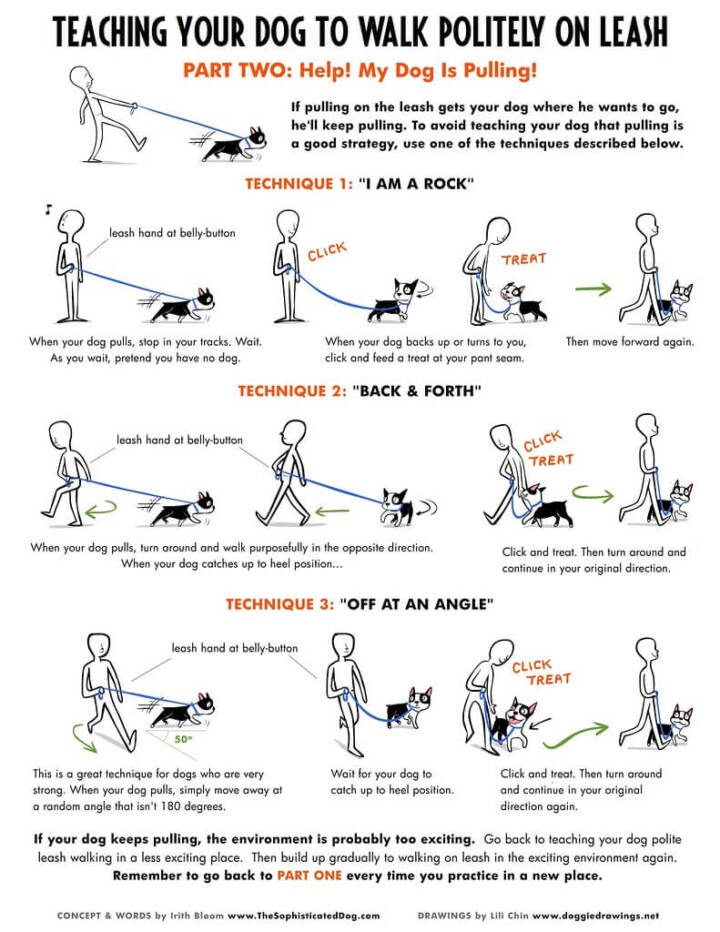
Pulling works when it gets your puppy somewhere interesting. To change this pattern, pulling must stop being useful.
When your puppy pulls, stop walking. Keep the leash still and wait. The moment your puppy looks back, steps toward you, or creates slack, praise and continue.
You can also turn and walk in another direction. Use a calm movement rather than a sharp leash correction.
Try this simple pattern:
-
Walk while the leash is loose.
-
Stop when your puppy pulls.
-
Wait for the leash to loosen.
-
Reward your puppy.
-
Continue walking.
Do not yank the leash, jerk your puppy backward, or punish pulling. These actions may increase fear and frustration. They also do not teach your puppy what to do instead.
In my experience, many owners reward pulling without realizing it. They keep walking while the puppy drags them toward grass, a dog, or a person. Once the owner pauses and rewards calm behavior, progress often becomes much faster.

Manage Jumping, Biting, and Barking
Puppies often bite the leash because it moves, feels exciting, or attracts attention. Stay calm and avoid turning the leash into a tug toy.
If your puppy grabs it, stop moving. Offer a small treat near your leg when your puppy releases the leash. Then continue once the leash is calm.
For jumping, reward four paws on the ground. Keep greetings low-key and ask visitors to avoid petting a puppy that is bouncing or grabbing clothing.
If your puppy barks at dogs or people, create more distance. A puppy that is already barking may be too stressed to learn. Move away until your puppy can notice the trigger and still eat a treat.
Useful management tools include:
• Walking during quieter times
• Choosing wide paths
• Crossing the street early
• Using parked cars or trees as visual barriers
• Carrying high-value treats
• Ending the walk before your puppy becomes exhausted
Training works best when your puppy can think. Stress, fear, hunger, and tiredness can make even simple skills difficult.
Use Rewards the Right Way
Rewards do not always need to be food. You can use praise, play, access to a smell, or permission to greet a friendly person.
Food is often helpful because it gives quick, clear feedback. Use small treats so your puppy does not fill up during training.
Reward these behaviors:
• Looking at you
• Walking beside you
• Leaving the leash loose
• Ignoring a distraction
• Returning after exploring
• Sitting calmly before crossing a street
Give the reward within one or two seconds of the desired behavior. This helps your puppy understand exactly what earned it.
Do not lure your puppy with a treat for every step forever. In the beginning, frequent rewards are useful. Later, reward less often while still praising good choices.
A practical method is to carry treats on every walk at first. As your puppy improves, offer food less often but continue using praise and access to sniffing as rewards.
Keep Training Sessions Short and Positive
Puppies learn best through short practice periods. Five minutes of focused work may be more useful than a long walk filled with pulling and frustration.
Aim for several short sessions each day. End while your puppy is still successful.
A simple routine may look like this:
• Two minutes of name and attention practice
• Three minutes of loose-leash walking indoors
• Five minutes of outdoor exploration
• A quiet sniff break
• One or two minutes of walking home
The right amount depends on your puppy’s age, health, breed, and energy level. Young puppies may need more rest than new owners expect.
A tired puppy is not always a better-trained puppy. Overstimulation can lead to biting, barking, jumping, or sudden refusal to move.
Avoid Common Leash Training Mistakes
Small mistakes can slow progress, but they are easy to fix.
Expecting too much too soon
A puppy cannot go from zero training to a perfect neighborhood walk in one day. Build skills in small steps.
Using punishment
Choke chains, prong collars, and harsh leash corrections can create pain, fear, or unwanted behavior. Reward-based methods are safer for teaching lasting skills.
Practicing only outside
Outdoor spaces contain many distractions. Teach the basic skill indoors before asking your puppy to perform it near traffic or other dogs.
Walking too far
Long walks may overwhelm a young puppy. Focus on calm learning rather than distance.
Rewarding only perfect behavior
Reward small improvements. If your puppy usually pulls but gives you two loose steps, those two steps deserve recognition.
Forgetting to watch the environment
Good training includes prevention. If you see a loose dog, loud truck, or crowded path ahead, change direction before your puppy becomes upset.
Create a Safe and Enjoyable Walking Routine
A predictable routine can help your puppy feel secure. Try to walk at similar times each day, but vary safe locations once your puppy is ready.
Before leaving home, wait for a calm moment. You do not need a long sit or perfect eye contact. Simply avoid opening the door while your puppy is jumping, barking, or pulling wildly.
At crossings, stop and keep your puppy close. Use a short leash without tightening it harshly. Reward calm behavior before moving forward.
Watch the weather and ground temperature. Hot pavement can burn paw pads, while extreme cold can be unsafe for some puppies. Bring water on longer outings and check your puppy for signs of fatigue.
Stop the walk if your puppy shows distress, such as repeated freezing, heavy panting, tucked posture, shaking, or attempts to escape. Seek advice from a veterinarian or qualified behavior professional if fear continues.
Know When to Ask for Professional Help
Most puppies improve with steady practice, but some need extra support. A certified professional dog trainer or veterinary behaviorist can help you create a safe plan.
Ask for help if your puppy:
• Shows intense fear outdoors
• Lunges or snaps at people or dogs
• Cannot recover after a distraction
• Pulls so hard that breathing seems difficult
• Freezes on every walk
• Guards treats or reacts aggressively
• Suddenly changes walking behavior
A veterinarian should check sudden behavior changes, pain, limping, or reluctance to move. Physical discomfort can look like stubbornness.
Choose a trainer who uses reward-based methods and explains each step clearly. Be cautious of anyone who promises instant results or relies on fear, pain, or dominance-based claims.
A Simple Weekly Training Schedule
A clear plan makes it easier to stay consistent.
Days 1 and 2
Practice wearing the harness indoors. Reward calm behavior and short periods of following.
Days 3 and 4
Attach the leash indoors. Practice one to five steps with a loose leash.
Days 5 and 6
Move to a quiet yard or driveway. Reward attention, loose steps, and calm sniffing.
Day 7
Take a short outdoor walk in a low-distraction area. Stop when your puppy becomes tired or overwhelmed.
Repeat the week as needed. Some puppies progress quickly, while others need several weeks. Age, temperament, previous experiences, and the walking environment all affect progress.
The most important part of how to train a puppy to walk on a leash is consistency. A few calm minutes each day can create better results than one stressful session each weekend.
Frequently Asked Questions About How to Train a Puppy to Walk on a Leash
What age should I start leash training a puppy?
You can begin introducing a harness and leash indoors as soon as your puppy comes home, often around 8 weeks of age. Outdoor walks should follow your veterinarian’s advice about vaccinations and local disease risks.
How long does it take to leash train a puppy?
Many puppies show early progress within a few weeks, but reliable loose-leash walking can take several months. Keep sessions short, reward good choices, and expect some setbacks during growth and adolescence.
Should a puppy wear a collar or harness for walking?
A properly fitted harness is often a comfortable option, especially for puppies that pull or have sensitive necks. A collar can hold identification tags, but your veterinarian or trainer can help you choose the safest setup for your puppy.
How do I stop my puppy from pulling on the leash?
Stop moving when the leash becomes tight and wait for your puppy to create slack. Reward the loose leash, then continue walking or change direction calmly.
Why does my puppy bite the leash?
Leash biting may come from play, frustration, excitement, or discomfort with the equipment. Stop moving, reward your puppy for releasing the leash, and check that the harness and leash fit correctly.
Is it okay to let my puppy sniff during a walk?
Yes. Sniffing provides mental enrichment and helps your puppy explore safely. Use sniffing as a reward for short periods of calm walking.
What should I do if my puppy refuses to walk?
Do not drag your puppy. Check for fear, pain, heat, uncomfortable equipment, or overwhelming distractions, then move to a quieter place and reward small movements.
Conclusion
How to train a puppy to walk on a leash becomes much easier when you focus on trust, small steps, and rewards. Introduce the gear slowly, practice indoors, reward a loose leash, manage distractions, and stop before your puppy becomes tired or stressed.
Progress may look small at first, such as two calm steps beside you. Those small wins build the foundation for safe and enjoyable walks. Start with a short session today, stay patient, and explore more positive training resources as your puppy grows.