How Long Can You Leave A Puppy Alone: Safe Limits And Tips
Most puppies can stay alone for one to three hours, depending on age, training, health, and bathroom needs.
Knowing how long you can leave a puppy alone helps you protect your puppy’s comfort, safety, and emotional health. A young puppy is not a small adult dog. It needs frequent bathroom breaks, meals, play, sleep, and gentle practice with alone time.
The right plan changes as your puppy grows. In this guide, you will learn safe time limits, age-based guidelines, signs of stress, crate advice, and practical ways to help your puppy feel calm when you leave.

How long can you leave a puppy alone by age?
Age is one of the best starting points when deciding how long you can leave a puppy alone. Puppies have small bladders, short attention spans, and a strong need for social contact. They also sleep a lot, but they still need regular care when awake.
A common guideline is to leave a puppy alone for about one hour for each month of age, with a reasonable upper limit of around six hours for older puppies. This is only a guide. Some puppies need a bathroom break sooner, while others may cope well for a little longer.
| Puppy age | Suggested maximum alone time |
|---|---|
| 8 to 10 weeks | 30 to 60 minutes |
| 11 to 12 weeks | 1 to 2 hours |
| 3 to 4 months | 2 to 3 hours |
| 5 months | 3 to 4 hours |
| 6 months | 4 to 5 hours |
| 7 to 8 months | 5 to 6 hours |
| 9 to 12 months | About 6 hours, depending on the dog |
These limits are not permission to leave a puppy alone for the full time every day. They are gradual training targets. A puppy that has only been alone for 20 minutes should not suddenly be left for five hours.
Why age matters
Young puppies need more frequent bathroom breaks because their bladder control is still developing. They also need meals at regular times and may become frightened if left without a safe routine.
A puppy may sleep for two hours, wake up, and need to urinate right away. If you are gone during that window, accidents are likely. This does not mean the puppy is stubborn or poorly trained. It means the puppy is still growing.
How long can you leave a puppy alone in a crate?
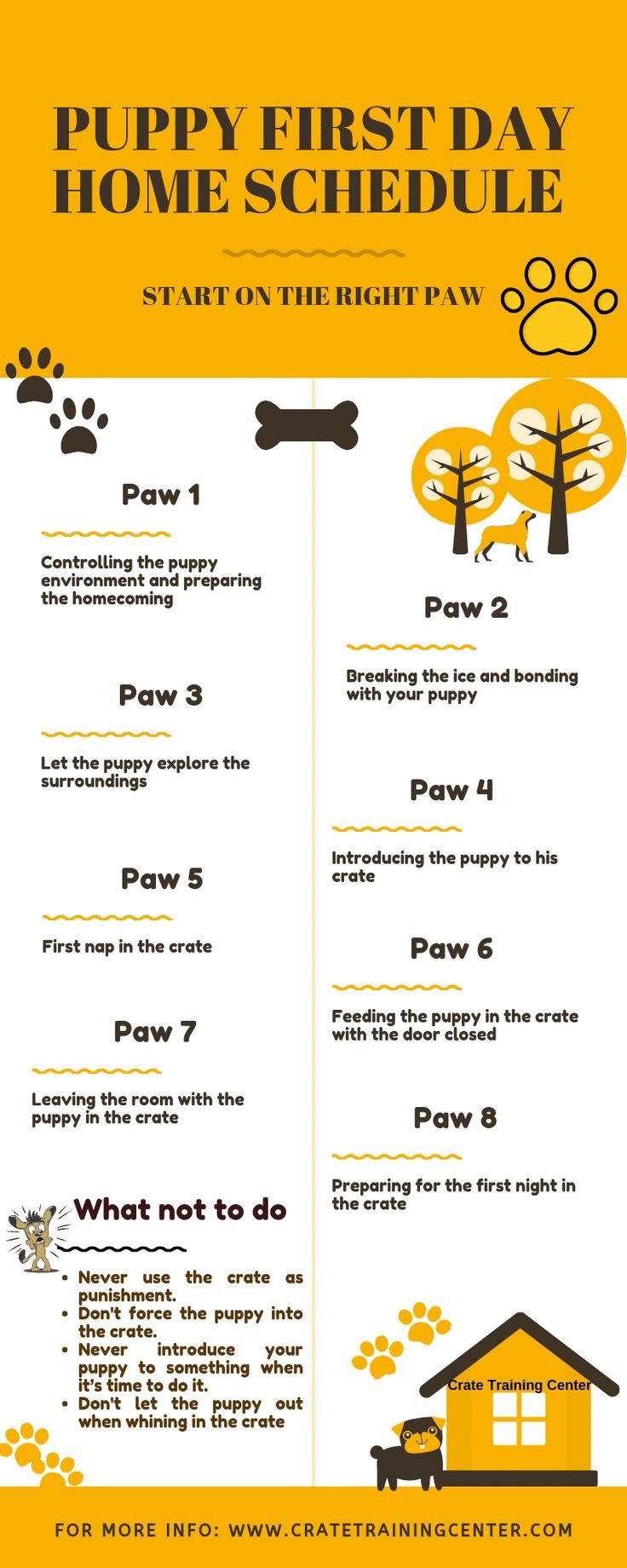
A crate can support house training and give your puppy a quiet place to rest. However, a crate is not a solution for long absences. It should never become a place where a puppy spends most of the day.
For many young puppies, daytime crate time should stay close to the lower end of the age guideline. A 10-week-old puppy may need a break after 30 to 60 minutes, while a 4-month-old puppy may manage two to three hours if trained slowly.
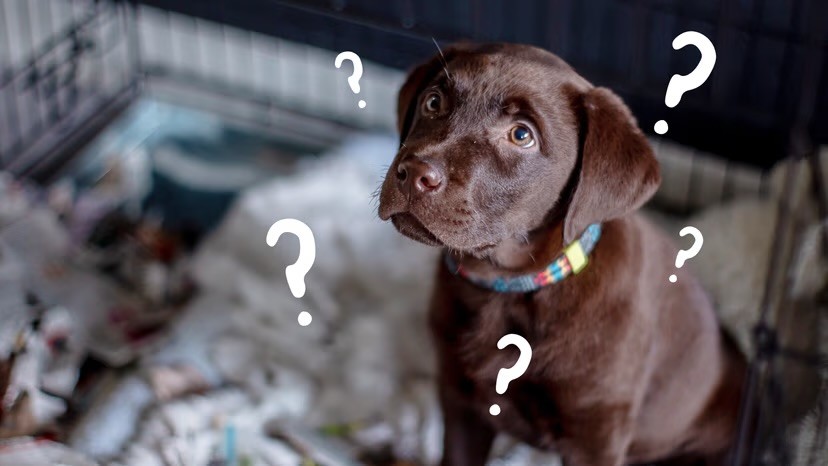
Never use the crate as a test of endurance. A puppy that cries, soils the crate, pants heavily, or tries to escape may be overwhelmed or may need a bathroom break.
Safe crate habits
• Choose a crate large enough for your puppy to stand, turn, lie down, and stretch.
• Remove collars, harnesses, and loose items that could catch or choke your puppy.
• Add a safe bed or mat only if your puppy does not chew and swallow it.
• Take your puppy outside before crating.
• Offer a safe, size-appropriate chew or food toy.
• Keep the crate in a calm area where your puppy does not feel isolated.
• Avoid using the crate for punishment.
The American Veterinary Medical Association and many veterinary behavior experts recommend positive crate training. The goal is for the crate to feel like a bedroom, not a jail cell.
In my experience, one common mistake is crating a puppy only when the owner leaves. The puppy quickly learns that the crate predicts isolation. Short crate sessions while you are still home help create a better association.
What affects how long you can leave a puppy alone?
There is no single answer that fits every puppy. Breed, health, temperament, training, and daily routine all matter.
Bathroom control
A small breed puppy may need more frequent bathroom trips than a larger puppy of the same age. Some puppies also take longer to become reliable, especially if they came from a busy shelter, a cold climate, or a home with little house-training structure.
Energy level
A calm puppy may nap after a short play session. A high-energy puppy may wake up ready to chew furniture, bark, or search for something to do.
Mental exercise matters as much as physical exercise. A tired puppy is not always a calm puppy, but a puppy with a balanced routine often settles more easily.
Health
Diarrhea, vomiting, urinary problems, parasites, and medication can change bathroom needs. A sick puppy should not be left alone for a long period. Contact your veterinarian if your puppy has repeated accidents, sudden distress, or changes in appetite and behavior.
Temperament
Some puppies are naturally more independent. Others follow their people from room to room. A puppy that panics when a door closes may need a slower training plan than one that calmly settles on a bed.
Previous experience
A puppy that has always had company may find alone time harder. This is not a flaw. Alone time is a skill, much like walking on a leash or learning to sit.
How to teach a puppy to stay home alone
Learning how long you can leave a puppy alone is only half the task. You also need to teach the puppy that your absence is safe and temporary.
Start with very short sessions. Leave the room for a few seconds, return calmly, and repeat. Slowly build the time when your puppy stays relaxed.
A simple training plan
-
Take your puppy outside for a bathroom break.
-
Give a short period of gentle play or training.
-
Help your puppy settle in a safe area.
-
Step away for 10 to 30 seconds.
-
Return before your puppy becomes upset.
-
Repeat several times during the day.
-
Increase the time by small amounts.
-
Practice leaving through different doors and returning without excitement.
The key is to return while your puppy is still calm when possible. If your puppy cries after 10 seconds, the next practice session may need to last only five seconds.
Do not make every departure dramatic. Long goodbyes can increase tension. A quiet “see you soon” is enough.
Use a departure routine
A predictable routine can make leaving easier. For example:
• Bathroom break
• Short walk or play session
• Water
• Safe chew or food puzzle
• Rest in a puppy-proof area
• Calm departure
This routine gives your puppy a clear pattern. It is like following a familiar road instead of walking into the unknown.

How long can you leave a puppy alone during a workday?
Leaving a puppy alone for a full workday is usually too long, especially during the first few months. Even if your puppy can hold urine, it still needs social contact, movement, supervision, and mental activity.
If you work eight hours away from home, plan at least one or two visits. Options include:
• Asking a trusted friend or neighbor to visit
• Hiring a professional dog walker
• Using a reputable puppy daycare
• Coming home during lunch
• Arranging a flexible or remote work schedule
• Having a family member provide a midday break
A midday visit should include more than opening the door. Your puppy may need a bathroom break, fresh water, a short play session, and calm human contact.
Puppy daycare can help some dogs, but it is not right for every puppy. A young puppy may become overtired or stressed in a busy group. Check vaccination rules, staff training, rest areas, cleaning practices, and group size before choosing a facility.
If no one can provide regular care, consider whether your schedule is ready for a puppy. Planning this before adoption can prevent stress for both you and the dog.
Signs your puppy is not ready to be left alone
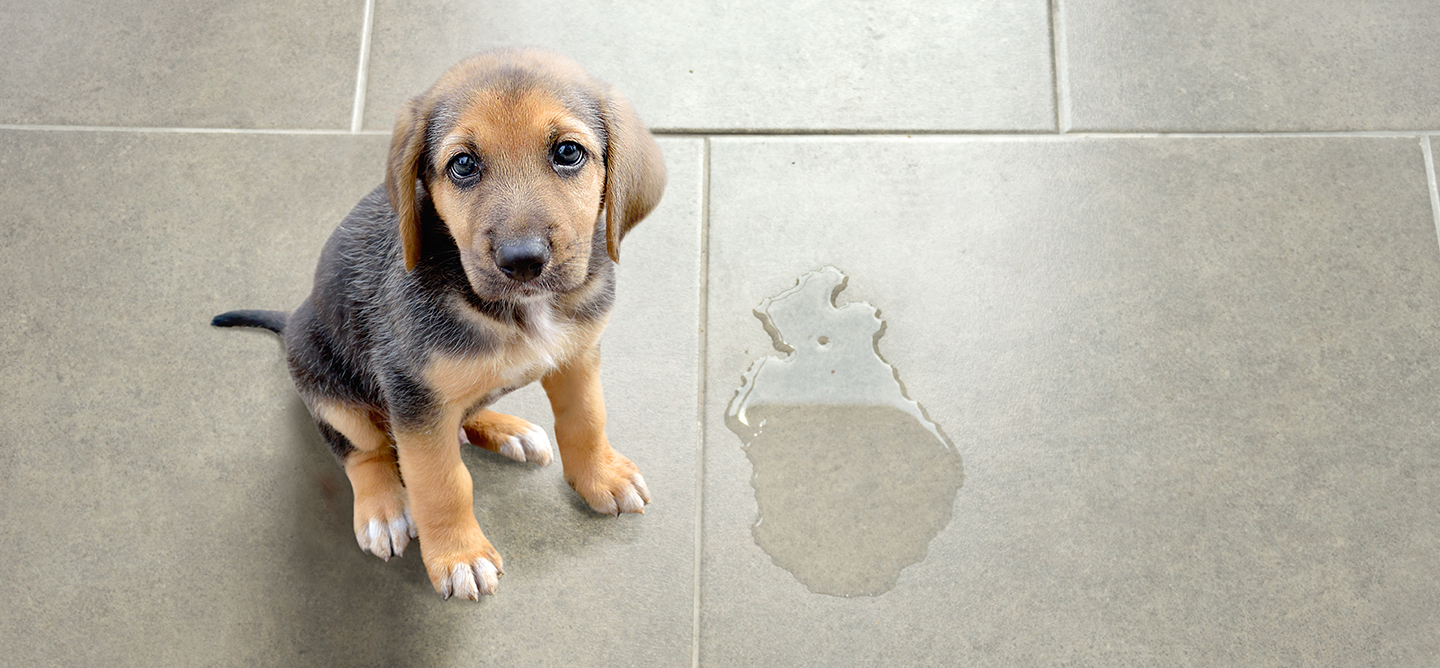
A puppy may show stress in clear or subtle ways. Do not assume that every sound means separation anxiety, but do take repeated distress seriously.
Watch for:
• Continuous barking, whining, or howling
• Scratching or biting at doors and crates
• Repeated accidents despite recent bathroom breaks
• Heavy panting or drooling
• Pacing and inability to settle
• Destructive chewing near exits
• Refusing food toys that are normally enjoyable
• Trembling, hiding, or frantic behavior
• Escape attempts that cause injury
A camera can help you see what happens after you leave. Some puppies cry for a minute and then sleep. Others remain distressed for the entire absence. Those situations need different responses.
If your puppy panics, shorten the time alone. Speak with your veterinarian or a certified veterinary behaviorist if the problem continues. Severe separation distress can worsen when a puppy is repeatedly pushed beyond its comfort level.

How to puppy-proof the home before leaving
A safe room can be better than a crate for longer periods. Use a small, puppy-proof area with a secure gate, easy-to-clean flooring, and no dangerous objects.
Remove:
• Electrical cords
• Small toys and objects
• Toxic plants
• Cleaning products
• Human medicines
• Food that is unsafe for dogs
• Open trash cans
• Loose blankets or bedding that your puppy may swallow
• Reclining chairs and other furniture with moving parts
Keep water available in a stable bowl. If your puppy uses a food puzzle, test it while you are home first. Never leave a new toy alone with a puppy until you know it cannot break apart.
Use baby gates with care. Some puppies climb or chew them. Check the room from your puppy’s eye level. Items that seem harmless from an adult’s view may become tempting hazards on the floor.

Should you leave food, water, music, or a television on?
Fresh water should usually be available when your puppy is alone. Choose a heavy bowl or a spill-resistant design, and check that your puppy cannot tip it over.
Food depends on your puppy’s feeding plan. Young puppies often need several small meals each day, but free-feeding can cause overeating or stomach upset. Follow your veterinarian’s advice for meal size and timing.
A safe food toy can provide mental activity. Use part of your puppy’s normal daily food rather than adding too many extra treats.
Soft music or white noise may cover outdoor sounds. It can help some puppies, but it is not a cure for fear or separation distress. Test the sound while you are home and keep the volume low.
Avoid leaving the television on as a substitute for companionship. Your puppy needs a gradual training plan, not just background noise.
Common mistakes when leaving a puppy alone
Many alone-time problems begin with good intentions. Owners often try to tire out a puppy, leave for too long, or rush training because of work demands.
Leaving too much space too soon
A whole house gives a young puppy too many choices and hazards. Start with a safe, limited area and expand it as your puppy earns freedom.
Exercising too hard before leaving
A long, intense workout may make a puppy overtired rather than relaxed. Gentle play, sniffing, short training, and a bathroom break often work better.
Returning during intense crying
If it is safe, wait for a brief pause before entering. Otherwise, your puppy may learn that loud crying brings you back. However, never ignore panic, injury, or a clear bathroom emergency.
Using punishment after an accident
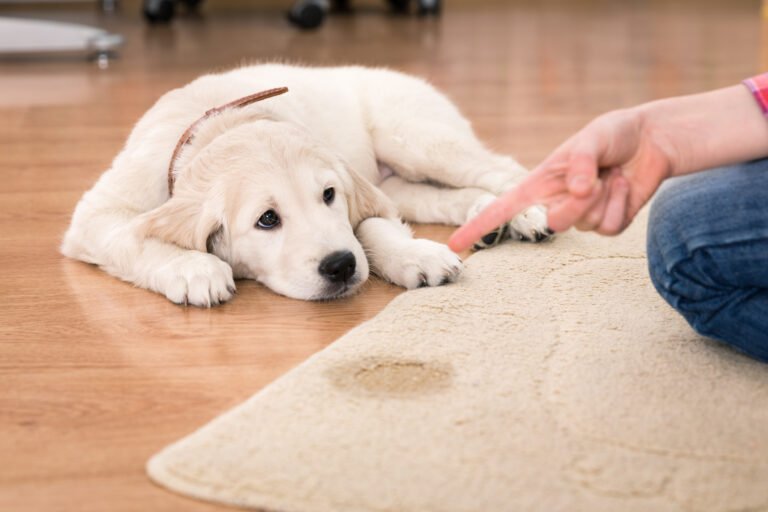
Punishment can make house training harder and may cause fear. Clean the area with an enzymatic cleaner and adjust the schedule.
Increasing time too fast
Alone-time training should grow like a plant, not jump like a rabbit. Small increases are more reliable than sudden long absences.
Ignoring the puppy’s individual limits
The question is not only how long can you leave a puppy alone in theory. It is how long your specific puppy can remain calm, safe, and comfortable.
A practical daily schedule for a young puppy
A routine helps a puppy understand what comes next. The exact times will vary, but a pattern may look like this:
• Morning: Bathroom break, breakfast, gentle play, and short training
• Midmorning: Nap in a safe area
• Late morning: Bathroom break and a few minutes of alone-time practice
• Noon: Meal if recommended, bathroom break, and social time
• Afternoon: Nap, enrichment, and another short practice session
• Evening: Dinner, play, training, and a calm rest period
• Before bed: Final bathroom trip and quiet settling
Young puppies may sleep 18 to 20 hours in a day, according to common veterinary guidance. Sleep is important, but it should happen in a safe space and should not be confused with forcing a puppy to remain alone for long hours.
Track bathroom breaks, meals, naps, and alone-time practice for the first few weeks. A simple note on your phone can reveal patterns that are easy to miss.
When should you call a veterinarian or behavior professional?
Contact your veterinarian if your puppy has repeated diarrhea, vomiting, blood in the stool, trouble urinating, extreme lethargy, or sudden behavior changes. Medical issues can look like training problems.
Ask for professional help if your puppy hurts itself trying to escape, cannot settle at all, or shows severe fear when you prepare to leave. A veterinary behaviorist or qualified positive-reinforcement trainer can create a gradual plan.
Professional support is not a sign that you failed. It is like hiring a tutor when a lesson becomes difficult. Early help can prevent a small problem from becoming a daily crisis.
Frequently Asked Questions About How Long Can You Leave a Puppy Alone
How long can you leave an 8-week-old puppy alone?
An 8-week-old puppy should usually be left alone for only about 30 to 60 minutes at first. The puppy may need a bathroom break sooner, especially after eating, drinking, playing, or waking up.
Can I leave my 3-month-old puppy alone for four hours?
Four hours may be too long for many 3-month-old puppies. Aim closer to two or three hours, then arrange a visit if you will be gone longer.
How long can you leave a puppy alone at night?
Many puppies can sleep for longer stretches at night than they can stay alone during the day. However, young puppies may still need one or more bathroom trips, and nighttime crate training should increase gradually.
Is it okay to leave a puppy alone while I work?
A full workday alone is usually not suitable for a young puppy. Arrange a midday visit, dog walker, family member, or carefully chosen daycare to provide bathroom care and social contact.
Should I crate my puppy when I leave the house?
You may use a crate if your puppy is comfortable and has been trained to use it positively. Keep the session age-appropriate, remove safety hazards, and use a puppy-proof room instead when a longer safe period is needed.
What should I do if my puppy cries when left alone?
First, check for a bathroom need, fear, illness, or an unsafe setup. Reduce the time alone, practice shorter departures, and contact a veterinarian or qualified behavior professional if the crying is intense or persistent.
Can a puppy learn to stay alone without separation anxiety?
Yes, many puppies learn to enjoy calm alone time through slow, positive practice. Short sessions, predictable routines, safe enrichment, and gradual increases can build confidence.
Conclusion
How long can you leave a puppy alone depends on age, bladder control, health, temperament, and past training. Start with short absences, provide a safe space, and arrange help when your schedule exceeds your puppy’s limits.
A young puppy should not be expected to manage a full workday alone. With patience and steady practice, alone time can become a normal part of life rather than a frightening event.
Begin today with a calm five-minute session, record how your puppy responds, and increase the time only when your puppy stays relaxed. For more puppy care guidance, explore trusted veterinary resources or share your experience in the comments.