How To Crate Train A Puppy At Night: Easy Guide
Crate training a puppy at night works best with a safe crate, calm routines, and patient bathroom breaks.
Learning how to crate train a puppy at night can make bedtime easier for both of you. The right plan helps your puppy feel secure without using the crate as punishment. It also supports house training, better sleep, and a stronger bond built through trust.
Why Nighttime Crate Training Matters
A crate gives your puppy a small, quiet place to rest. Dogs often avoid soiling the area where they sleep, so a properly sized crate can support potty training. Still, the crate is not a bathroom substitute or a place to leave a puppy for long periods.
Nighttime crate training also creates a steady sleep pattern. Puppies need plenty of rest, but they may wake because they need to pee, feel lonely, or hear a new sound. A calm routine teaches your puppy that nighttime is for sleeping, not playing.
The crate should feel like a bedroom, not a jail cell. Never use it for punishment, yelling, or forced isolation. If your puppy fears the crate, training will take longer and may create new behavior problems.
.jpg?width=600&height=450&name=fozzie%20in%20crate%20(open%20doors).jpg)
Choose the Right Crate
The best crate is safe, sturdy, and large enough for your puppy to stand, turn around, lie down, and stretch. It should not be so large that your puppy can sleep in one corner and use another corner as a toilet.
Measure your puppy from the nose to the base of the tail. Add a few inches for length. Measure from the floor to the top of the head or ears, then add a few inches for height. For a growing puppy, use a crate with a divider panel.
Good crate options include:
• Wire crates offer airflow and visibility.
• Plastic crates feel more enclosed and can help some puppies relax.
• Soft-sided crates are light but may not suit puppies who chew or scratch.
Place the crate near your bed at first. Your presence can comfort a young puppy and helps you hear signs that they need a bathroom break. Later, you can move the crate a few feet at a time if you want it in another room.
Add a washable mat or thin blanket only if your puppy does not chew it. Avoid loose bedding, collars, harnesses, and toys with small parts that could cause choking or injury.

Prepare Your Puppy Before Bed
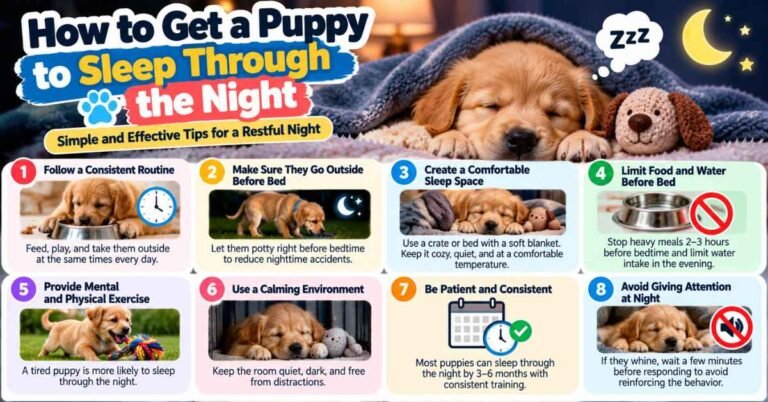
A tired puppy often settles more easily, but too much excitement before bed can have the opposite effect. Think of the evening as a gentle landing rather than a sudden stop.
About one hour before bedtime, lower the energy in the home. Avoid rough play, loud games, and exciting visitors. Offer calm interaction, light training, or gentle chewing under supervision.
Use this bedtime routine:
-
Give your puppy a meal early enough to allow digestion.
-
Offer water normally during the day.
-
Take your puppy outside for a bathroom break.
-
Allow quiet play or gentle contact.
-
Take your puppy outside again just before entering the crate.
-
Guide your puppy into the crate with a calm voice.
-
Turn down the lights and keep the room quiet.
Do not severely restrict water without veterinary advice. Puppies can become dehydrated, especially after exercise, in warm homes, or during illness. Instead, ask your veterinarian how to manage evening water for your puppy’s age, health, and daily routine.
A short training session can also help. Ask for simple cues such as “sit” or “down,” reward calm behavior, and end while your puppy is still relaxed.
:max_bytes(150000):strip_icc()/how-to-crate-train-a-puppy-at-night-2-512161144-2000-68323cb5fbd24393bef573e4a3edcaa4.jpg)
Introduce the Crate During the Day
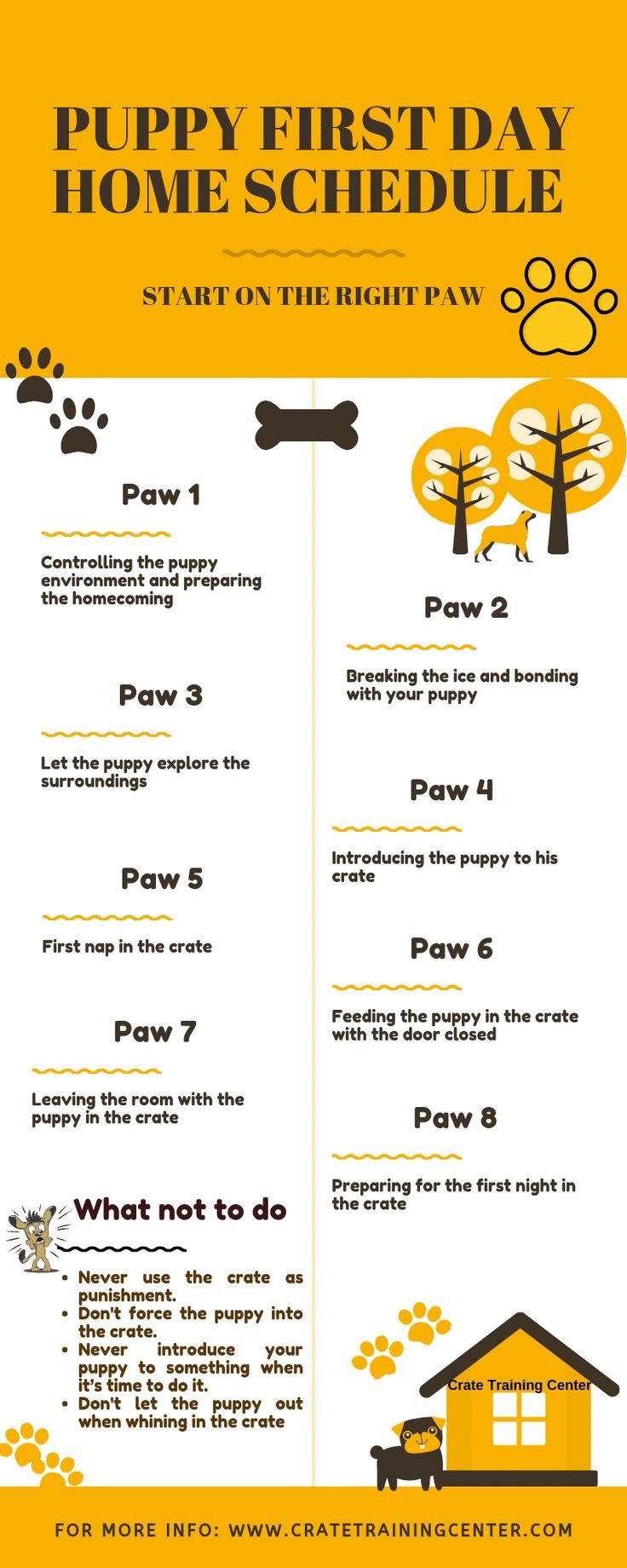
Do not make the first crate experience happen at bedtime. A puppy may already feel tired, lonely, and unsure at night. Daytime practice gives your puppy a chance to learn without pressure.
Start with the crate door open. Toss a treat inside and let your puppy walk in and out. Praise your puppy softly, but do not push or pull them inside.
Next, place meals near the crate. If your puppy stays relaxed, move the food bowl just inside the entrance. Over several meals, move it farther back. This helps your puppy connect the crate with good things.
Once your puppy enters willingly, close the door for a few seconds. Open it before your puppy becomes upset. Slowly increase the time by a few seconds at a time.
Try this simple progression:
• Enter the crate for a treat.
• Eat near or inside the crate.
• Rest inside with the door open.
• Rest inside with the door closed briefly.
• Stay inside while you sit nearby.
• Stay inside while you step away for a short time.
If your puppy whines, pants, scratches hard, or tries to escape, you moved too fast. Return to the last step that felt easy and build up more slowly.
Follow a Nighttime Crate Training Schedule
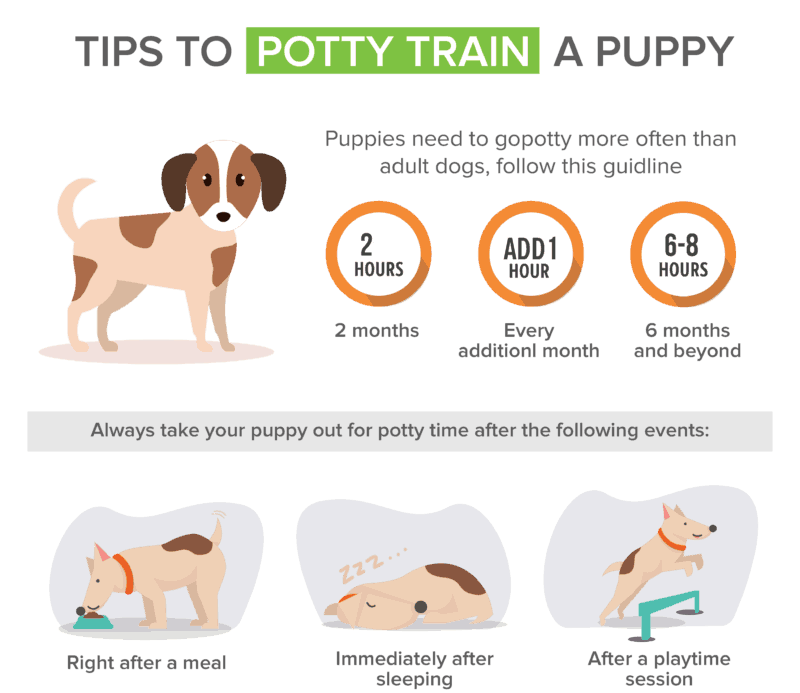
Young puppies usually cannot hold their bladder all night. The exact schedule depends on age, size, health, activity, and individual development. Small breeds may need more frequent breaks than larger breeds.
A simple starting plan looks like this:
• Take your puppy outside immediately before bedtime.
• Set an alarm for one planned overnight bathroom break.
• Carry or calmly lead your puppy outside.
• Give quiet praise after they go.
• Return directly to the crate.
• Avoid food, games, bright lights, and long cuddles.
Many puppies need a bathroom break every few hours at first. As your puppy stays dry and sleeps calmly, slowly extend the time between breaks. Do not make your puppy wait through signs of distress.
Keep a small record for several nights. Note the bedtime, accidents, bathroom trips, meals, water, and wake-up times. This can reveal a pattern and help you adjust the schedule based on evidence rather than guesswork.
Accidents do not mean your puppy is stubborn. They often mean the schedule was too demanding, the puppy drank more than usual, or the puppy has a health issue. Clean accidents with an enzymatic cleaner so lingering odor does not invite repeat marking.

Respond to Whining at Night
Whining is one of the hardest parts of learning how to crate train a puppy at night. Your puppy may be asking to go outside, or they may want company. Your response should be calm and consistent.
First, pause and listen. If the whining comes with restlessness, circling, sniffing, or sudden movement, take your puppy outside for a short bathroom trip. Keep the trip boring and return to the crate right away.
If your puppy has recently gone outside and seems safe, wait for a brief quiet moment before offering attention. Opening the door while your puppy is actively crying can teach them that crying makes the door open. However, do not ignore panic, injury, illness, or severe distress.
Helpful responses include:
• Speak in a low, calm voice.
• Keep the crate close to your bed.
• Take your puppy out only for a bathroom need.
• Avoid play during overnight breaks.
• Reward calm behavior the next morning.
Some puppies settle faster when they hear soft background noise. A fan, quiet sound machine, or gentle music may cover sudden household sounds. Keep the volume low and make sure the room remains comfortable.
Never bang on the crate, spray your puppy, yell, or shake the crate. These actions can increase fear and make nighttime crate training harder.

Prevent Common Crate Training Mistakes
Many crate training problems come from asking for too much too soon. Puppies need time to learn that the crate is safe and that you will return.
Avoid these common mistakes:
• Using a crate that is too large or too small.
• Crating a puppy immediately after intense play.
• Leaving a puppy confined for excessive hours.
• Letting the puppy out during every mild complaint.
• Ignoring repeated signs of fear or illness.
• Using the crate as punishment.
• Placing the crate in a noisy, hot, cold, or isolated area.
• Adding unsafe bedding or chew items.
• Expecting a very young puppy to stay dry all night.
The crate should support training, not replace exercise, social contact, and supervision. Puppies need play, gentle handling, short training sessions, safe exploration, and regular bathroom trips during the day.
A useful rule is to consider total daily confinement, not just nighttime hours. If your puppy spends much of the day in a crate while also staying there overnight, they may not receive enough movement or social time. A trusted family member, pet sitter, or dog walker may help when your schedule is long.

Adjust the Plan for Your Puppy’s Age
Age provides a rough guide, not a strict promise. A young puppy may need several bathroom breaks, while an older puppy may sleep longer. Health, breed, stress, and routine can change the picture.
Very young puppies often need frequent daytime trips and at least one or more nighttime outings. Puppies around three to four months may begin sleeping for longer stretches, but many still need help. By five to six months, some puppies can sleep through the night, though every puppy develops at a different pace.
Use your puppy’s behavior as feedback. A dry crate, calm sleep, and quiet mornings suggest that the schedule may be working. Frequent accidents, frantic crying, or repeated attempts to escape suggest that you need to slow down or seek help.
Contact your veterinarian if your puppy suddenly starts having accidents, urinates unusually often, drinks much more than usual, has diarrhea, vomits, seems painful, or cannot settle. Medical problems such as urinary infections can look like training problems.

Make the Crate Comfortable and Safe
Comfort comes from more than a soft bed. Your puppy needs a stable routine, a suitable temperature, and a sense of security.
Keep the crate away from direct heat, cold drafts, and busy walkways. Check that your puppy cannot pull curtains, cords, or other objects through the crate. Inspect the crate often for sharp edges, loose wires, broken latches, or chew damage.
Some puppies relax with a safe chew approved for their age and size. Supervise new items first. Remove anything that breaks into pieces or becomes small enough to swallow.
A blanket over part of a wire crate can create a den-like feel, but leave plenty of airflow. Do not cover the crate fully if your puppy becomes hot, anxious, or unable to breathe comfortably.
A camera can help you observe sleep, but it should not replace direct care. Watch for repeated pacing, heavy panting, drooling, attempts to escape, or prolonged distress. These signs may indicate that your puppy needs a slower plan or professional guidance.
What I Have Learned From Real Puppy Routines
One of the most useful lessons in nighttime crate training is that consistency matters more than perfection. A puppy may sleep well for three nights and then wake more often after a busy day, a change in routine, or a new sound. That does not erase the progress.
A common mistake is adding too much excitement to a bathroom break. When a puppy wakes at 2 a.m., it is tempting to cuddle, play, or offer a snack. That can turn a quick potty trip into a rewarding midnight event. Quiet, brief, and predictable works better.
Another lesson is to watch the clock less and the puppy more. A schedule is helpful, but it cannot account for every puppy. If your puppy is consistently dry, calm, and ready to sleep, you may gradually extend the interval. If your puppy has accidents, shorten it again.
The kindest approach is also the most practical. Meet genuine needs, prevent avoidable mistakes, and celebrate small wins. Crate training is not a test of willpower. It is a skill built through repetition and trust.
When to Seek Professional Help
Most puppies improve with patience and a clear routine. Still, some need extra support. Ask your veterinarian or a qualified positive-reinforcement trainer for help if your puppy shows intense fear, repeated panic, aggression, self-injury, or ongoing accidents.
Look for a trainer who uses reward-based methods and explains each step clearly. Be cautious of anyone who recommends intimidation, shock, physical punishment, or forcing a puppy to remain in a crate for long periods.
Professional help is especially important if your puppy has separation distress. Signs can include nonstop barking, heavy drooling, frantic escape attempts, damaged teeth or nails, vomiting, or inability to settle even when bathroom needs are met.
The crate may not be the right overnight tool for every dog. A puppy-proofed pen or small, safe room may work better while you address anxiety. The goal is restful, safe sleep, not simply keeping a door closed.
Frequently Asked Questions About How to Crate Train a Puppy at Night
How long does it take to crate train a puppy at night?
Some puppies adjust within a few nights, while others need several weeks of gradual practice. Progress depends on age, past experiences, temperament, bladder control, and how consistent the routine is.
Should I let my puppy cry in the crate at night?
Do not ignore signs of panic, pain, illness, or a real need to use the bathroom. If your puppy is safe and recently went outside, wait for a brief quiet moment before giving attention, and keep your response calm.
Should a puppy sleep in a crate beside my bed?
Yes, placing the crate beside your bed often helps a puppy feel secure and lets you hear bathroom signals. You can move it slowly later if you want your puppy to sleep elsewhere.
How often should I take my puppy out at night?
Young puppies may need to go out every few hours, while older puppies may sleep longer. Start with a realistic schedule, track accidents and dry nights, then gradually increase the time as your puppy develops bladder control.
Should I put food and water in the nighttime crate?
Food is usually not needed overnight, and a full water bowl may lead to more bathroom trips. Follow your veterinarian’s advice, especially for very young, small, sick, or heat-sensitive puppies.
What should I do if my puppy has an accident in the crate?
Take your puppy outside without punishment, then clean the crate and bedding with an enzymatic cleaner. Review the crate size and bathroom schedule, and contact a veterinarian if accidents are frequent or sudden.
Can I crate my puppy all day and all night?
Long periods of confinement can limit exercise, learning, and social contact. Puppies need regular movement, play, training, bathroom breaks, and interaction, so plan daytime care instead of relying on the crate for most of the day.
Conclusion
Successful nighttime crate training rests on three things: a safe crate, a steady routine, and patience. Introduce the crate during the day, use calm bathroom breaks, respond to genuine needs, and increase alone time in small steps.
Your puppy may not sleep through the night at once, and that is normal. Each calm bedtime and successful bathroom trip builds confidence. Start tonight with a quiet routine, keep notes for a few days, and ask your veterinarian or a reward-based trainer for help when needed. Share your puppy’s progress or explore more positive training resources for the next step.