How Long Can A Puppy Stay In A Crate: Safe Time Guide
Most puppies can stay in a crate for one hour per month of age, with limits and frequent potty breaks.
Knowing how long a puppy can stay in a crate helps prevent accidents, fear, and stress. The right time depends on age, bladder control, health, training, and whether your puppy is sleeping or awake. This guide explains safe crate limits, how to build alone time, and the warning signs that mean your puppy needs a break.

How long can a puppy stay in a crate?
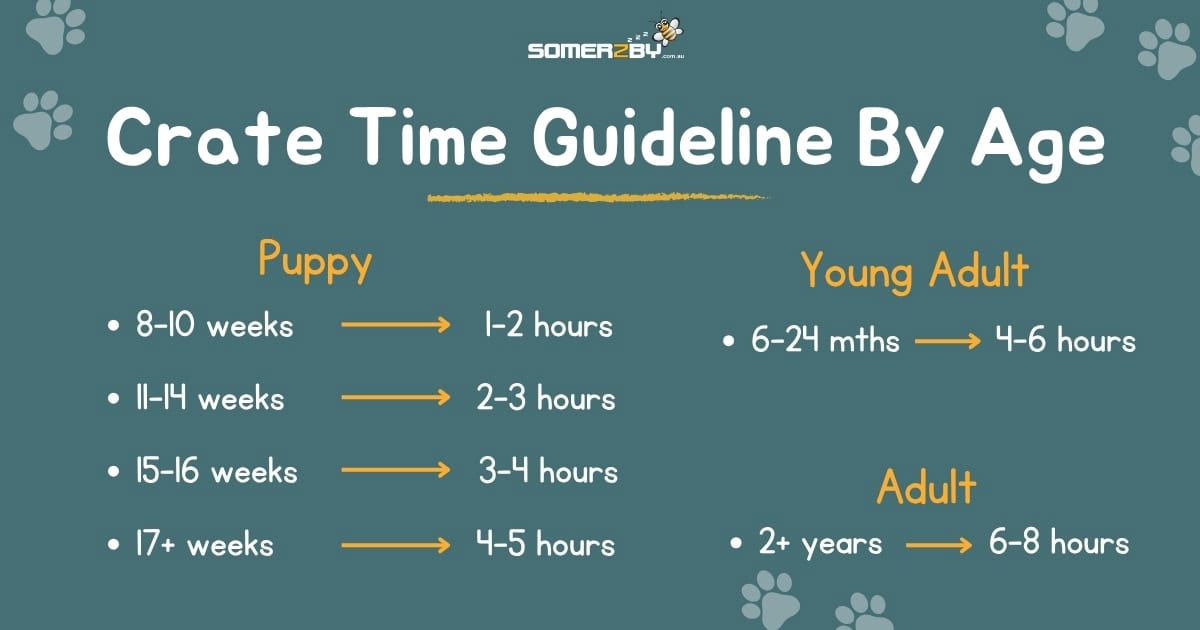
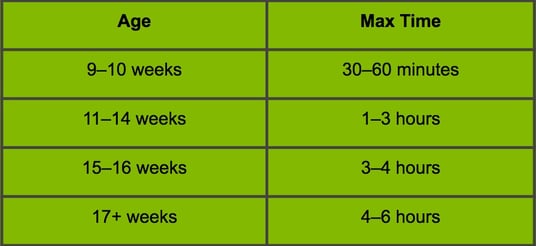
A healthy puppy can usually hold their bladder for about one hour for each month of age, plus one hour. For example, a 3-month-old puppy may manage about four hours during the day. This is a rough limit, not a goal.
A better question is how long your puppy can stay calm, dry, and comfortable. Some puppies need to go out sooner. Small breeds, recently adopted puppies, and puppies with stomach problems may need more frequent breaks.
Use this guide as a starting point:
| Puppy age | Usual daytime crate limit |
|---|---|
| 8 to 10 weeks | 30 to 60 minutes |
| 11 to 12 weeks | 1 to 2 hours |
| 3 to 4 months | 2 to 4 hours |
| 5 to 6 months | 4 to 6 hours |
| 7 to 12 months | 5 to 7 hours |
These times assume the puppy has had a potty break, some gentle activity, and a calm place to rest. They should not replace regular exercise, training, play, and human contact.
For overnight sleep, some puppies can stay in a crate longer because they are not eating, drinking, or playing. Still, a young puppy may need one or more nighttime potty trips. If your puppy wakes, cries, circles, or sniffs, take them outside calmly.
Why age matters
Young puppies have small bladders and limited muscle control. They may understand that the crate is their bed but still be unable to hold urine for long. Expecting too much too soon can lead to accidents and frustration.
Age also affects emotional control. A puppy may physically stay in a crate for two hours but become distressed after 30 minutes. Crate training is not only about bladder control. It also teaches your puppy that quiet time is safe.
The common “one hour per month” rule has limits. It does not account for:
• Breed and body size
• Water intake
• Recent meals
• Exercise and excitement
• Illness or diarrhea
• Fear or separation distress
• Previous crate training
• The time of day
A 4-month-old puppy that drank a large bowl of water and played hard may need a break sooner than the chart suggests. Watch the puppy in front of you, not just the number on the calendar.
Daytime crate time versus nighttime crate time
Daytime crate time is often harder for puppies. Your puppy may hear people moving, see sunlight, and want to play. This makes it harder to sleep for long periods.
Nighttime is different because most puppies are tired and the home is quiet. Even so, a young puppy may not sleep through the night. A short potty trip is normal and does not mean crate training is failing.
During the day, plan crate breaks around your puppy’s routine:
- Take your puppy outside after waking.
- Offer food and water based on your veterinarian’s advice.
- Allow time for potty, play, and gentle training.
- Place your puppy in the crate with a safe chew.
- Take the puppy outside when the planned period ends.
- Praise outdoor potty behavior in a calm, friendly way.
Never use a long daytime crate period as a substitute for care. A crate should be a bedroom, not a parking space.

How long can a puppy stay in a crate overnight?
Many puppies need a potty break every few hours at night. A very young puppy may sleep for two to four hours before needing to go outside. Older puppies may sleep for six to eight hours, but this varies widely.
Set an alarm before your puppy usually wakes and cries. Take them outside on a leash, keep lights low, avoid play, and return them to the crate. This teaches that nighttime potty trips are quick and boring.
If your puppy stays dry for several nights, slowly extend the time. Do not suddenly expect a 10-week-old puppy to stay crated all night. That can create accidents and may make the crate feel unpleasant.
Also, remove collars and harnesses before overnight crating unless a veterinarian has advised otherwise. They can catch on crate wires or create a safety risk.

How to crate train a puppy safely
Good crate training grows in small steps. Start with the door open and let your puppy explore. Toss treats inside, feed meals near the crate, and use a soft voice.
Once your puppy enters freely, close the door for a few seconds. Open it before the puppy becomes upset. Slowly increase the time by a few seconds or minutes.
Try this simple plan:
• Days 1 and 2: Feed treats near the crate and leave the door open.
• Days 3 and 4: Feed meals inside the crate with the door open.
• Days 5 and 6: Close the door for 10 to 30 seconds while you stay nearby.
• Days 7 and beyond: Add short periods while you move around the room.
• Later: Leave the room for one or two minutes, then return calmly.
The exact schedule does not matter as much as your puppy’s response. If your puppy cries hard, scratches, pants, or refuses food, the step may be too difficult.
In my experience with crate-training plans, the most common mistake is moving too fast after one good session. One calm five-minute period does not mean the puppy is ready for an hour. Training works best when you build on many easy wins.
How to tell if your puppy has been crated too long
A puppy may show clear signs that the crate period is too long. Some signs relate to potty needs. Others point to fear, boredom, or discomfort.
Watch for:
• Repeated accidents in the crate
• Heavy panting when the room is cool
• Drooling, shaking, or frantic movement
• Constant barking or high-pitched crying
• Scratching at the crate door
• Chewing the crate bars
• Vomiting or diarrhea
• Refusing treats that normally excite the puppy
• Extreme excitement or frantic biting after release
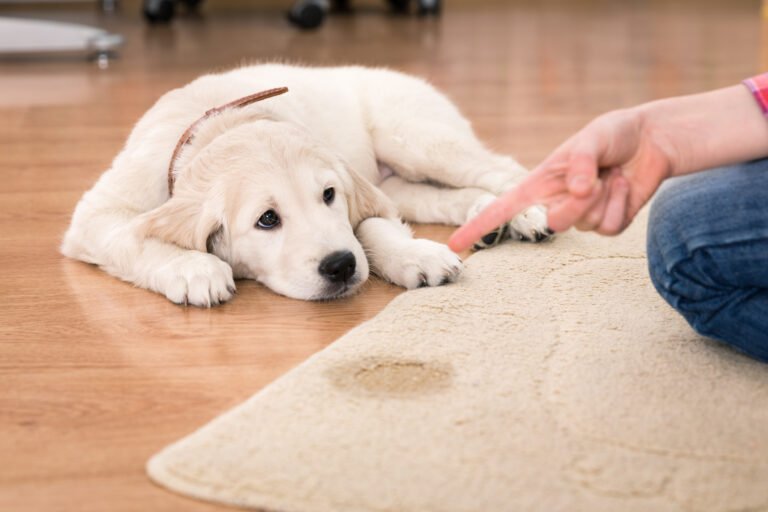
One accident does not always mean the crate time was too long. Your puppy may have had too much water, a stomach issue, or an incomplete potty break. Repeated accidents deserve a closer look.
If your puppy panics, do not punish the behavior. Reduce the crate time and speak with a veterinarian or qualified positive-reinforcement trainer. Panic can worsen if the puppy is repeatedly left alone until exhaustion.
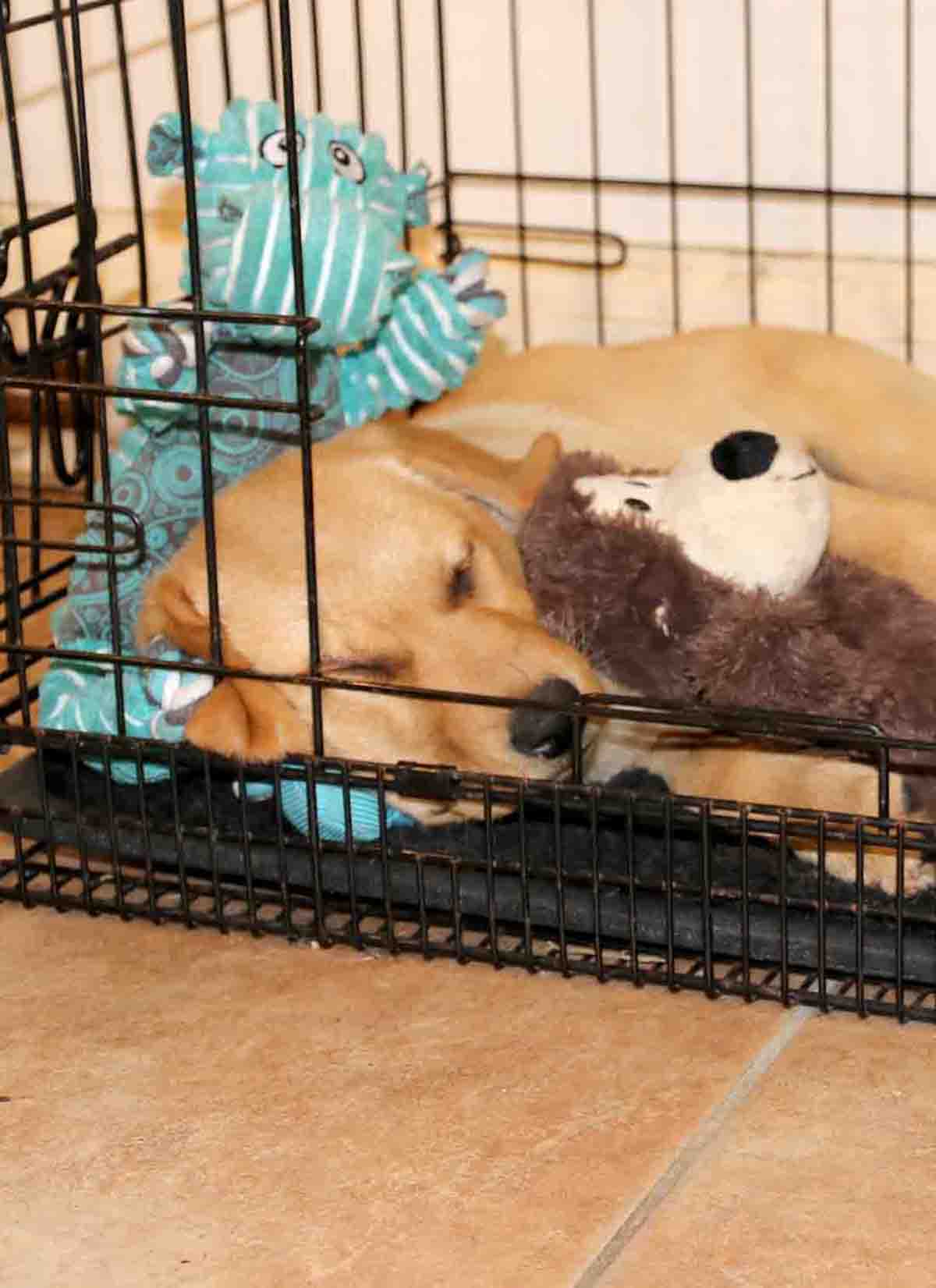
Choosing the right crate
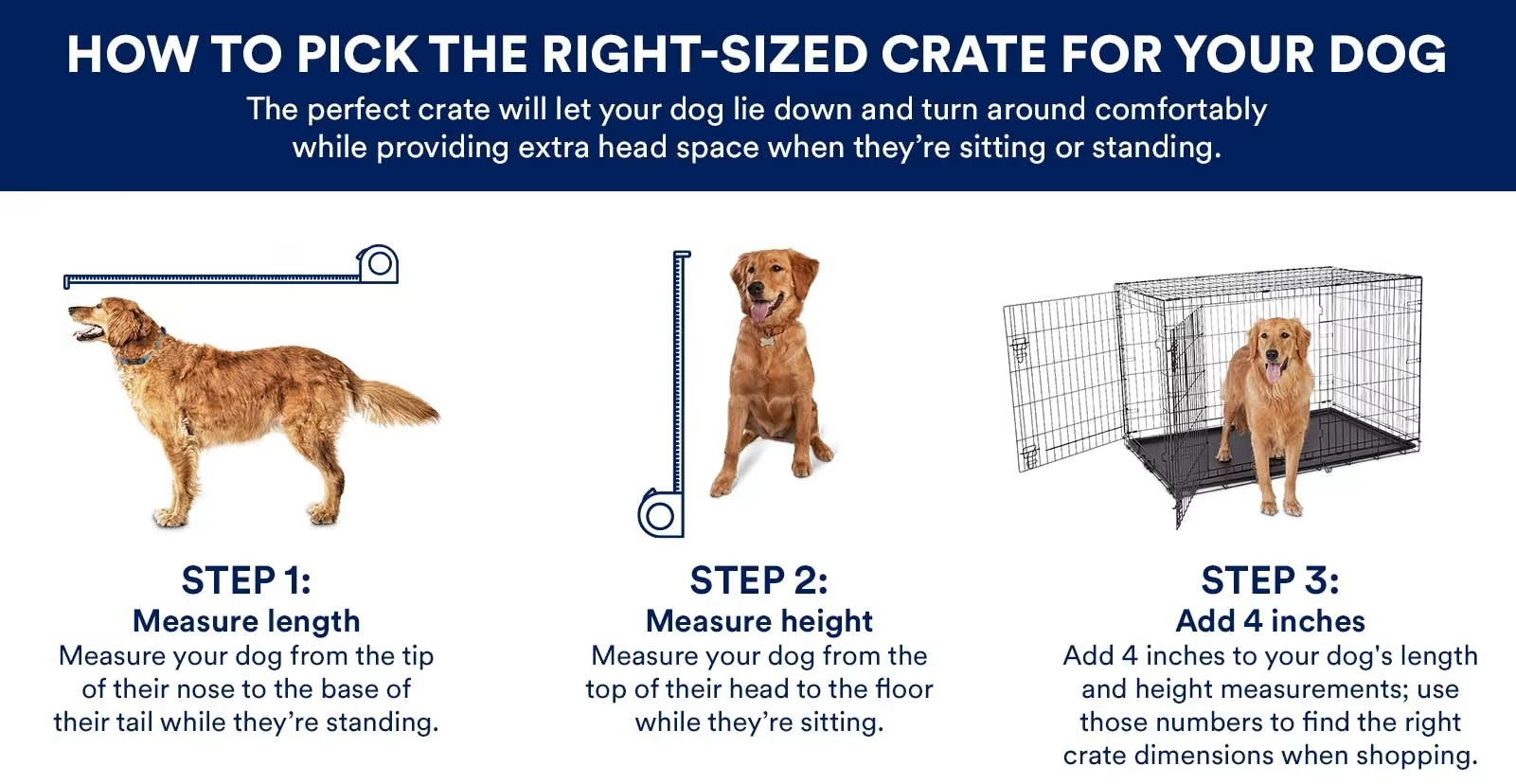
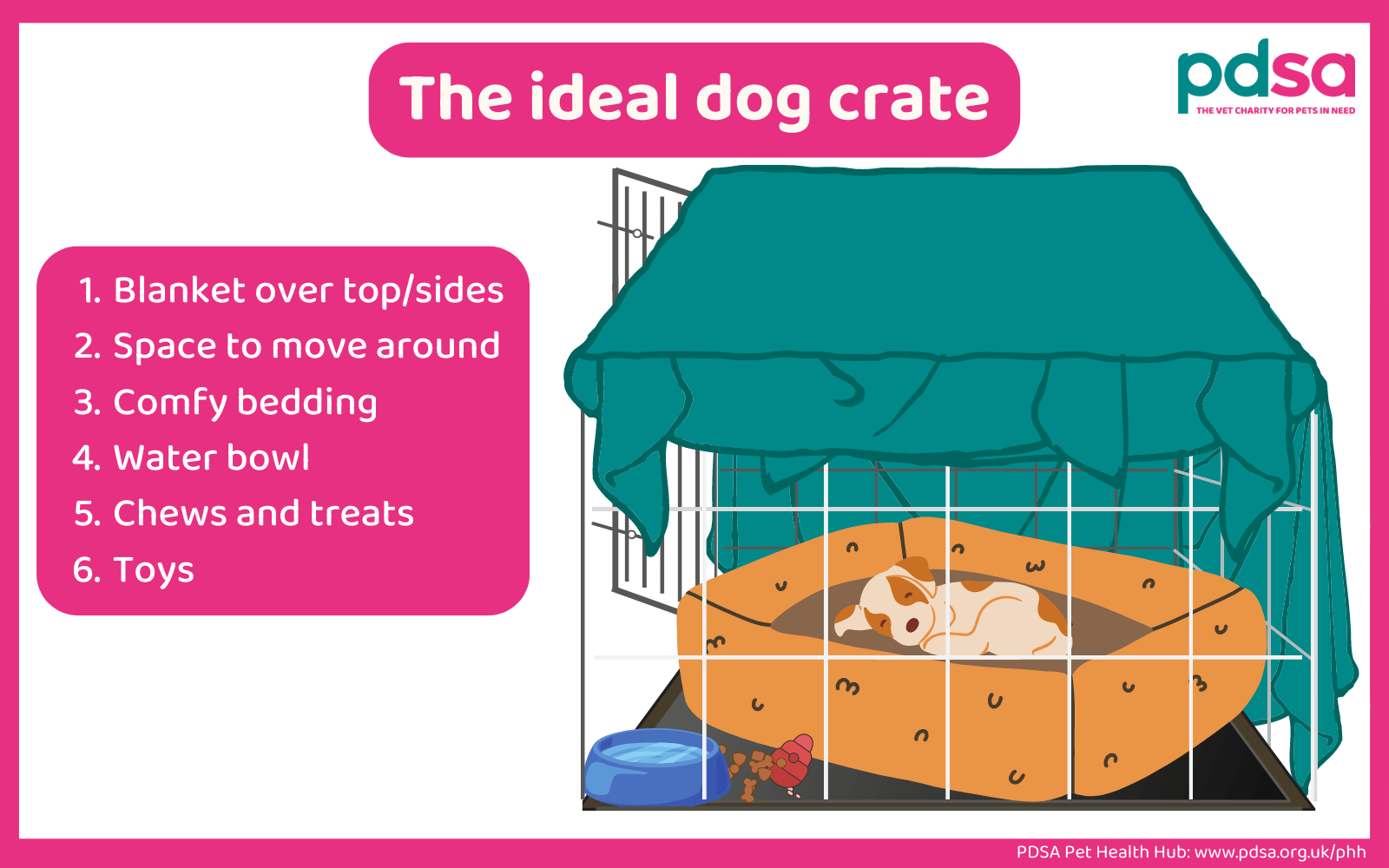
The crate should be large enough for your puppy to stand up, turn around, lie down, and stretch comfortably. It should not be so large that the puppy can sleep in one corner and use another corner as a bathroom.
A crate with a divider is useful for growing puppies. Move the divider as your puppy grows. Check the fit often because puppies can grow quickly.
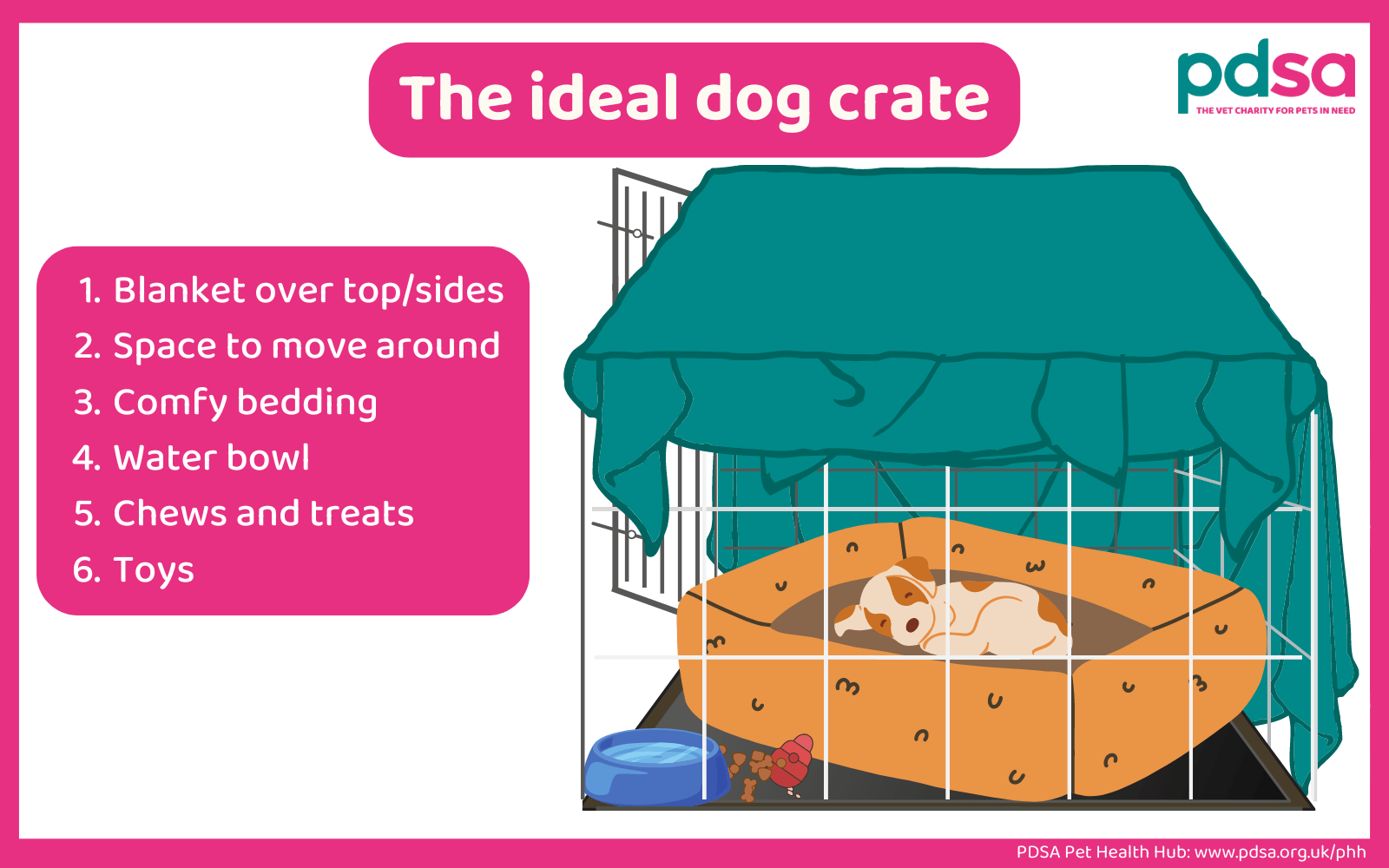
Place the crate in a safe area where your puppy can rest but does not feel isolated. Many families keep it near the living room during the day and beside the bed at night.
Add only safe items:
• A washable mat that your puppy will not shred
• A durable puppy-safe chew
• A simple comfort item, if your puppy does not destroy it
• Fresh water when advised by your veterinarian
Avoid loose bedding if your puppy eats fabric. Avoid toys with small parts, broken pieces, or strings. Inspect all items often.
What to do before putting a puppy in a crate
A puppy is more likely to rest after meeting basic needs. Before crating, offer a calm routine rather than intense play that leaves the puppy overstimulated.
Use this checklist:
- Take the puppy outside to potty.
- Give a short period of play or training.
- Offer water according to the normal routine.
- Let the puppy settle for a few minutes.
- Place them in the crate with a safe chew.
- Leave quietly without a long emotional goodbye.
Avoid trying to “wear out” a puppy with wild exercise. Over-tired puppies can become mouthy, frantic, and unable to settle. A few minutes of sniffing, basic training, or gentle play may work better.
When you return, wait for a brief calm moment before opening the door if possible. Do not make the return feel like a dramatic event. Calm exits and calm arrivals can reduce excitement over time.

Can a puppy stay in a crate while you are at work?
A full workday is usually too long for a young puppy to spend in a crate without help. Even an older puppy needs movement, social contact, training, and potty breaks.
If you work away from home, consider a midday plan:
• Ask a trusted friend or family member to visit.
• Hire a reputable dog walker or pet sitter.
• Use a puppy-proof pen with a separate toilet area when appropriate.
• Arrange puppy daycare after checking its safety and supervision.
• Return home during lunch if your schedule allows.
A pen can give a puppy more room than a crate, but it does not replace training. It may be useful when a puppy cannot yet hold their bladder for the needed period.
How long can a puppy stay in a crate while you work? For most young puppies, only a few hours at a time with a break. The exact limit depends on age, training, and welfare needs.
Common crate-training mistakes
Many crate problems come from simple timing errors. Fixing them early can protect your puppy’s trust.
• Using the crate as punishment: Your puppy may begin to fear entering it.
• Crating after no potty break: This often causes accidents.
• Making the crate too large: Extra space can encourage bathroom use.
• Leaving for too long too soon: This can create distress.
• Opening the door during intense panic: Wait for safety, then make the next session easier.
• Ignoring health problems: Frequent urination, diarrhea, or pain needs veterinary attention.
• Using the crate all day and night: Puppies need play, contact, movement, and learning time.
One lesson many owners learn late is that crying has more than one meaning. A puppy may need to potty, feel lonely, feel afraid, or simply want attention. Look at the timing and body language before choosing a response.
When to contact a veterinarian or trainer
Contact your veterinarian if your puppy suddenly has accidents after staying dry, strains to urinate, drinks much more than usual, or has vomiting or diarrhea. Pain and illness can look like a crate-training problem.
Ask for professional help if your puppy shows panic, tries to escape, injures their mouth, or cannot settle even with gradual training. A veterinary behaviorist or qualified force-free trainer can help you create a safer plan.
Crate training also needs adjustment for puppies with separation anxiety. Leaving such a puppy alone for longer periods may increase fear. These puppies often need gradual behavior work, environmental changes, and sometimes veterinary treatment.
No single crate schedule works for every dog. Good guidance considers health, temperament, home setup, and the puppy’s learning history.
Frequently asked questions about how long can a puppy stay in a crate
How long can a 2-month-old puppy stay in a crate?
A 2-month-old puppy often needs a potty break every 30 to 60 minutes when awake. Some may sleep for a few hours at night, but daytime crate periods should remain short.
Can a puppy stay in a crate for 8 hours?
Most young puppies should not stay in a crate for eight hours during the day. They need potty breaks, exercise, social contact, and mental activity, so arrange help if you are away that long.
Should I ignore my puppy crying in the crate?
First check whether your puppy needs to potty, feels sick, or is in danger. If basic needs are met, shorten the next session and build crate time more slowly instead of allowing prolonged panic.
How long can a puppy stay in a crate at night?
This depends on age and bladder control. Young puppies may need one or more overnight potty breaks, while older puppies may sleep for six to eight hours.
Is it okay to crate a puppy during the day and night?
Short, well-spaced crate periods can be fine, but a puppy should not spend most of the day and night confined. Balance crate rest with play, training, exercise, exploration, and family time.
What if my puppy has an accident in the crate?
Clean the area with an enzymatic cleaner and review the schedule. Take the puppy out sooner, check the crate size, and contact a veterinarian if accidents continue or come with other symptoms.
Conclusion
How long can a puppy stay in a crate depends on age, bladder control, health, training, and emotional comfort. Use the age guidelines as a starting point, but let your puppy’s behavior guide the pace. Keep crate periods short at first, offer regular potty breaks, and never use the crate as punishment.
A crate can become a safe bedroom when it is linked with rest, food, calm training, and trust. Start with one easy session today, track how your puppy responds, and adjust the plan as they grow. Share this guide with another new puppy owner or explore more positive training resources for the next step.