How To Raise A Puppy: Easy Training Guide
Raise a puppy with patience, routine, positive training, proper care, and early socialization.
Learning how to raise a puppy takes time, but the right plan makes each day easier. From house training and safe socialization to food, sleep, exercise, and veterinary care, this guide explains how to raise a puppy with kindness and confidence. The goal is not a perfect dog overnight. It is to build trust through small, steady steps.
Prepare Your Home Before Your Puppy Arrives
Before learning how to raise a puppy, make your home safe and calm. Puppies explore with their mouths, so even small objects can become choking risks. Walk through each room from a puppy’s view and remove anything unsafe.
Keep these items ready:
• A crate or safe pen
• A washable bed
• Food and water bowls
• Puppy food recommended by your veterinarian
• A collar, identification tag, and properly fitted harness
• A leash
• Safe chew toys
• Enzyme cleaner for accidents
• Treats made for puppies
• Baby gates
• Grooming tools
• A first-aid kit for pets
Choose one quiet area as your puppy’s home base. This space should contain the crate, bed, water, and a few safe toys. A small area helps your puppy settle and reduces accidents while they learn the house rules.
Puppy-proof wires, medicines, cleaning products, plants, and food. Chocolate, grapes, raisins, onions, garlic, xylitol, and some medications can be dangerous or toxic to dogs. When you are unsure about a substance, contact your veterinarian or an animal poison control service.
I have found that preparation prevents many early problems. New puppy owners often focus on toys but forget simple items such as a gate or enzyme cleaner. Those small tools can save you stress during the first few weeks.

Build a Consistent Daily Routine
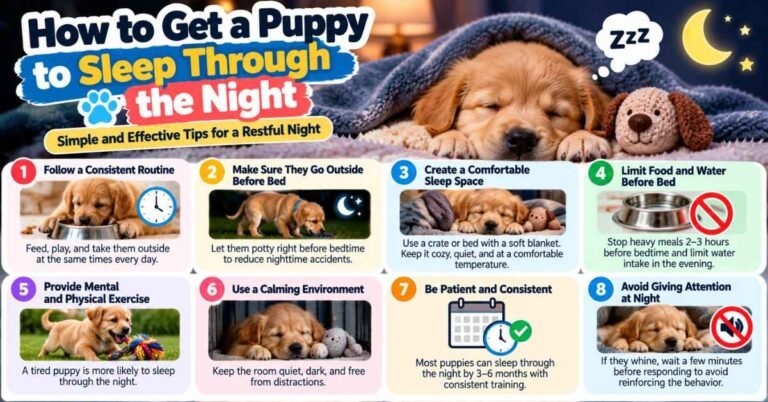
A predictable routine is one of the best tools for how to raise a puppy. Puppies learn faster when meals, potty breaks, naps, play, and training happen at regular times. A routine also helps you notice changes in appetite, energy, or bathroom habits.
A young puppy may need a schedule like this:
- Wake up and go outside to potty
- Eat breakfast
- Go outside again after eating
- Rest in the crate or pen
- Play and practice a short training session
- Go outside again
- Take a nap
- Eat lunch if your veterinarian recommends three meals
- Repeat potty, play, training, and rest
- Eat dinner and settle for the night
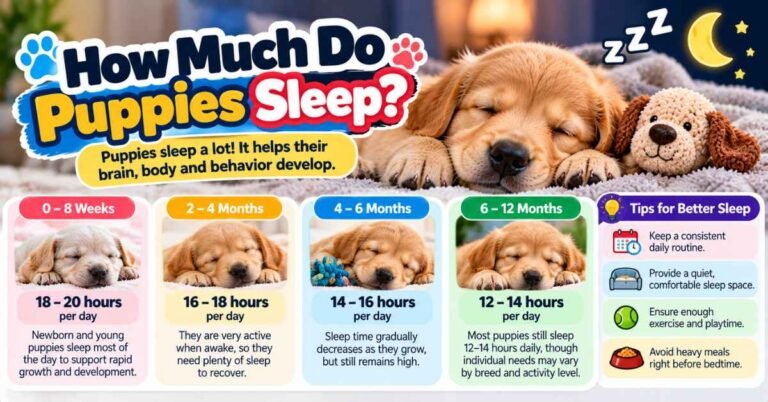
Very young puppies often sleep 18 to 20 hours per day. Sleep is not wasted time. It supports growth, learning, and emotional control. An overtired puppy may bite, bark, run wildly, or ignore cues because they need rest.
Take your puppy outside after waking, eating, drinking, playing, and exciting activity. Puppies have small bladders, so accidents are normal. A common guideline is that a puppy may hold urine for about one hour per month of age, but this is only an estimate. Breed, size, health, and activity all matter.
Use the same words and rules each day. If jumping is not allowed, everyone in the home should avoid rewarding it. Mixed messages can confuse a puppy and slow training.

Feed Your Puppy for Healthy Growth
Good nutrition is a central part of how to raise a puppy. Choose a complete and balanced food made for puppies or for all life stages. Large-breed puppies may need a food designed for controlled growth. Ask your veterinarian which food fits your puppy’s breed, age, size, and health.
Read the feeding guide on the package, but do not treat it as a perfect rule. Feeding amounts are starting points. Your veterinarian can help you adjust portions as your puppy grows. Too much food can lead to excess weight and stress on developing bones and joints.
Helpful feeding habits include:
• Measure meals with a standard measuring cup or kitchen scale
• Feed at set times instead of leaving food out all day
• Keep fresh water available
• Use small treats during training
• Keep treats under about 10% of daily calories
• Avoid sudden food changes
• Monitor body shape, weight, stool, and energy
A healthy puppy should grow steadily. You should be able to feel the ribs with light pressure, but the ribs should not be sharply visible. Ask your veterinarian to show you how to assess body condition.
Do not give supplements unless a veterinarian recommends them. Extra calcium and other nutrients can harm some growing dogs, especially large breeds. Home-cooked diets also need careful professional planning because missing nutrients can affect bone and organ development.

Start House Training on Day One
House training is often the first major challenge for new owners. The key is management, timing, and praise. Do not wait for your puppy to ask to go outside. Take them out before an accident is likely.
Choose one outdoor potty area. Bring your puppy there on a leash and wait quietly. When they finish, praise them right away and give a small treat. The reward should come within a few seconds so your puppy connects it with the correct behavior.
Watch for signs such as:
• Sniffing the floor
• Walking in circles
• Restlessness
• Moving toward a corner
• Whining or scratching at a door
• Suddenly stopping play
If you see these signs, take your puppy outside at once. If an accident happens indoors, interrupt gently if you catch it, then move outside. Never rub your puppy’s nose in the mess or punish them after the fact. They will not understand the reason for the punishment.
Clean accidents with an enzymatic cleaner. Regular soap may remove the smell for you but leave traces that your puppy can detect. Those traces may draw the puppy back to the same spot.
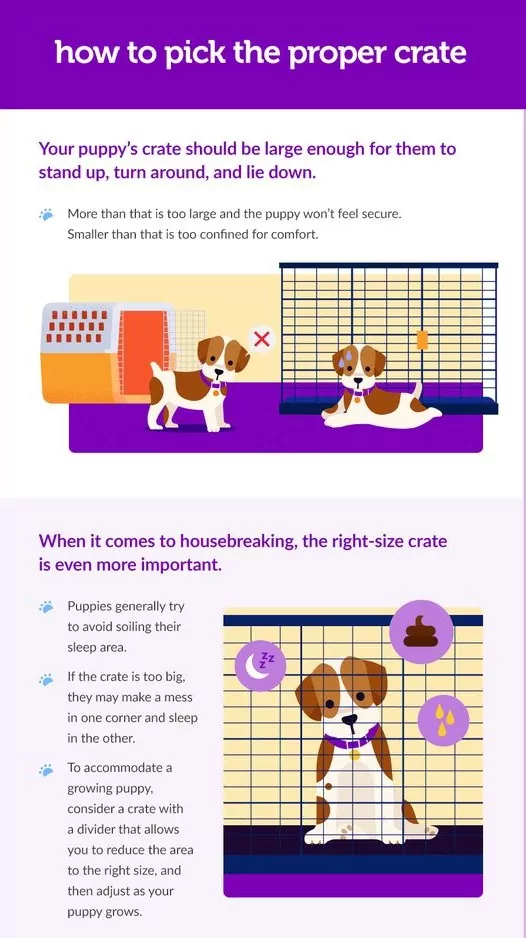
Crate training can support house training, but the crate should never be used as punishment. Puppies naturally avoid soiling a small sleeping space, yet they cannot hold urine for too long. A crate that is too large may allow a puppy to sleep in one area and use another as a bathroom.

Use Positive Training Methods
Positive reinforcement is the safest and most effective foundation for how to raise a puppy. Reward the behavior you want to see. Rewards may include treats, praise, play, access to the yard, or a favorite toy.
Start with simple skills:
• Responding to their name
• Sitting
• Coming when called
• Touching your hand with their nose
• Walking beside you
• Waiting at a door
• Trading an object for a treat
• Settling on a mat
Keep training sessions short. One to five minutes is enough for a young puppy. End while your puppy is still interested. Several short sessions work better than one long session.
Use a clear marker word such as “yes” when your puppy does the right thing. Then give the reward. For example, say your puppy’s name. When they look at you, say “yes,” offer a treat, and smile. Repeat this many times in different rooms.
Avoid shouting, leash jerks, shock collars, and physical punishment. These methods can create fear and may hide warning signals such as growling. The American Veterinary Society of Animal Behavior supports reward-based training and advises against aversive methods.
One mistake I often see is asking for a command again and again. If you say “come” five times, your puppy may learn that the first four words do not matter. Say the cue once, make it easy, and help your puppy succeed.

Teach Your Puppy to Bite Gently
Puppy biting is normal. Puppies use their mouths to explore, play, and learn social limits. Still, sharp teeth can hurt, so teach bite control early.
When your puppy bites your hands or clothing, stop moving. Offer a safe toy instead. If the biting continues, calmly end the game and step away for a brief moment. Then try again with a toy.
Reward gentle play. You can also give your puppy a chew after exciting activities. Teething puppies may chew more because their mouths feel sore, so provide several textures that are safe for their age and size.
Avoid rough hand games if you do not want hand biting later. Also avoid chew items that can break into pieces, damage teeth, or cause intestinal blockage. Your veterinarian can help you choose suitable toys.
Children need guidance during puppy play. They should not pull ears, climb on the puppy, take food, or chase a puppy into a corner. Always supervise interactions between children and dogs.
A puppy who growls over food or toys needs careful support, not punishment. Do not forcibly remove items. Contact a qualified reward-based trainer or veterinary behavior professional for help with resource guarding.

Socialize Your Puppy Safely
Socialization means helping your puppy feel safe around new people, animals, places, sounds, surfaces, and handling. It does not mean forcing your puppy to greet everyone. The goal is calm confidence.
The most important socialization period occurs early in life, especially during the first three months. The exact timing varies, but early positive experiences can shape future behavior. The American Veterinary Society of Animal Behavior states that puppies should receive safe social experiences before they are fully vaccinated, with appropriate health precautions.
Safe socialization may include:
• Meeting calm, healthy, vaccinated dogs
• Hearing traffic, doorbells, and household sounds at a low volume
• Walking on grass, mats, tile, and pavement
• Visiting a quiet veterinary clinic for treats
• Riding in a car
• Seeing people with hats, umbrellas, or backpacks
• Being gently touched on paws, ears, mouth, and tail
• Watching bicycles, strollers, and people from a safe distance
Keep each experience short and pleasant. If your puppy hides, freezes, trembles, or tries to escape, increase distance and offer comfort. Never force a puppy toward a frightening person or object.
Ask your veterinarian about local disease risks before visiting dog parks, pet stores, or areas with heavy dog traffic. A puppy can often attend a well-run puppy class before completing every vaccine, but the class should require health records and use strong cleaning practices.

Provide Exercise and Mental Enrichment
Exercise is important, but young puppies need more than physical activity. Mental enrichment helps prevent boredom and teaches your puppy how to focus.
Try these activities:
• Scatter a few pieces of kibble in a safe area
• Use a food puzzle made for puppies
• Practice name games
• Teach simple tricks
• Let your puppy sniff during walks
• Rotate toys every few days
• Offer supervised chew time
• Practice calm settling on a mat
Avoid forced running, long hikes, repeated jumping, and hard stops while your puppy’s bones and joints develop. The right amount of exercise depends on age, breed, health, and temperament. Ask your veterinarian for advice, especially for large or giant breeds.
Sniffing is a form of mental work. A slow walk with time to smell can tire a puppy more safely than a fast, long walk. Think of it as reading the neighborhood newspaper.
A common mistake is trying to fix every behavior with more exercise. Some puppies become more excited when they are pushed too hard. Balance play with naps, quiet time, and calm training.

Teach Crate Training and Alone Time
A crate can give your puppy a safe place to rest, travel, and recover after medical care. It should feel like a bedroom, not a jail. Introduce it slowly and reward your puppy for choosing to enter.
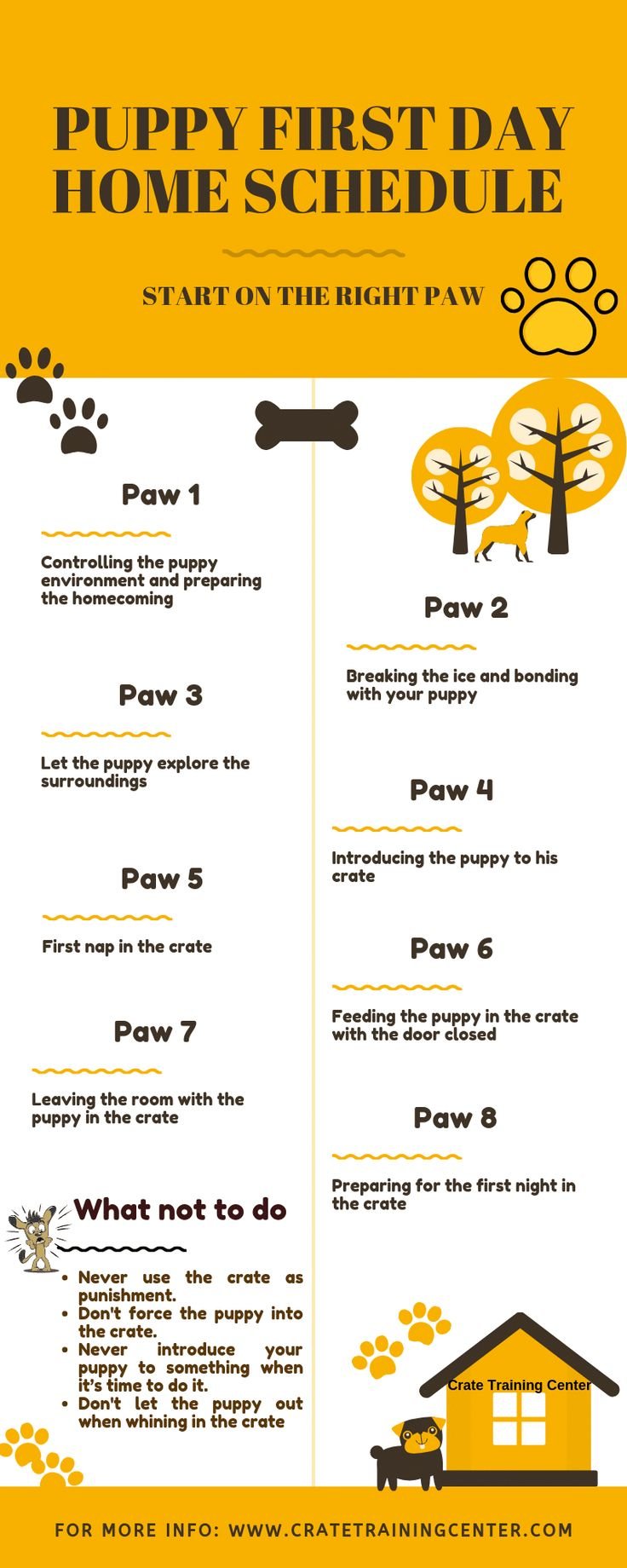
Start with the door open. Toss treats inside and praise your puppy for going in. Place meals near the crate, then inside it. When your puppy is relaxed, close the door for a few seconds and open it before they become distressed.
Increase time in small steps. Stay nearby at first, then move around the room. Later, leave for a short period. If your puppy cries intensely, pants, drools, or tries to escape, the step was too large. Slow down and seek professional help if distress continues.
Do not use the crate for long periods beyond your puppy’s ability to hold urine or remain comfortable. Puppies need movement, play, contact, and bathroom breaks. A crate is one useful tool, not a substitute for care.
Practice short separations even when you are home. This helps your puppy learn that alone time is safe and temporary. Calm departures and returns can also reduce excitement.

Handle Grooming, Health, and Veterinary Care
A strong health routine is a major part of how to raise a puppy. Schedule a veterinary visit soon after adoption. The veterinarian can check your puppy, discuss vaccines, test for parasites, plan preventive care, and answer questions about food and growth.
Your puppy may need protection against diseases such as parvovirus, distemper, adenovirus, and rabies. Vaccine schedules vary by location and health history. Follow your veterinarian’s plan rather than relying on a general online calendar.
Begin gentle handling at home:
• Touch each paw and reward calm behavior
• Lift the lips briefly to view the teeth
• Look inside the ears without forcing them
• Brush the coat for a few seconds
• Handle the tail gently
• Practice standing on a stable surface
• Offer treats during each session
Use parasite prevention recommended for your region. Fleas, ticks, heartworms, and intestinal parasites can cause serious illness. Never give a dog medication meant for people or another animal unless your veterinarian approves it.
Call a veterinarian promptly if your puppy has trouble breathing, repeated vomiting, severe diarrhea, extreme weakness, a swollen belly, pale gums, seizures, or possible toxin exposure. Puppies can become dehydrated quickly, so do not wait if your puppy seems seriously ill.
Manage Common Puppy Problems
Most puppy problems improve when you identify the need behind the behavior. A puppy may bark because they are scared, lonely, excited, tired, or seeking attention. The solution depends on the cause.
For jumping, reward four paws on the floor. Turn away from jumping, then greet your puppy when they stand calmly. Ask visitors to follow the same rule.
For leash pulling, reward your puppy for staying near you. Begin indoors or in a quiet yard. Add distractions slowly. A front-clip harness may help some dogs, but it does not replace training.
For chewing, limit access to unsafe objects and provide better choices. If your puppy steals something, trade it for a treat or toy. Chasing can turn theft into a fun game.
For barking, avoid rewarding demand barking with attention, food, or access. Teach a calm behavior, such as sitting on a mat, and reward it before barking begins. If barking is linked to fear or anxiety, contact a qualified professional.
Keep a simple behavior journal. Write down what happened before the behavior, what your puppy did, and what happened afterward. This can reveal patterns and help your trainer or veterinarian give more useful advice.
Understand What Not to Do
Knowing what not to do is just as important as knowing how to raise a puppy. Many well-meaning owners use methods that create fear or confusion.
Avoid these common mistakes:
• Punishing accidents after they happen
• Using the crate for isolation or anger
• Allowing children to play without supervision
• Taking an incompletely vaccinated puppy into risky areas
• Giving too many treats
• Expecting a puppy to behave like an adult dog
• Changing rules from day to day
• Offering unsafe bones, toys, or human foods
• Ignoring signs of fear or pain
• Waiting too long to seek professional help
Puppies are not trying to be difficult. Their brains and bodies are still developing. A behavior that looks stubborn may reflect fatigue, stress, hunger, confusion, or a training step that is too hard.
Be patient with yourself, too. Raising a puppy can disrupt sleep and daily plans. Build a support team that may include your veterinarian, a reward-based trainer, a trusted pet sitter, and reliable friends or family.
Create a Long-Term Training Plan
Puppy training does not end when your dog learns to sit. Continue teaching life skills as your puppy grows. Increase distractions slowly and practice in different places.
A useful monthly plan may include:
• Practicing recall in safe areas
• Improving loose-leash walking
• Visiting new places calmly
• Building polite greetings
• Reinforcing house training
• Practicing grooming and veterinary handling
• Teaching settle, leave it, and drop it
• Reviewing emergency cues
• Maintaining healthy exercise and sleep habits
Use rewards throughout adolescence. Many dogs seem to “forget” training during this stage because their bodies, hormones, and attention are changing. This is normal. Return to easier steps, reward generously, and keep rules clear.
Consider enrolling in a positive puppy class. A good class teaches both the puppy and the human. Look for an instructor who explains behavior, uses rewards, manages play carefully, and avoids fear-based tools.
The best answer to how to raise a puppy is not one perfect technique. It is a steady system built on safety, clear communication, health care, and a trusting relationship.
Frequently Asked Questions About How to Raise a Puppy
How often should a puppy go outside to potty?
Take a puppy outside after waking, eating, drinking, playing, and exciting activity. Young puppies may need breaks every 30 to 60 minutes while awake, but age, size, and health affect the timing.
When can a puppy start socialization?
Puppies can begin safe socialization before they finish every vaccine, but the activities must match local disease risks. Ask your veterinarian about safe puppy classes, healthy vaccinated dogs, and places to avoid.
How long can a puppy stay in a crate?
The safe length depends on age, bladder control, health, and comfort. A crate should never replace exercise, play, social contact, or regular bathroom breaks, and a puppy should not be left crated longer than they can comfortably manage.
What should I do if my puppy bites?
Stop the game, stay calm, and offer a safe chew toy. Reward gentle play, avoid rough hand games, and seek help if biting is intense, fearful, or paired with stiff body language or guarding.
Should I punish my puppy for accidents?
No. Punishment after an accident does not teach the correct behavior and may create fear. Clean the area with an enzymatic cleaner, increase potty breaks, and reward your puppy immediately for going outside.
How much sleep does a puppy need?
Many puppies sleep about 18 to 20 hours each day, including naps. If a puppy becomes wild, mouthy, or unable to focus, they may need a quiet rest period rather than more play.
Conclusion
Learning how to raise a puppy is a daily process built on patience, routine, reward-based training, safe socialization, good nutrition, rest, and regular veterinary care. Prepare your home, keep rules clear, reward the behaviors you want, and treat mistakes as information rather than failure.
Your puppy does not need a perfect owner. They need a calm guide who keeps learning. Start with one small habit today, such as a regular potty schedule or a short name-training game, and build from there. For more practical dog-care guidance, explore trusted veterinary resources, work with a qualified trainer, and share your puppy journey with others.