How Much Do Puppies Sleep: Puppy Sleep Guide
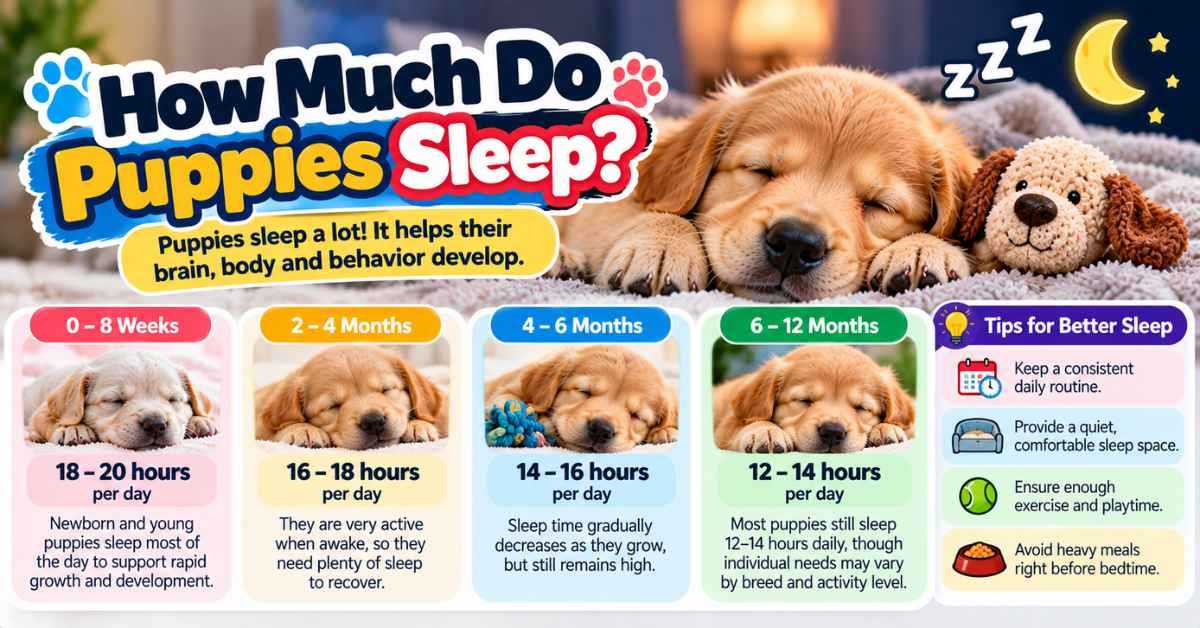
Most puppies sleep 18 to 20 hours a day, with newborns often sleeping even longer.
If you are wondering how much do puppies sleep, you are asking an important question about healthy growth, learning, and behavior. Puppies need far more rest than adult dogs, and their sleep needs change as their brains, bones, and immune systems develop. This guide explains normal puppy sleep, age-based needs, daily routines, warning signs, and simple ways to help your puppy rest well.
How Much Do Puppies Sleep?
Most young puppies sleep between 18 and 20 hours in a 24-hour period. Some puppies may sleep closer to 16 hours, while very young puppies may rest for 20 to 22 hours.
Puppies do not sleep in one long block. They usually nap after eating, playing, training, and going outside. Their day may look like a repeating cycle of waking, potty time, food, play, and sleep.
Sleep is not wasted time for a puppy. It works like a charging station for the body and brain. During rest, puppies process new experiences, build muscle, support immune health, and recover from the excitement of exploring the world.
Breed, size, age, health, activity, and personality all affect how much do puppies sleep. A calm puppy may nap more than an active one, while a puppy in a busy home may need extra quiet time to settle.
Puppy Sleep Needs by Age
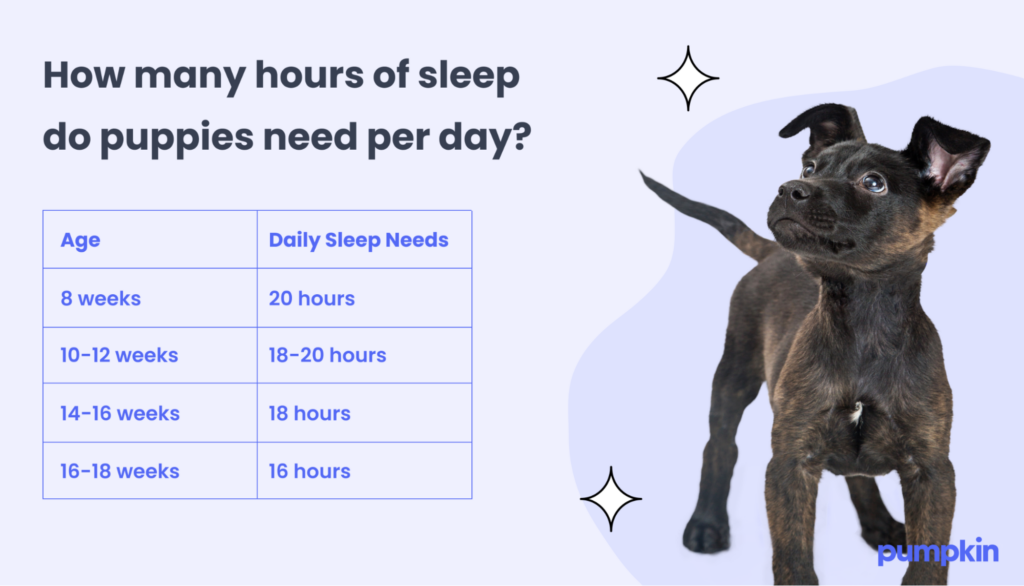
The best way to understand how much do puppies sleep is to look at their age. A two-month-old puppy has very different needs from a six-month-old puppy.
Newborn puppies
Newborn puppies can sleep about 20 to 22 hours each day. They wake mainly to nurse, stay warm, and receive care from their mother.
At this stage, sleep supports fast growth. Puppies should not be separated from their mother and litter too early, since early development depends on warmth, feeding, sleep, and social contact.
Puppies from 8 to 12 weeks
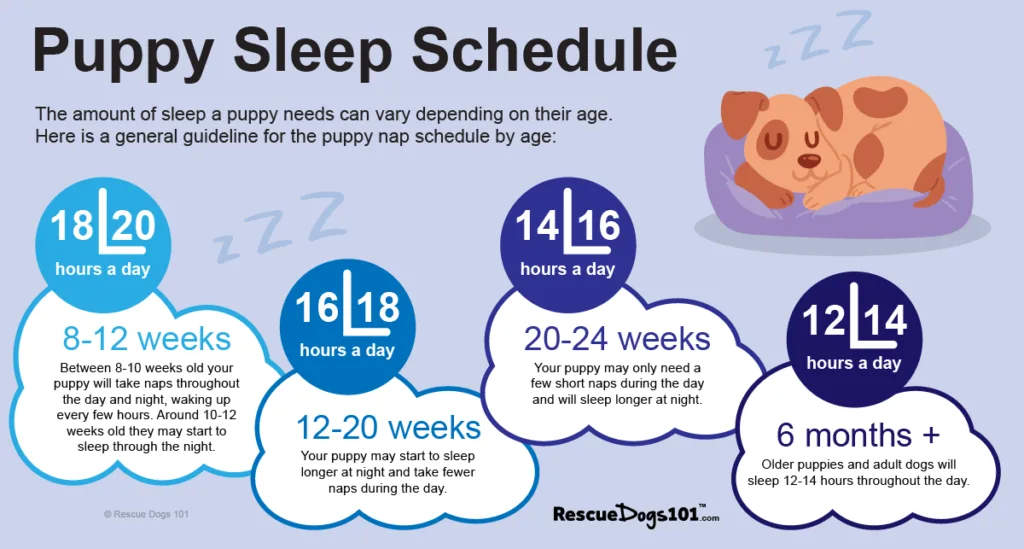
Puppies between 8 and 12 weeks often sleep 18 to 20 hours daily. They may stay awake for only 30 to 60 minutes before becoming tired again.
This is also a busy learning stage. A puppy may seem full of energy, then suddenly fall asleep on the floor. That change is normal and often means the puppy needs a nap, not more play.
Puppies from 3 to 6 months
At 3 to 6 months, many puppies sleep about 16 to 18 hours each day. They may remain awake for longer periods, but they still need several naps.
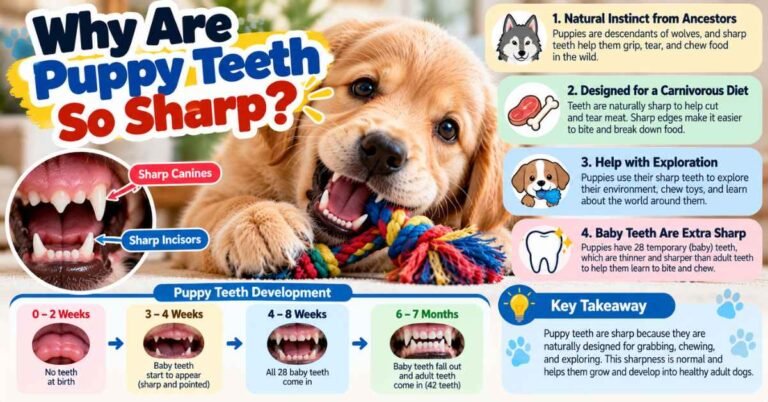
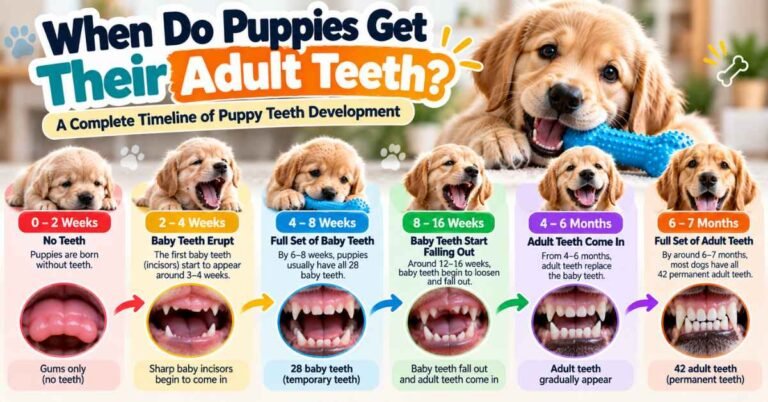
Teething, house training, and new commands can make this stage tiring. A puppy that skips naps may become fussy, mouthy, or unable to focus.
Puppies from 6 to 12 months
Older puppies often sleep 14 to 18 hours per day. Large breeds may continue sleeping more than smaller breeds because their bodies grow for a longer period.
Do not assume that a puppy needs less rest just because it is bigger or more active. Growth does not stop when a puppy starts looking like an adult dog.
/beacondogtraining/30643309-2d8f-446f-a2d9-d819bde9beec.jpeg)
Why Do Puppies Sleep So Much?
Puppies sleep so much because their bodies and brains are developing at a rapid pace. Walking, chewing, learning a name, meeting people, and hearing household sounds all require mental effort.
Sleep also helps with memory. After a short training session, a nap may help a puppy remember what it learned. This is one reason short lessons followed by rest often work better than long sessions.
Growth hormones are released during sleep, which supports healthy development. Rest also helps the immune system respond to normal challenges and helps the body recover after play.
A tired puppy can act much like an overtired toddler. Instead of becoming calm, the puppy may zoom around, bite hands, bark, or ignore cues. Many owners think this behavior means the puppy needs more exercise, when the real answer may be sleep.
In my experience with puppy routines, one of the most useful lessons is simple: behavior often improves when rest improves. A puppy that gets regular naps is usually easier to train and less likely to become overwhelmed.

What Does Normal Puppy Sleep Look Like?
Normal puppy sleep can look different from adult dog sleep. Puppies may twitch, move their paws, make small sounds, or briefly open their eyes.
These movements often happen during rapid eye movement sleep, sometimes called REM sleep. It is a normal sleep stage and may support learning and brain development.
A healthy sleeping puppy may:
• Change positions during a nap
• Twitch its legs or whiskers
• Breathe slowly and evenly
• Make soft whimpering sounds
• Wake up ready to eat, play, or potty
• Sleep deeply after a busy activity
Puppies may also have irregular sleep patterns. One nap may last 20 minutes, while another may last two hours. This variation is usually fine if the puppy wakes normally and acts well when awake.
Pay attention to the whole picture rather than one nap. How much do puppies sleep can vary from day to day, especially after travel, training, visitors, or a new experience.

How to Build a Healthy Puppy Sleep Schedule
A consistent schedule helps puppies understand when it is time to play and when it is time to rest. You do not need a perfect plan, but a steady rhythm can reduce stress.
Try this simple routine:
-
Take the puppy outside after waking.
-
Offer food and fresh water as directed by your veterinarian.
-
Allow calm play or short training.
-
Take the puppy outside again.
-
Guide the puppy to a quiet sleep area.
-
Repeat the cycle throughout the day.
Young puppies often need a potty break after waking, eating, drinking, and playing. Keeping this pattern predictable can support house training and help the puppy settle.
Use short activity periods. For very young puppies, 30 to 60 minutes of gentle activity may be enough before a nap. This includes exploring, training, chewing, and social contact.
Do not force a puppy to stay awake for entertainment. A common mistake is allowing a puppy to play until it becomes wild. Learning how much do puppies sleep can help you spot the difference between healthy energy and overtired behavior.

How to Help Your Puppy Sleep Better
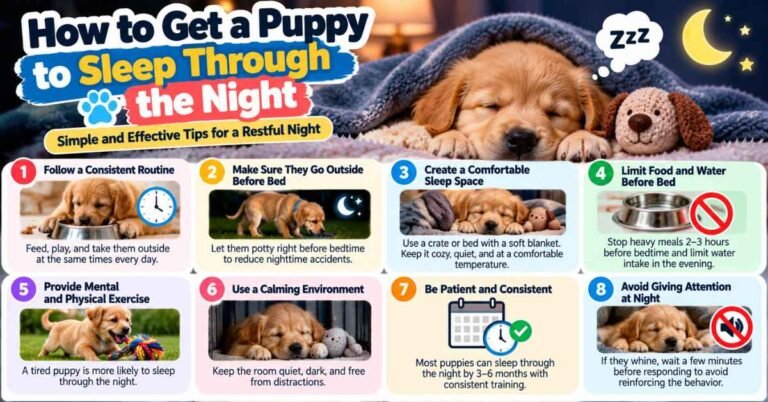
A safe sleep space can make a major difference. Many puppies rest well in a crate, playpen, or small puppy-proofed area near the family.
Make the area comfortable, but avoid items that could be chewed and swallowed. Follow your veterinarian’s advice about bedding, especially if your puppy destroys fabric.
Helpful sleep habits include:
• Keep the sleep area quiet and dim.
• Use a regular nap schedule.
• Offer a safe chew before rest.
• Avoid rough play right before bedtime.
• Take the puppy outside before a longer sleep.
• Keep nighttime trips calm and brief.
• Praise quiet behavior.
A young puppy may cry at night because it needs to potty, feels alone, or is adjusting to a new home. Respond calmly. Take the puppy outside if needed, then return it to bed without turning the trip into playtime.
Do not punish crying or accidents. Fear can make sleep and house training harder. Gentle support teaches the puppy that nighttime is safe and predictable.
I have found that many families get better results when they place the crate close to the bed at first. The puppy can hear and smell them, while the family can notice signs that a potty break is needed. The crate can be moved slowly later.
Puppy Sleep and Exercise
Exercise is important, but too much activity can cause problems. Puppies have growing bones and joints, so forced running, long hikes, and repeated jumping may place too much stress on their bodies.
Choose gentle activities that match the puppy’s age and breed. Short walks, free play on safe ground, sniffing games, and brief training sessions are good options.
Mental exercise can tire a puppy as much as physical activity. Learning “sit,” finding treats, or exploring a safe new room uses the brain without putting heavy strain on the joints.
A good activity pattern is:
• Short play
• A potty break
• A small meal or chew
• Quiet time
• A nap
If a puppy becomes clumsy, frantic, or unusually mouthy, stop the activity and offer rest. Knowing how much do puppies sleep helps you avoid the trap of trying to exercise away every unwanted behavior.

When Too Much Puppy Sleep May Be a Concern
Sleep is normal, but a sudden change can signal a health problem. The key question is not only how much do puppies sleep, but also how they behave when awake.
Contact a veterinarian if your puppy is difficult to wake, weak, unable to stand, or uninterested in food and water. You should also seek advice for repeated vomiting, diarrhea, trouble breathing, pale gums, seizures, or signs of pain.
A puppy that sleeps more after a vaccine, busy day, or stressful event may simply need recovery time. Still, the puppy should wake and respond normally when gently roused.
Keep a simple record if you are worried. Note eating, drinking, bathroom habits, energy, sleep times, and other symptoms. Clear details help a veterinarian judge whether the change is normal.
Never rely on sleep alone to diagnose illness. Puppies can worsen quickly, so trust your concerns and call a veterinary clinic when something feels wrong.
Common Puppy Sleep Mistakes to Avoid
Many sleep problems come from small routine errors rather than a serious issue. Fixing these errors can make life easier for both the puppy and the family.
Avoid these common mistakes:
• Expecting a young puppy to sleep through the night immediately
• Skipping naps because the puppy seems energetic
• Using intense exercise to stop biting
• Allowing late-night rough play
• Punishing whining or accidents
• Giving unsafe bedding or chew items
• Changing the sleep schedule every day
• Comparing one puppy with another
Puppies develop at different rates. A small breed, large breed, rescue puppy, and recently rehomed puppy may all have different sleep patterns.
The goal is not to make a puppy sleep on command all day. The goal is to provide enough rest, safe activity, regular meals, and calm guidance.
Frequently Asked Questions About How Much Do Puppies Sleep
How much do puppies sleep at night?
Many puppies sleep for several hours at night but still need one or more potty breaks. Young puppies may not sleep through the night until they are older and have better bladder control.
Is it normal for a puppy to sleep all day?
Puppies often sleep for most of the day, especially during their first months. It is usually normal if the puppy wakes easily, eats well, plays at times, and acts alert when awake.
How much do puppies sleep at 8 weeks?
An 8-week-old puppy commonly sleeps about 18 to 20 hours in 24 hours. Short periods of play and training should be followed by quiet rest.
Should I wake my puppy from a nap?
Usually, you can let a healthy puppy sleep. Wake the puppy if it has missed a meal, needs a scheduled medicine, has gone unusually long without a potty break, or your veterinarian has given different instructions.
Why does my puppy sleep more after playing?
Play uses physical and mental energy, so extra sleep afterward is expected. A longer nap is especially common after training, a new experience, travel, or a busy day.
Can an overtired puppy have trouble sleeping?
Yes. An overtired puppy may become restless, bite, bark, or run around instead of settling. A quiet room, a potty break, and a regular nap routine can help.
When should I call a vet about puppy sleep?
Call a veterinarian if your puppy is hard to wake, weak, not eating, having breathing trouble, or showing other signs of illness. A sudden and lasting change in sleep is also worth discussing with a veterinary professional.
Conclusion
Most puppies sleep 18 to 20 hours a day, although age, breed, health, activity, and personality can change that number. Regular naps support growth, learning, emotional control, and healthy development.
Create a calm sleep space, use short play sessions, keep a steady routine, and watch how your puppy acts when awake. If sleep changes suddenly or your puppy seems ill, contact a veterinarian promptly.
With patience and good habits, you can help your puppy rest well and grow with confidence. Share your puppy’s sleep routine in the comments, or explore more trusted puppy-care resources for the next stage of training.