When Do Puppies Start Teething: Timeline And Tips
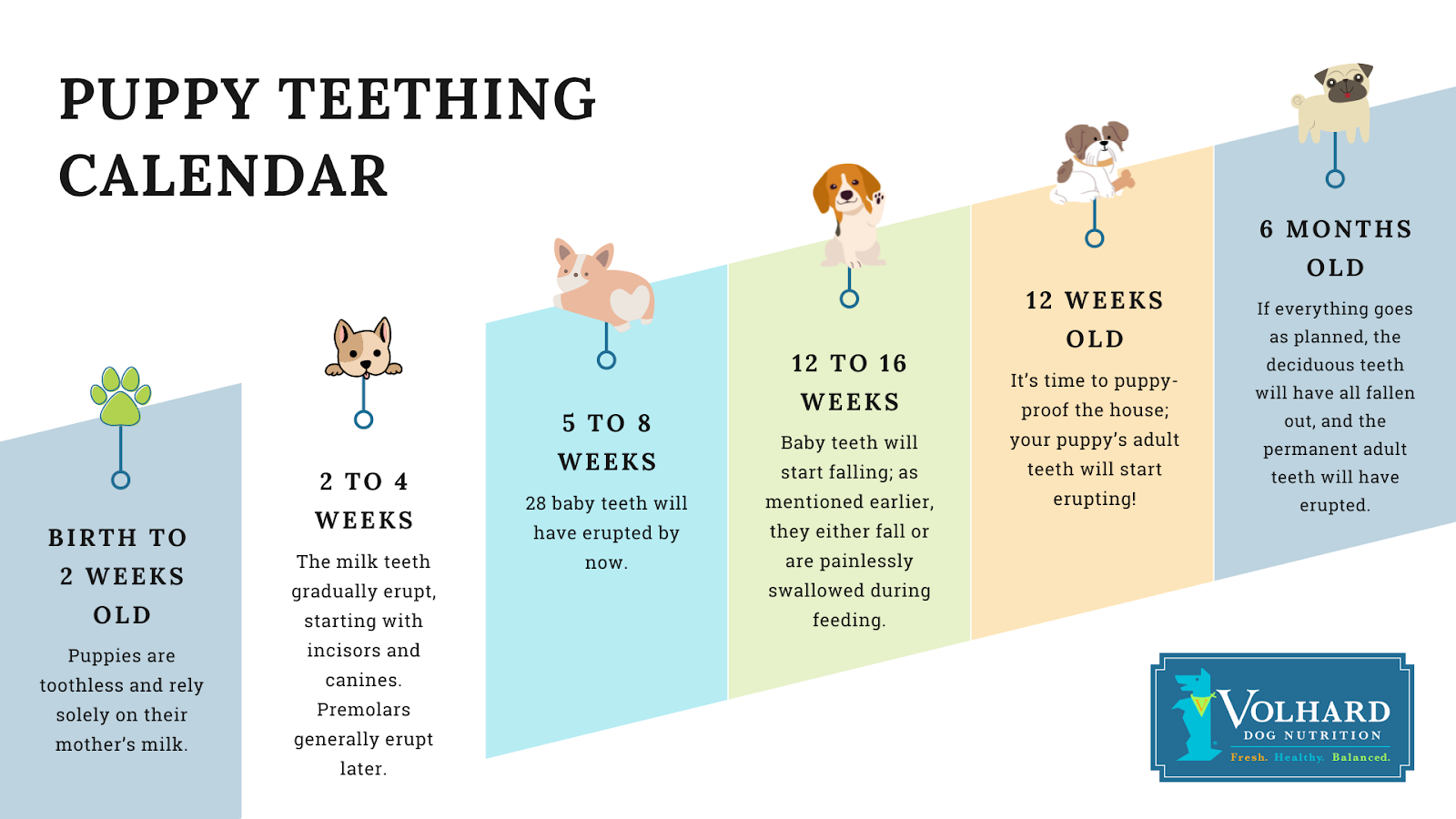
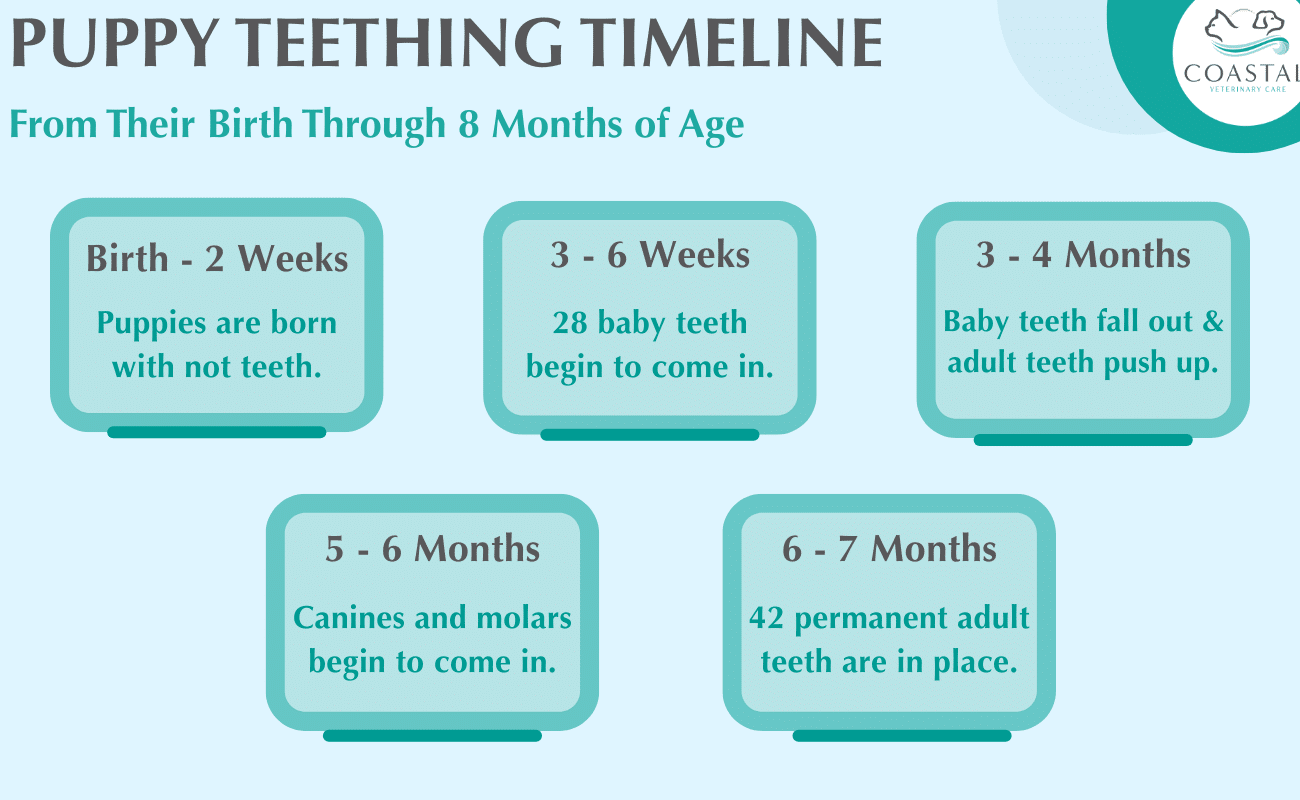
Puppies usually start teething at 3 to 4 weeks old and finish getting adult teeth by about 6 months.
Understanding when do puppies start teething helps you prepare for chewing, sore gums, extra drool, and changes in eating habits. Most puppies move through teething in a steady pattern, but each dog is a little different. This guide explains what to expect, how to ease discomfort, and when a vet should check your puppy’s mouth.
When Do Puppies Start Teething?
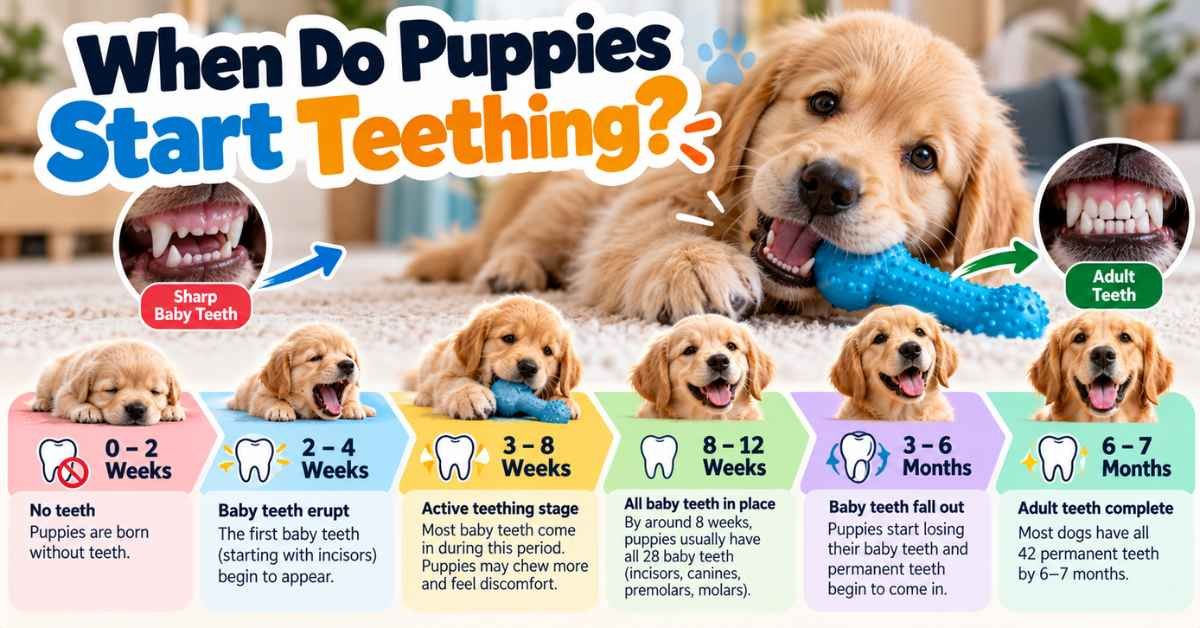
Most puppies start teething at about 3 to 4 weeks of age. At this stage, their small, sharp baby teeth begin to push through the gums. These teeth help puppies learn to chew before they are fully weaned.
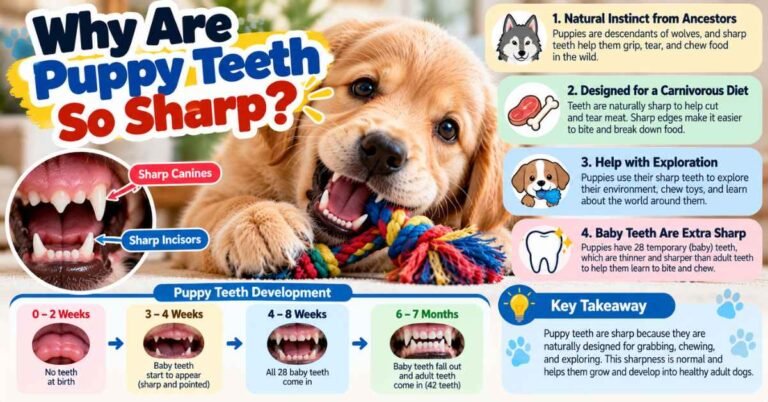
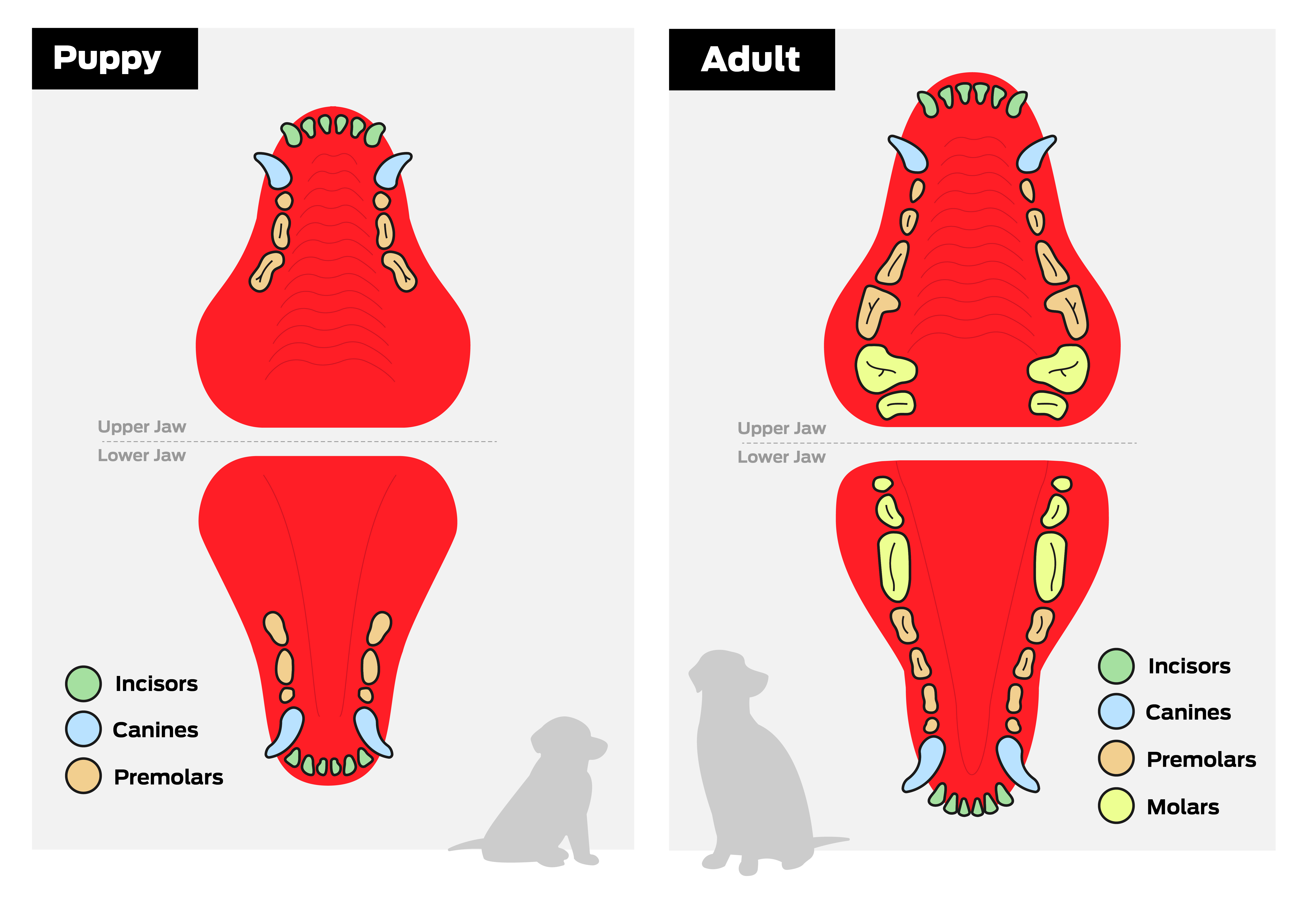
By 6 to 8 weeks, most puppies have all 28 baby teeth. These are also called deciduous teeth. They are thinner and sharper than adult teeth, which is why puppy bites can feel surprisingly strong.
A second teething stage begins when adult teeth start replacing the baby teeth. This usually happens at about 12 to 16 weeks. By around 6 months, most puppies have their full set of 42 adult teeth.
So, when do puppies start teething? The answer depends on which stage you mean:
• First baby teeth: Around 3 to 4 weeks
• Full set of baby teeth: Around 6 to 8 weeks
• Adult teeth begin to appear: Around 12 to 16 weeks
• Most adult teeth are present: Around 6 months
Small breeds may develop adult teeth a little more slowly than large breeds. Breed, genetics, nutrition, and general health can all affect the exact timing.
Puppy Teething Timeline
A clear timeline makes puppy teething easier to understand. Think of it as a slow change from soft baby gums to a strong adult bite.
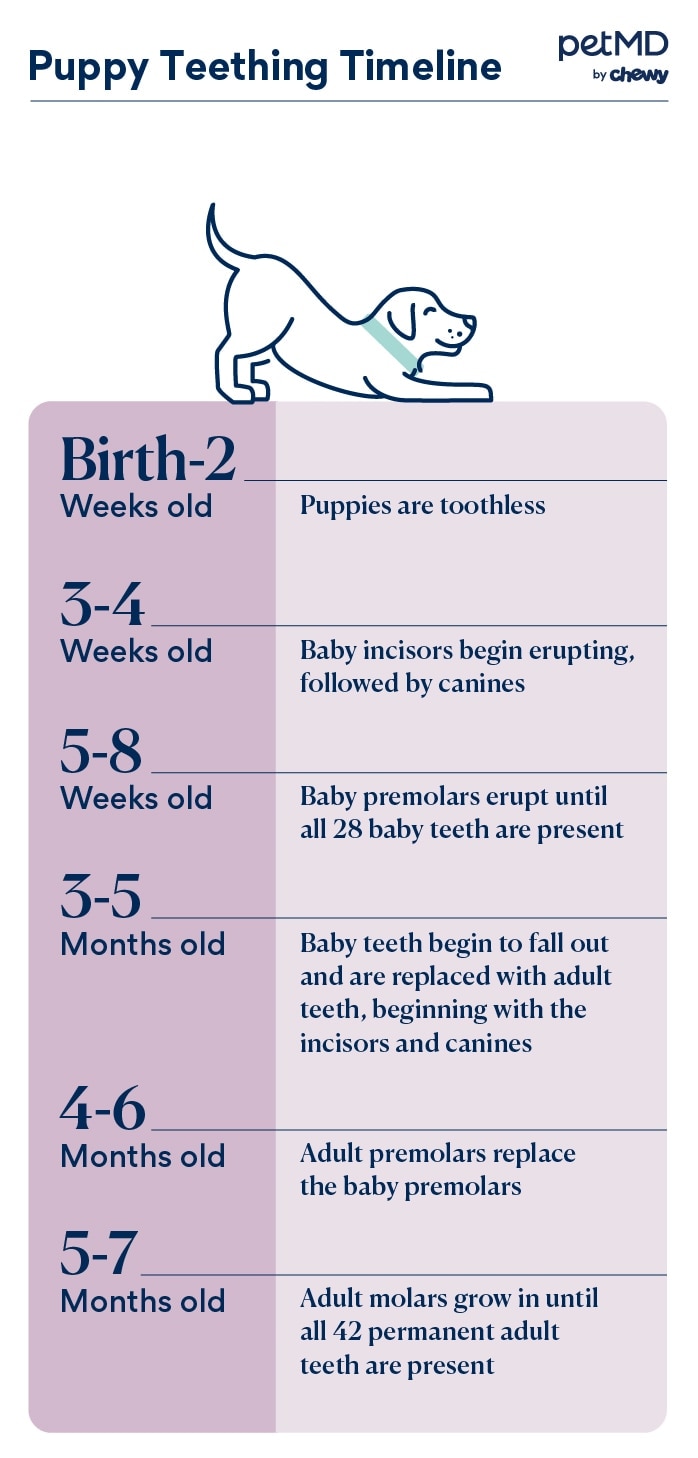
Birth to 3 weeks
Newborn puppies do not have visible teeth. Their gums are soft, which helps them nurse safely from their mother.
At this age, puppies spend most of their time sleeping, nursing, and staying close to their littermates. They do not need chew toys yet.
3 to 8 weeks
This is when the first baby teeth usually appear. The incisors often come in first, followed by the canine teeth and premolars.
Puppies may start chewing on toys, bedding, or their littermates. This behavior is normal. It helps them explore their world and learn how much pressure to use with their mouths.
12 to 16 weeks
The adult teeth begin to push out the baby teeth. This stage can cause tender gums, more chewing, and mild changes in appetite.
You may find tiny teeth on the floor, in a toy, or in your puppy’s food bowl. However, many puppies swallow their baby teeth. This is usually harmless.
4 to 6 months
Teething is often most active during this period. Adult incisors, canine teeth, premolars, and molars continue to develop.
Your puppy may chew more often because chewing creates pressure that can soothe sore gums. This is also the stage when good chew habits matter most.
Around 6 months
Most puppies have their adult teeth by 6 months. Their mouth should have 42 permanent teeth, although some dogs develop teeth at a slightly different pace.
If baby teeth remain beside adult teeth, your veterinarian should examine them. Retained teeth can crowd the mouth and trap food near the gums.

Signs Your Puppy Is Teething
When do puppies start teething signs become easier to spot once you know what to look for. Some puppies show clear symptoms, while others seem almost unaffected.
Common signs include:
• Chewing more often
• Drooling more than usual
• Red or swollen gums
• Small spots of blood on toys
• Whining while eating
• Picking up food and dropping it
• Eating more slowly
• Mild bad breath
• Finding loose baby teeth
• Increased interest in cold items
A small amount of blood on a toy can be normal. Baby teeth can loosen as adult teeth move into place. The blood should be light and brief, not heavy or ongoing.
Teething can also affect behavior. A normally calm puppy may seem restless or irritable. This does not mean your puppy is becoming aggressive. Pain and frustration can make any young dog less patient.
In my experience helping owners understand puppy behavior, the biggest mistake is treating all chewing as bad behavior. Chewing is a normal need during teething. The goal is to guide it toward safe items rather than trying to stop it completely.
Why Puppies Chew During Teething
Chewing gives puppies several types of relief. Pressure from a toy can massage the gums and provide comfort as teeth move through the tissue.
Puppies also use their mouths to learn. A young dog explores texture, shape, taste, and resistance through chewing. This is similar to how human babies explore objects with their mouths.
Teething is not the only reason puppies chew. Other causes include:
• Boredom
• Stress
• Excess energy
• Seeking attention
• Normal play
• Lack of exercise
• Curiosity
• Separation discomfort
This distinction matters. A puppy that chews furniture all day may need more than a teething toy. Short training sessions, gentle exercise, food puzzles, and naps can help meet the puppy’s other needs.
Avoid punishing your puppy for normal chewing. Punishment may create fear without teaching the correct behavior. Instead, calmly replace the unsafe object with an approved chew.

How to Help a Teething Puppy
Once you know when do puppies start teething, you can prepare a simple comfort plan. The best approach combines safe chewing, good supervision, and basic dental care.
Offer safe chew toys
Choose toys made for puppies. They should be firm enough to last but soft enough to bend slightly under pressure.
Good choices may include:
• Puppy rubber toys
• Soft teething rings
• Flexible nylon toys made for puppies
• Food-stuffed rubber toys
• Chilled puppy-safe toys
Always follow the product size guide. A toy that is too small can become a choking risk.
Try cool, not frozen, comfort
A cool toy may soothe sore gums. Some owners chill a damp, clean washcloth for short periods, but the puppy must be supervised.
Avoid toys that become rock-hard when frozen. Very hard objects can damage developing teeth. A simple rule is that a chew should not be harder than what you would safely press against your own knee.
Redirect unwanted chewing
Keep shoes, cords, children’s toys, and small objects out of reach. When your puppy grabs something unsafe, trade it for a chew toy.
Use a calm voice and praise the puppy when they choose the right item. Repetition teaches the lesson better than scolding.
Keep a toy rotation
Too many toys at once can make them seem boring. Offer a few safe options and rotate them every day or two.
A toy that feels new again can hold your puppy’s attention longer. This may save your furniture and make training easier.
Protect rest time
Overtired puppies often chew more. Young puppies need many hours of sleep each day, sometimes 18 to 20 hours, depending on age and activity.
If your puppy becomes wild, nippy, or unable to settle, a quiet nap may help more than another play session.
Foods and Chews to Avoid
Not every chew marketed for dogs is safe for a teething puppy. Some products are too hard, too small, or likely to break into sharp pieces.
Avoid giving puppies:
• Cooked bones
• Antlers
• Hooves
• Very hard nylon bones
• Ice cubes
• Small rawhide pieces
• Toys with loose parts
• Sticks that splinter
• Human snacks containing xylitol
Rawhide safety can vary by product, size, and chewing style. Some puppies swallow large pieces, which can cause choking or digestive blockage. Ask your veterinarian before using it.
Treats should also be small and suitable for puppies. Too many rich treats may cause diarrhea or add excess calories. Fresh water should always be available.
No chew is completely risk-free. Supervise your puppy, inspect toys often, and throw away anything that is cracked, torn, or small enough to swallow.

Puppy Teething and Dental Care
When do puppies start teething is an important question, but what you do after teething matters just as much. Early dental habits can make future tooth brushing easier.
Start by touching your puppy’s lips and gums for a few seconds. Reward calm behavior with praise or a tiny treat. Slowly introduce a soft puppy toothbrush or finger brush.
Use toothpaste made for dogs. Human toothpaste may contain ingredients that are unsafe for pets, including xylitol in some formulas.
A simple routine can look like this:
- Let your puppy sniff the toothbrush.
- Touch the outer teeth gently.
- Brush for a few seconds.
- Praise your puppy.
- Gradually increase the time.
Do not force the mouth open or wrestle with your puppy. A calm, slow introduction builds trust.
Veterinary dental groups recommend regular brushing because it helps reduce plaque. Chews and dental diets may support oral care, but they should not replace brushing or professional veterinary checks.
Retained Baby Teeth in Puppies
Sometimes a baby tooth stays in place after the adult tooth begins to grow. This is called a retained deciduous tooth.
The upper canine teeth are often affected, but retained teeth can occur in other areas. The adult tooth may grow beside the baby tooth instead of replacing it directly.
This can cause:
• Crowding
• Trapped food
• Gum irritation
• Bad breath
• Abnormal bite development
• Higher risk of periodontal disease
Small and toy breeds may be more likely to have retained teeth, although any puppy can develop them.
Do not pull a loose puppy tooth at home. Baby tooth roots can be long, and forceful removal may damage the adult tooth. A veterinarian can decide whether monitoring or removal is needed, sometimes while the puppy is under anesthesia for another planned procedure.
When to Call a Veterinarian
Mild soreness is common during puppy teething. Severe pain is not something to ignore.
Contact your veterinarian if you notice:
• Heavy or ongoing bleeding
• Facial swelling
• Pus around a tooth
• Strong or worsening bad breath
• Refusal to eat or drink
• Repeated vomiting or diarrhea
• A broken adult tooth
• Trouble closing the mouth
• A tooth stuck in the lip
• Extreme tiredness or fever
A puppy may eat less for a short time because the gums are tender. However, refusing food for a full day, especially in a very young puppy, needs prompt veterinary advice.
Your veterinarian can check for infection, tooth damage, an abnormal bite, or retained baby teeth. Early care often prevents a small mouth problem from becoming a larger one.
Common Mistakes During Puppy Teething
Many teething problems come from good intentions. Owners want to help, but some popular tips can create new risks.
One mistake is giving a chew that is too hard. Hard objects may seem durable, yet they can crack a puppy’s developing teeth.
Another mistake is allowing free access to every toy. Toys with strings, squeakers, plastic pieces, or fabric can become dangerous when chewed apart.
A third mistake is ignoring the mouth until adult teeth arrive. Early handling makes future brushing, grooming, and veterinary exams less stressful.
From the patterns I have seen in puppy-care guidance, the most useful lesson is consistency. Give the puppy the same calm response each time: remove the unsafe item, offer a safe chew, and praise the better choice.
Frequently Asked Questions About When Do Puppies Start Teething
When do puppies start teething for the first time?
Puppies usually start growing their first baby teeth at about 3 to 4 weeks old. Most have all 28 baby teeth by 6 to 8 weeks.
When do puppies lose their baby teeth?
Puppies commonly begin losing baby teeth at about 12 to 16 weeks. Most baby teeth are replaced by adult teeth by around 6 months.
Is it normal for a puppy’s gums to bleed during teething?
A small amount of blood on a chew toy can be normal when baby teeth loosen. Heavy, repeated, or unexplained bleeding needs a veterinary check.
What can I give my puppy for teething pain?
Offer puppy-safe rubber toys or flexible teething toys that are cool, not dangerously hard. Never give human pain medicine unless a veterinarian specifically prescribes it.
Why is my puppy chewing everything?
Teething can make chewing soothing, but boredom, stress, play, and excess energy can also cause it. Redirect the puppy to safe toys and provide rest, exercise, and short training sessions.
Should I pull out my puppy’s loose tooth?
Do not pull a loose tooth yourself. The root may still be attached, and home removal can injure the adult tooth or gum.
Do all puppies finish teething at 6 months?
Most puppies have their adult teeth by 6 months, but timing can vary. Small breeds may take longer, and a veterinarian should check any baby teeth that remain beside adult teeth.
Conclusion
Puppies usually start teething with baby teeth at 3 to 4 weeks, then begin losing those teeth around 12 to 16 weeks. Most have their adult teeth by about 6 months, although breed and individual growth can change the schedule.
Safe chew toys, supervision, cool comfort, early tooth care, and regular veterinary checks can make this stage much easier. Watch for severe pain, swelling, heavy bleeding, or retained teeth, and contact your veterinarian when something seems unusual.
Start today by choosing two safe puppy chews, removing risky items from your puppy’s reach, and gently introducing tooth brushing. Your puppy’s future smile will benefit from these small habits.