How To Get A Puppy To Sleep Through The Night: Easy Tips
A steady bedtime routine, safe crate, late potty break, and calm comfort help puppies sleep.
Learning how to get a puppy to sleep through the night takes patience, timing, and a plan that fits your puppy’s age. Most young puppies wake because they need to pee, feel alone, or have too much energy left. With the right routine, gentle training, and realistic expectations, you can help your puppy rest while protecting your own sleep.
How to get a puppy to sleep through the night: Start with realistic goals
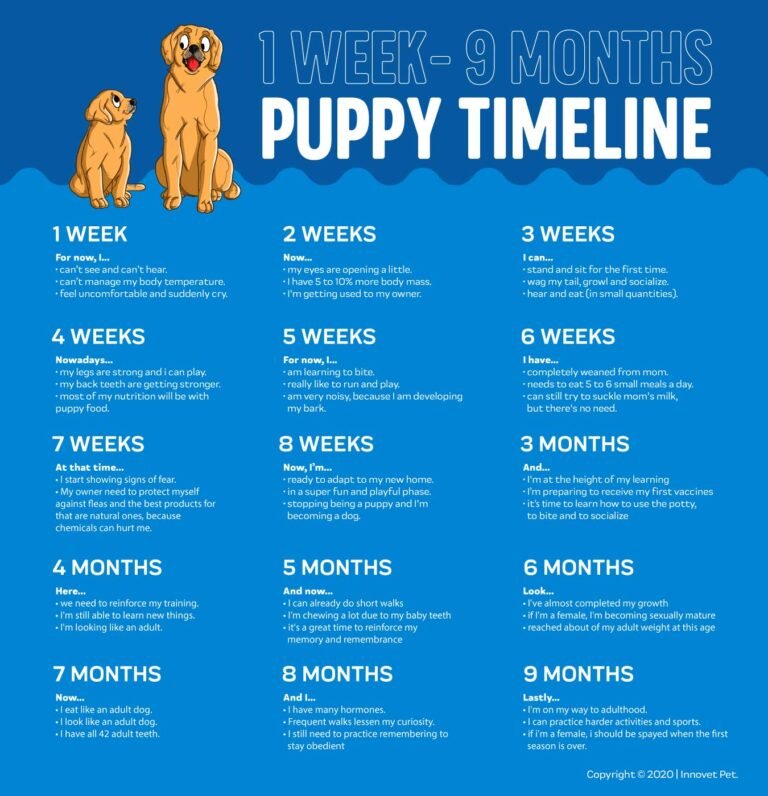
A puppy may not sleep for eight straight hours right away. Very young puppies have small bladders, and many need one or more bathroom trips during the night.
A useful rule is that a puppy can often hold urine for about one hour for each month of age, with a practical limit of around six to eight hours for many dogs. This is only a guide. Breed, health, size, stress, and daily water intake all affect bladder control.
For example, an 8-week-old puppy may need to go out every two to three hours. Expecting that puppy to stay dry all night is like asking a toddler to do the same. A better goal is steady progress.
Your first goals should be:
- Help your puppy feel safe at bedtime.
- Build a predictable sleep routine.
- Reduce nighttime accidents.
- Teach your puppy that nighttime is quiet time.
- Slowly extend sleep as bladder control improves.
Many puppies begin sleeping for longer stretches between 12 and 16 weeks. Some take longer, especially after a move, illness, or major change at home.
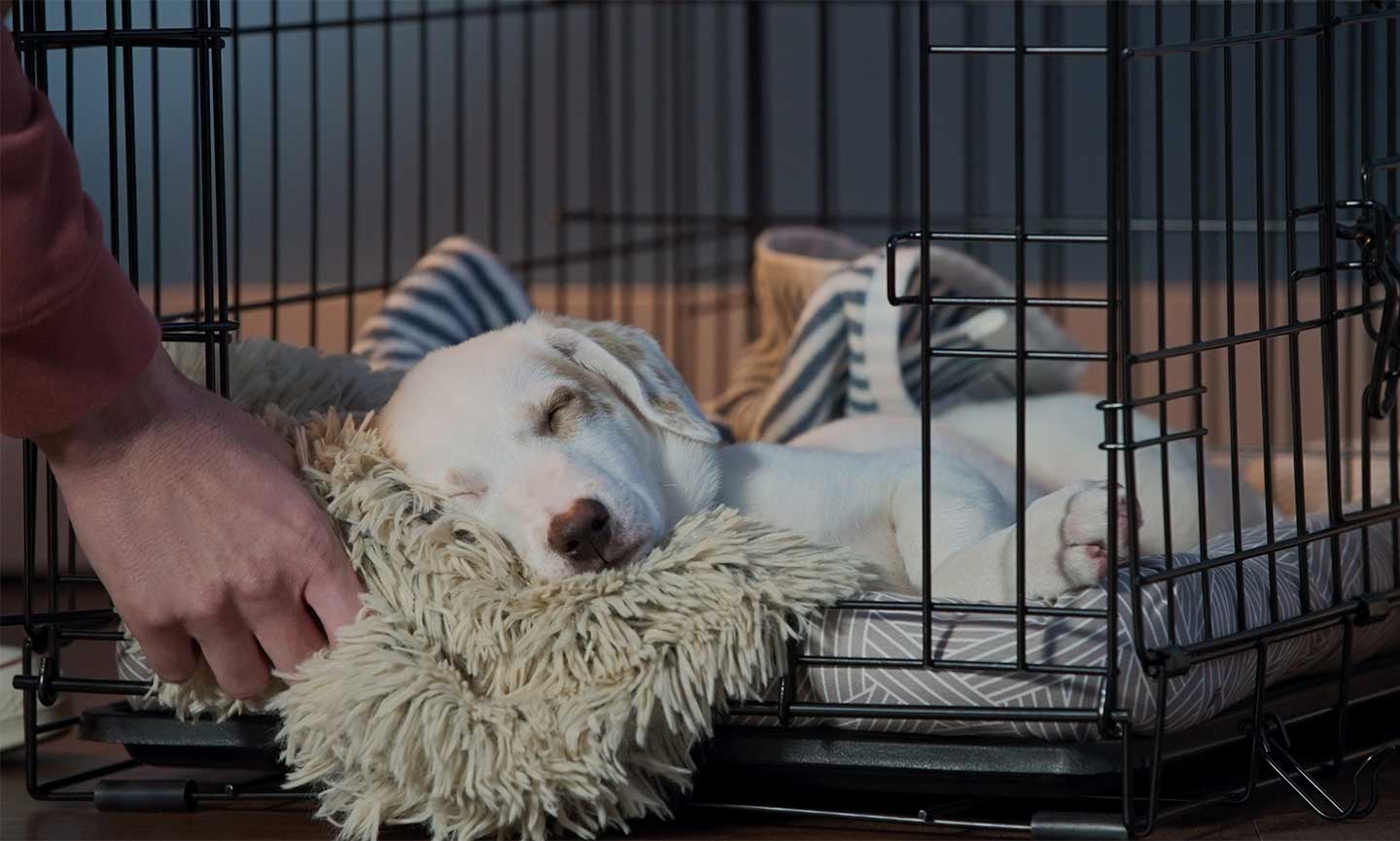
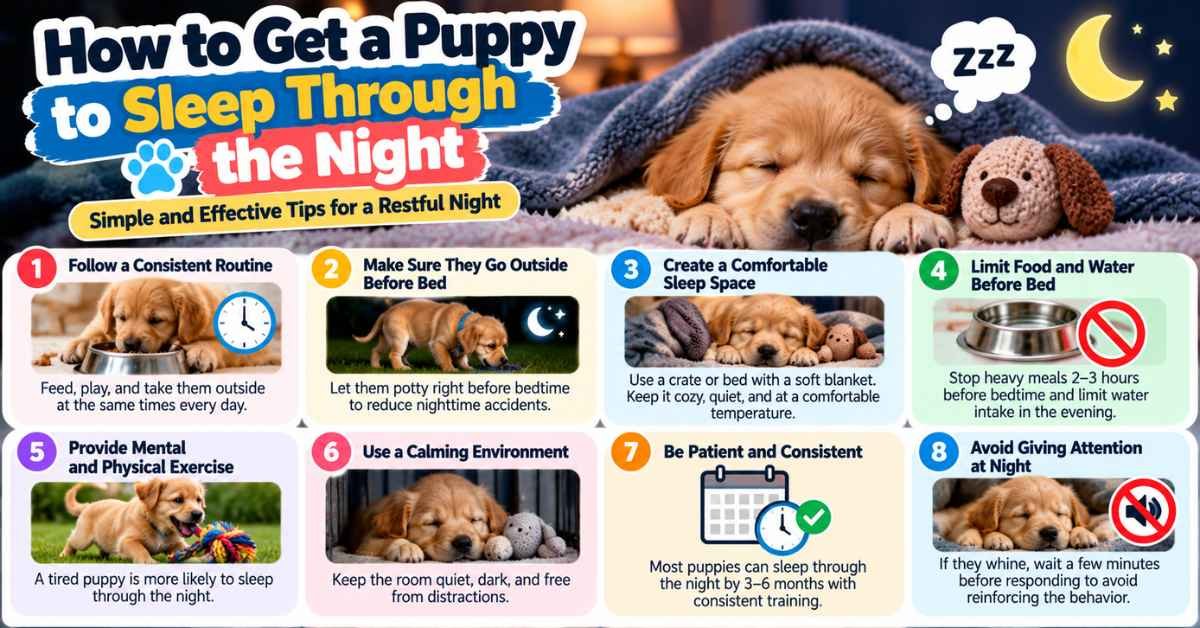
Create a calming bedtime routine
A regular routine tells your puppy’s body and brain that sleep is coming. Try to follow the same order each night. Dogs learn patterns quickly, and even simple steps can become strong sleep cues.
Start winding down about 30 to 60 minutes before bed. Avoid rough play, loud games, and exciting visitors during this time. A calm home helps your puppy shift from alert mode to rest mode.
A simple routine may look like this:
- Offer a quiet play session or short training lesson.
- Give your puppy dinner early enough for digestion.
- Take your puppy outside for a bathroom break.
- Offer gentle petting or a safe chew.
- Take your puppy out again right before bed.
- Place your puppy in the crate or sleeping area with a calm phrase.
A short sniff walk can also help. Sniffing uses mental energy without overstimulating your puppy. Keep the walk safe and brief if your puppy is not fully vaccinated. Ask your veterinarian about safe outdoor areas and local disease risks.
Do not use bedtime as a punishment. If the crate only appears when fun ends, your puppy may resist it. Make the whole process feel as normal as brushing your teeth.

Make the crate or sleep area feel safe
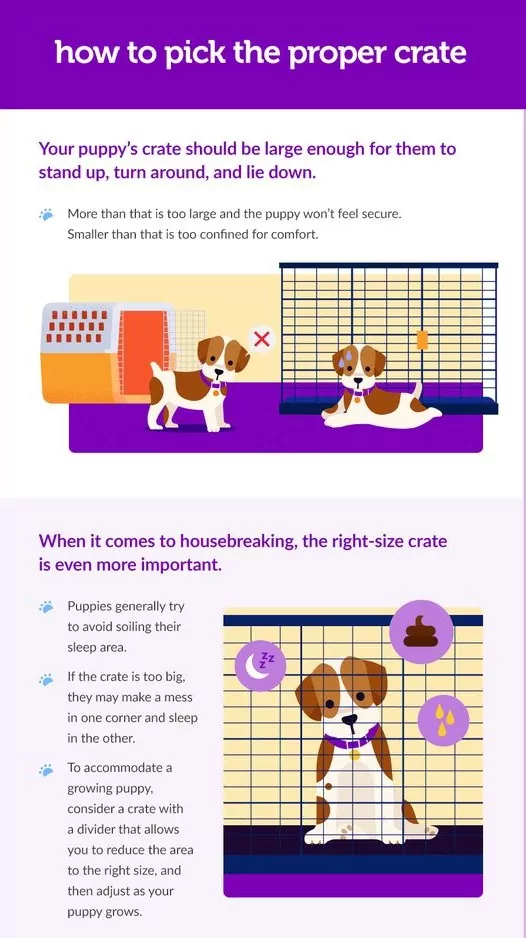
A crate can support sleep training when it is introduced with care. It should feel like a bedroom, not a jail. Choose a crate that lets your puppy stand, turn, lie down, and stretch comfortably.
Put the crate near your bed at first. Your presence can reduce crying because your puppy can hear and smell you. It also lets you notice signs that your puppy needs a bathroom break.
Add simple comforts:
- A washable bed or thin blanket.
- A safe puppy toy approved for unsupervised use.
- A familiar-smelling cloth, if your puppy does not chew fabric.
- Soft background noise, such as a fan.
Check the room temperature. Puppies can become too hot or cold more easily than adult dogs. Keep the crate away from drafts, heaters, cords, and household traffic.
Never force a puppy into the crate or use it for long periods beyond the puppy’s ability. The American Veterinary Medical Association and many veterinary behavior experts support positive crate training, but they also stress that confinement must be humane and age appropriate.
Feed treats near the crate first. Then place treats just inside. Later, feed meals inside with the door open. Close the door for a few seconds, then slowly increase the time while your puppy stays relaxed.
This gradual process is one of the most useful parts of learning how to get a puppy to sleep through the night. Rushing it can create fear that lasts far longer than a few difficult evenings.

Meet your puppy’s daytime needs
A puppy that sleeps all day may treat nighttime as playtime. A puppy that lacks rest may become overtired and wild. The goal is balanced activity, not exhaustion.
Young puppies need many naps. Puppies may sleep 18 to 20 hours in a 24-hour period, depending on age and individual needs. Protect nap time during the day, but include short periods of play, training, feeding, and safe exploration.
Use a simple daily plan:
- Give meals at regular times.
- Take your puppy out after waking, eating, drinking, and playing.
- Practice short training sessions.
- Offer age-safe play with breaks.
- Provide quiet naps in a crate or puppy-safe area.
- Avoid intense activity right before bed.
Mental work often tires puppies more safely than nonstop running. Practice “sit,” name recognition, touch, or settling on a mat for two to five minutes at a time.
Do not keep a puppy awake all day to force nighttime sleep. This often causes an overtired puppy to bite, bark, zoom around, or struggle to settle. Think of sleep like fuel: your puppy needs enough activity to use some energy, but still needs regular rest.

Handle nighttime crying and potty breaks
Nighttime crying can mean several things. Your puppy may need to pee, feel lonely, feel uncomfortable, or want attention. Your response should be calm and brief while still meeting real needs.
Take your puppy outside if the crying sounds urgent or it has been long enough since the last bathroom break. Keep the lights low. Do not play, offer a meal, or start a long cuddle session. Quietly say a cue such as “go potty,” wait a few minutes, then return to bed.
If your puppy does not eliminate, go back inside without making it exciting. This teaches that nighttime trips are useful but boring.
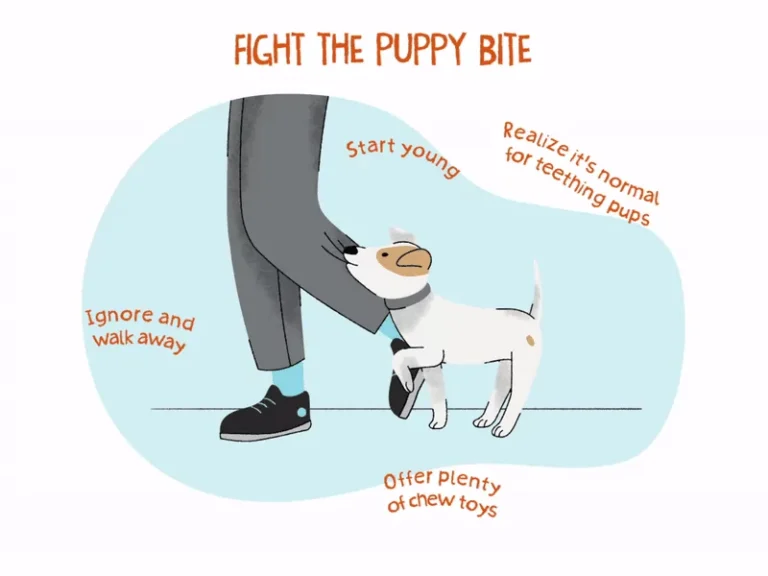
If you know your puppy is safe, comfortable, and has recently gone potty, pause for a short time before responding to mild whining. Some puppies settle within a few minutes. However, prolonged panic is not a training success. Screaming, heavy panting, frantic scratching, drooling, or attempts to escape mean you should make the plan easier.
Never shout, bang on the crate, or punish accidents. Fear may stop a sound for a moment, but it does not teach bladder control or confidence.
A scheduled bathroom break can help. For instance, if your puppy wakes at 2 a.m. each night, set an alarm for 1:45 a.m. Take the puppy out before the crying starts. After several dry nights, move the alarm later by 15 to 30 minutes.

Use food, water, and exercise wisely
Meal timing can affect nighttime rest. Feed the final meal several hours before bedtime when possible, based on your veterinarian’s advice and your puppy’s feeding schedule. A small bedtime snack may be appropriate for some puppies, but do not change meals without considering age, breed, and health.
Do not severely restrict water. Puppies need regular access to clean water, especially after play, in warm weather, or during illness. You can ask your veterinarian whether removing the water bowl shortly before bedtime is suitable for your puppy. Water restriction can be unsafe for some dogs.
Take your puppy out:
- As soon as the puppy wakes.
- After meals.
- After drinking a large amount.
- After play or training.
- Before entering the crate.
- First thing in the morning.
Clean accidents with an enzymatic cleaner. Regular soap may leave scent traces that tell your puppy, “This is a bathroom.” Avoid punishment, since accidents are usually a timing or supervision problem.
If your puppy suddenly starts urinating often, strains to pee, drinks far more than usual, has diarrhea, or cannot settle, contact a veterinarian. A urinary infection, parasites, pain, or another health issue can affect sleep.

Common mistakes that delay overnight sleep
Many caring owners make the same mistakes because they want to help. The good news is that most can be fixed quickly.
One common mistake is changing the rules each night. If your puppy sleeps in your bed on Monday, cries in a crate on Tuesday, and plays at 3 a.m. on Wednesday, the puppy receives mixed signals. Choose a plan that works for your household and follow it consistently.
Another mistake is giving attention for every small sound. Some puppies learn that whining brings treats, play, or a place on the couch. Meet genuine needs, but keep nighttime responses calm and boring.
Avoid these problems:
- Putting a puppy in the crate without daytime practice.
- Expecting a young puppy to last all night without a potty break.
- Using the crate as punishment.
- Allowing rough play just before bed.
- Ignoring signs of illness or distress.
- Giving unsafe toys, bones, or chews overnight.
- Making sudden changes after one difficult night.
In my experience, the biggest improvement often comes from moving the crate beside the bed and adding a clear final potty trip. A past mistake many puppy owners make, myself included in early training work, is trying to solve crying with more stimulation. That usually creates a puppy who is awake, excited, and ready for a midnight party.
Progress rarely moves in a straight line. Teething, growth, travel, visitors, storms, and schedule changes can cause setbacks. Return to the last routine that worked, then build forward again.

Know when to ask a veterinarian or trainer
Most sleep problems improve with routine and maturity. Still, some signs need professional help.
Contact your veterinarian if your puppy has repeated accidents despite frequent bathroom trips, cries in pain, vomits, has diarrhea, coughs, struggles to breathe, or seems unusually tired. Puppies can become dehydrated or ill quickly, so do not wait when symptoms seem serious.
Ask for help from a certified professional dog trainer or veterinary behaviorist if your puppy shows intense fear, panic, aggression, or escape behavior. A qualified professional can adjust the plan without using harsh punishment.
A health check is especially important when a puppy suddenly stops sleeping well after doing fine. Changes in sleep may point to pain, stomach upset, urinary problems, or stress.
The advice in this guide is general. It cannot replace an examination or a plan made for your puppy’s breed, age, health, and home environment.

How long does it take to get a puppy to sleep through the night?
Some puppies improve within a few nights, while others need several weeks. Age, bladder control, past experience, health, and training consistency all affect the timeline.
Should I ignore my puppy crying at night?
Do not ignore possible bathroom needs, illness, or panic. Take your puppy out calmly when needed, then keep the visit quiet and brief.
Should a puppy sleep in a crate at night?
A crate can help with safety, house training, and routine when introduced positively. It is not required for every family, but any sleep area should be secure, comfortable, and suited to the puppy’s age.
How often should a puppy go out at night?
Very young puppies may need a bathroom break every two to three hours. Follow your puppy’s signals and your veterinarian’s advice, then slowly lengthen the time as your puppy stays dry.
Why is my puppy suddenly waking up at night?
Sudden waking may come from teething, stress, a schedule change, too much daytime sleep, or a medical issue. Check basic needs first, and call your veterinarian if the change continues or other symptoms appear.
Can I let my puppy sleep in my bed?
You can, if it is safe and fits your long-term plan. A young puppy may fall from the bed, have an accident, or develop a habit you later want to change, so consider these limits before starting.
Conclusion
The best way to learn how to get a puppy to sleep through the night is to combine realistic expectations with a steady routine. Give your puppy daytime activity, regular naps, positive crate practice, a late potty trip, and calm responses after lights out.
Remember that nighttime sleep develops with age. A few difficult nights do not mean you are failing, and a setback does not erase progress. Start tonight with one simple plan, track bathroom breaks and sleep times, and adjust gently as your puppy grows.
For more practical puppy training guidance, explore trusted veterinary resources, work with a qualified trainer when needed, and share your own sleep-training lessons in the comments.