When Do Puppies Get Their Adult Teeth: Teething Guide
Most puppies get their adult teeth between 12 and 24 weeks, with a full set by six to seven months.
Understanding when do puppies get their adult teeth helps you spot normal teething, ease sore gums, and catch dental problems early. Most puppies follow a similar pattern, but breed, size, and genetics can shift the timing. This guide explains the full process, what to expect at home, and when a veterinarian should check your puppy’s mouth.
When Do Puppies Get Their Adult Teeth?
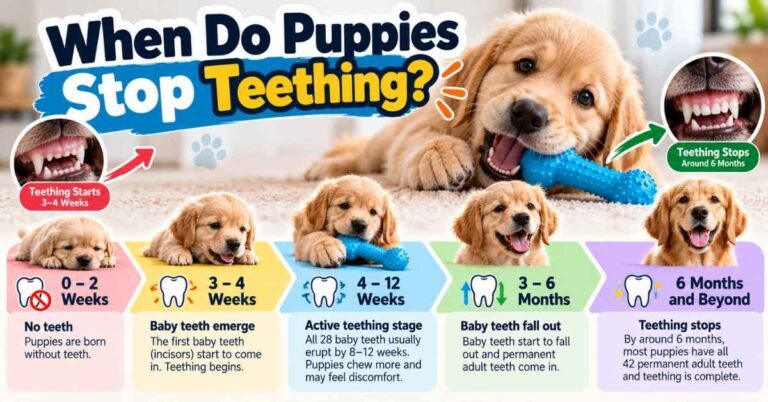
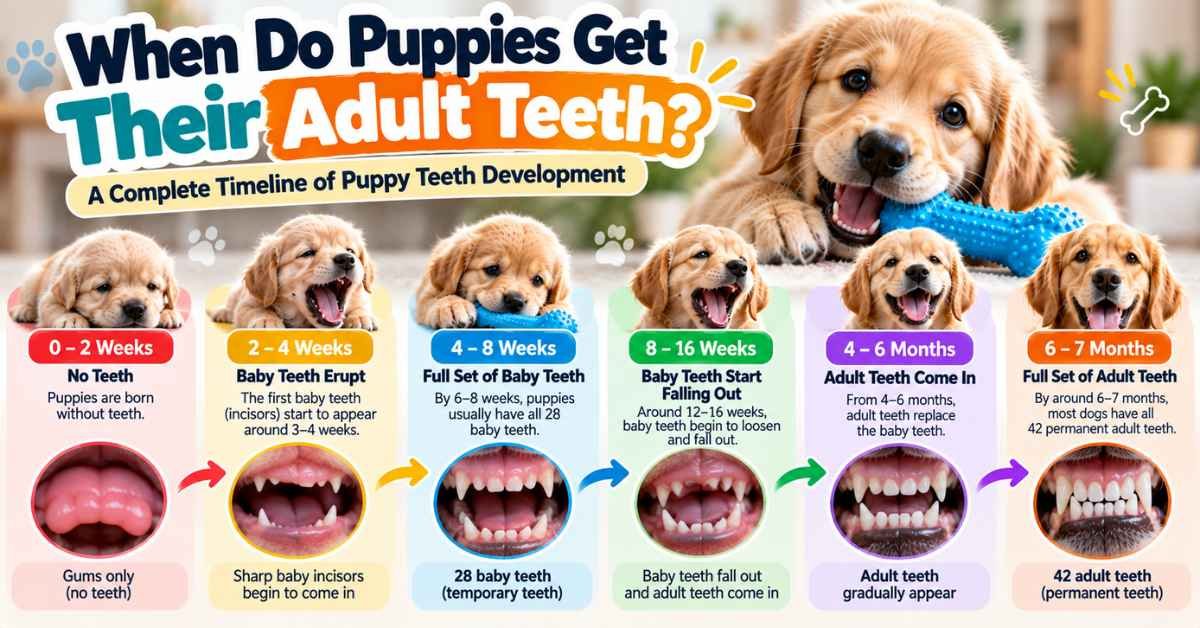
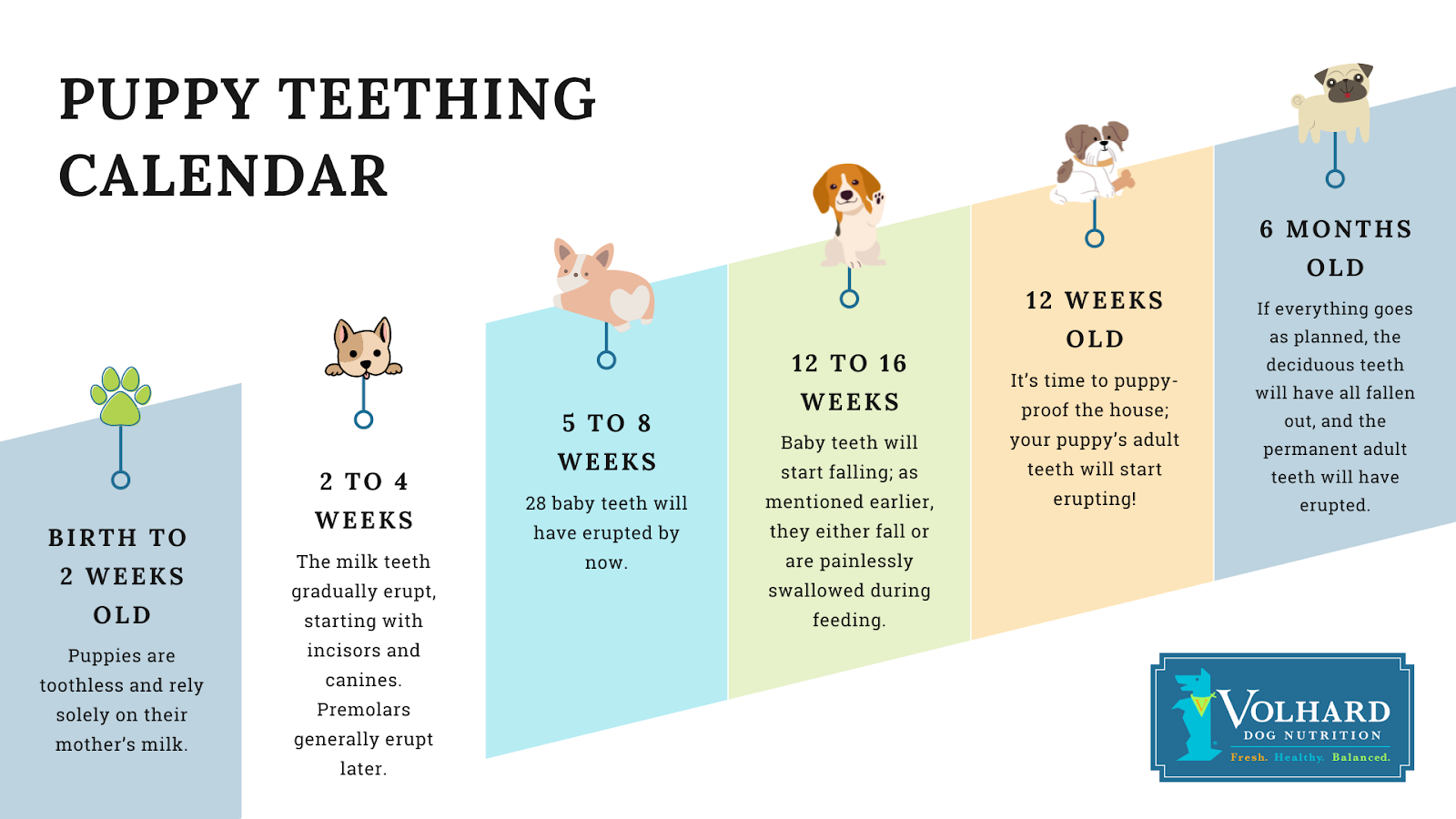
Most puppies start losing their baby teeth at about 12 to 16 weeks of age. Their adult teeth then grow through the gums over the next several months. By around six to seven months, most puppies have their complete adult set.
When do puppies get their adult teeth? The answer can vary a little. Some puppies finish early, while others need more time, especially small breeds. A healthy puppy may also swallow loose teeth, so you may not find every tooth on the floor.
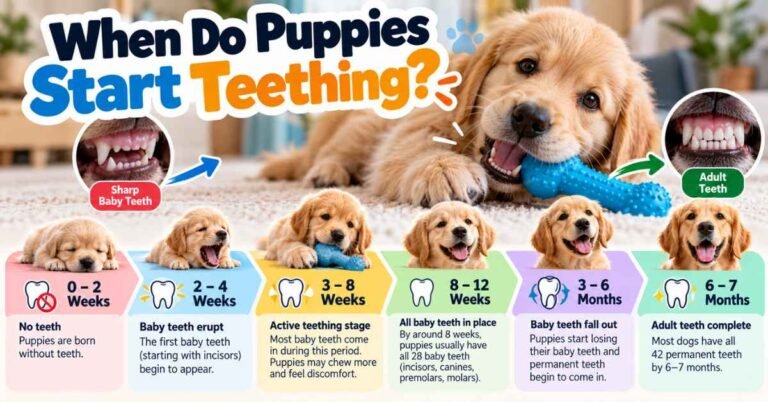
Puppies are born without visible teeth. Their baby teeth, also called deciduous teeth, usually begin to appear at about two to three weeks of age. By six to eight weeks, most puppies have all 28 baby teeth.
Adult dogs usually have 42 teeth. These teeth are larger, stronger, and shaped for cutting, tearing, and grinding food. The change from 28 baby teeth to 42 adult teeth is a key stage in your puppy’s growth.
Typical puppy tooth timeline
• Two to three weeks: Baby teeth begin to appear.
• Six to eight weeks: Most puppies have all 28 baby teeth.
• Twelve to 16 weeks: Baby incisors often start to fall out.
• Sixteen to 20 weeks: Canines and premolars commonly begin changing.
• Twenty to 24 weeks: Many adult teeth are now visible.
• Six to seven months: Most puppies have their full set of 42 adult teeth.
These ages are useful guides, not strict rules. When do puppies get their adult teeth depends partly on the puppy’s breed and body size. Your veterinarian can tell you whether your puppy’s dental development looks normal during routine visits.
Puppy Teeth and Adult Teeth: What Changes?
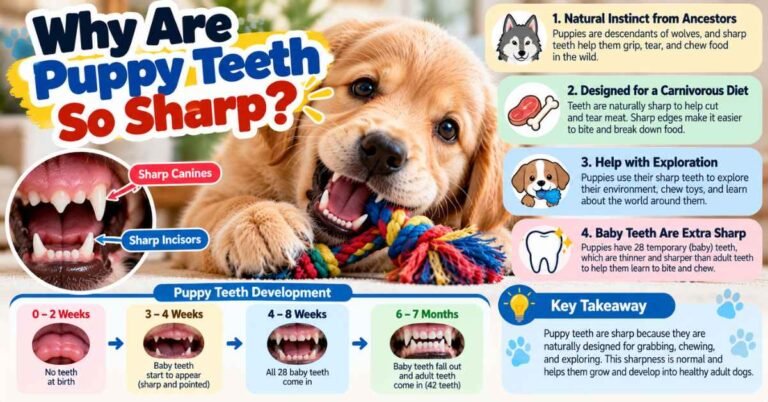
Baby teeth are small and sharp. They help puppies learn to eat solid food and explore the world. They also prepare the jaw for the larger adult teeth that will replace them.
Adult teeth have deeper roots and stronger crowns. They must last for many years, so good dental care should begin while your puppy is still teething.
The main types of adult teeth include:
• Incisors: The small front teeth used for nibbling and grooming.
• Canines: The long, pointed teeth used for gripping and tearing.
• Premolars: The teeth behind the canines that help cut food.
• Molars: The back teeth used for crushing and grinding.
When do puppies get their adult teeth? The front teeth often change first. The larger canine teeth and back teeth usually follow. This is why your puppy may have a mix of small baby teeth and larger adult teeth for several weeks.
A puppy’s jaw is like a small construction site during this phase. Baby teeth must fall out, adult teeth must move into place, and the gums must heal around them. Mild soreness is common, but severe pain is not normal.
Signs Your Puppy Is Teething
Teething can make puppies act differently. Some signs are mild and pass within a few days. Others may continue as new teeth break through the gums.
Common signs include:
• Chewing more often
• Drooling
• Red or swollen gums
• Small spots of blood on toys
• Pawing at the mouth
• Mild fussiness
• Eating more slowly
• Finding a loose tooth
• Leaving small teeth around the home
Many puppies chew because pressure on the gums feels soothing. This is normal, but it can become a problem if your puppy chews wires, furniture, shoes, or unsafe objects.
When do puppies get their adult teeth? The timing often matches a rise in chewing. This does not mean your puppy is being stubborn. Chewing is a natural response to gum pressure and helps the puppy explore texture.
A little blood on a chew toy can be normal. Call your veterinarian if bleeding is heavy, continues, or appears without chewing. Bad breath, facial swelling, pus, or a puppy that refuses food also needs professional attention.
What to Give a Teething Puppy
The right chew item can protect your puppy’s mouth and your furniture. Choose products made for puppies. They should have some flexibility and should not be so hard that they could damage a tooth.
Helpful choices may include:
• Puppy specific rubber toys
• Soft rubber treat toys
• Chilled, damp washcloths used only with supervision
• Flexible dental chews approved for puppies
• Food puzzle toys made for young dogs
Check every chew item often. Throw it away if it breaks, becomes sharp, or loses pieces. Always watch your puppy with a new toy, even if the product is labeled safe.
Avoid very hard items such as antlers, hooves, bones, rocks, and hard nylon toys. Veterinary dental experts warn that hard objects can fracture puppy or adult teeth. Cooked bones can also splinter and cause choking or internal injury.
Do not freeze extremely hard objects for your puppy. A cold toy may soothe gums, but a rock hard frozen item can put too much force on a developing tooth.
When do puppies get their adult teeth? During this stage, safe chewing matters because the gums are sensitive and the adult teeth are still settling into position. Gentle options work better than the hardest chew you can find.

How to Care for Puppy Teeth
Dental care should start before all the adult teeth arrive. Begin by touching your puppy’s lips and gums for a few seconds. Give praise or a small reward so mouth care feels calm and positive.
Once your puppy accepts this, introduce a soft pet toothbrush or finger brush. Use toothpaste made for dogs. Human toothpaste may contain ingredients that are unsafe for pets, including xylitol.
A simple training plan works well:
-
Touch the outside of your puppy’s lips.
-
Lift the lip for one second.
-
Rub a clean finger along the gums.
-
Let your puppy taste dog toothpaste.
-
Introduce a soft toothbrush.
-
Brush a few teeth at a time.
-
End with praise and a reward.
Do not force the mouth open or chase your puppy with a toothbrush. Short, calm sessions build trust. Even 30 seconds of gentle brushing is a good start.
Daily brushing is the best home method for reducing plaque. Dental treats, water additives, and special diets may help, but they should not replace brushing or veterinary dental care.
When do puppies get their adult teeth? It is a good time to create a dental routine because your puppy is already learning daily habits. A calm routine now can make future tooth brushing much easier.
Retained Baby Teeth in Puppies
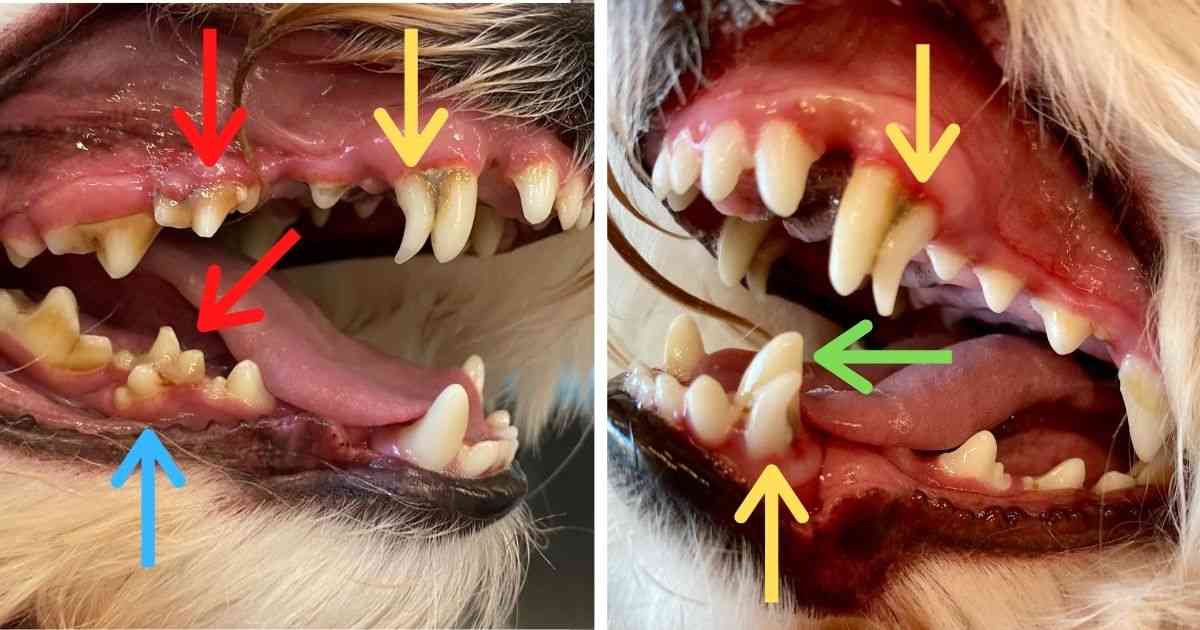
Sometimes a baby tooth does not fall out when the adult tooth grows in. This is called a retained deciduous tooth. It most often affects the canine teeth, especially in small and toy breeds.
You may see two teeth in one place. The baby tooth may sit beside the adult tooth instead of making room for it. This crowding can trap food and bacteria between the teeth.
Signs of a retained baby tooth include:
• Two canine teeth close together
• A baby tooth still present after six months
• Crooked adult teeth
• Food stuck around the gums
• Red or swollen gum tissue
• Bad breath
A retained tooth should be checked by a veterinarian. Do not pull it at home. Baby teeth have roots, and pulling one without proper care can damage the developing adult tooth.
A veterinarian may recommend removal, often while the puppy is under anesthesia for another planned procedure. The timing depends on the puppy’s age, tooth position, and risk of dental disease.
When do puppies get their adult teeth? If an adult tooth is visible while the matching baby tooth remains, do not wait too long for it to resolve on its own. Early advice can help prevent crowding and an abnormal bite.
How Breed and Size Affect Teething
Small dogs often have less room in their mouths. Because of this, they may have a higher risk of crowded teeth and retained baby teeth. Toy breeds may also finish teething at a slightly different pace than large breeds.
Large breed puppies can also have dental problems. Their adult teeth may grow quickly, and their chewing habits can lead to broken teeth if they use very hard objects.
When do puppies get their adult teeth? Breed can affect the exact timing, but most puppies still follow the general 12 to 24 week pattern. The condition and position of the teeth matter more than one exact birthday.
Genetics can also influence jaw shape. Breeds with short or crowded jaws may need closer dental checks. Your veterinarian can examine the bite and look for teeth that press into the gums or the roof of the mouth.
Common Mistakes During Puppy Teething
Many well meaning owners make simple mistakes during this stage. Avoiding them can keep your puppy safer and make teething less stressful.
Giving very hard chews
Hard bones and antlers may seem durable, but they can crack teeth. A broken tooth can expose sensitive inner tissue and may require treatment.
Punishing normal chewing
Puppies do not understand that a chair leg is wrong but a toy is right unless you teach them. Calmly move them to an approved chew toy, then praise the better choice.
Pulling out loose teeth
A loose tooth usually falls out naturally. Pulling it may injure the gum or break the root.
Ignoring a double tooth
Two teeth in one space can lead to crowding. Ask your veterinarian to check the area rather than assuming it will fix itself.
Using human toothpaste
Some human toothpaste contains xylitol or other ingredients that can harm dogs. Choose toothpaste made for pets.
Waiting for bad breath to appear
Bad breath is not simply a normal part of growing up. It can signal trapped food, gum inflammation, or another dental issue.
In real homes, the most useful approach is often simple: offer safe choices, keep dangerous items out of reach, and check the mouth once or twice each week. This small habit can reveal problems before they become painful.
When to Call the Veterinarian
A veterinarian should examine your puppy’s mouth during regular wellness visits. These checks help track adult tooth growth, jaw alignment, and gum health.
Contact your veterinary clinic if you notice:
• A tooth that seems stuck
• Two teeth growing in the same position
• Heavy or ongoing bleeding
• Swelling around the mouth or face
• Pus near a tooth
• Strong or sudden bad breath
• Trouble eating
• Crying while chewing
• A broken or discolored tooth
• A tooth pressing into the roof of the mouth
When do puppies get their adult teeth? Most puppies manage this process without major trouble, but dental problems can develop quickly. Prompt care can reduce pain and help protect the adult teeth for life.
Your veterinarian may use a careful oral exam and, if needed, dental X-rays. X-rays can show tooth roots and adult teeth that have not fully erupted. This is especially helpful when a baby tooth is retained or a tooth seems missing.
A Simple Teething Care Plan
You can support your puppy with a clear daily plan.
-
Check the mouth briefly each week.
-
Offer safe, flexible puppy chews.
-
Remove hard, sharp, or broken chew items.
-
Brush with pet toothpaste as your puppy allows.
-
Redirect chewing instead of using punishment.
-
Track any missing, loose, or crowded teeth.
-
Ask about dental health at each puppy visit.
Keep a photo of your puppy’s teeth if you notice a change. This can help your veterinarian compare the mouth over time. It is also useful if you are unsure whether a tooth is new, loose, or retained.
When do puppies get their adult teeth? A written record can help you notice whether the process is moving forward. Still, do not compare your puppy too closely with another dog. Normal variation is common.
Frequently Asked Questions
When do puppies get their adult teeth?
Most puppies begin getting adult teeth between 12 and 16 weeks of age. They usually have all 42 adult teeth by six to seven months.
Do puppies lose all of their baby teeth?
Puppies usually lose all 28 baby teeth as their 42 adult teeth grow in. Some baby teeth are swallowed, so owners may not find every tooth.
Is it normal for a puppy’s gums to bleed?
A small amount of blood on a toy can happen when a baby tooth falls out. Heavy bleeding, repeated bleeding, swelling, or pain needs a veterinary check.
Why does my puppy have two canine teeth?
Two canine teeth may mean a baby tooth has been retained beside the adult tooth. Your veterinarian should check it because crowding can trap food and affect the adult tooth’s position.
What can I give my puppy for teething pain?
Offer a soft rubber puppy toy or a cool, damp cloth under supervision. Avoid hard bones, antlers, hooves, and other objects that can break teeth.
Should I pull out my puppy’s loose tooth?
No. A loose baby tooth usually falls out on its own, and pulling it can damage the gum or root. Ask your veterinarian if the tooth remains after the adult tooth appears.
When should a puppy start brushing its teeth?
You can begin handling the mouth gently as soon as your puppy comes home. Introduce dog toothpaste and a soft brush slowly, then aim for regular brushing as the puppy grows.
Conclusion
When do puppies get their adult teeth? Most start between 12 and 16 weeks and finish by about six to seven months. Mild chewing, drooling, and sore gums are common, but severe pain, swelling, bad breath, or retained baby teeth need veterinary advice.
Give your puppy safe chew toys, avoid hard objects, and begin gentle tooth care early. Check the mouth often and bring questions to routine puppy visits. With steady care, you can help your puppy grow a healthy adult smile. Share this guide with another puppy owner or explore more trusted pet health resources for the next stage of your dog’s growth.