When Do Puppies Stop Growing: Age Guide
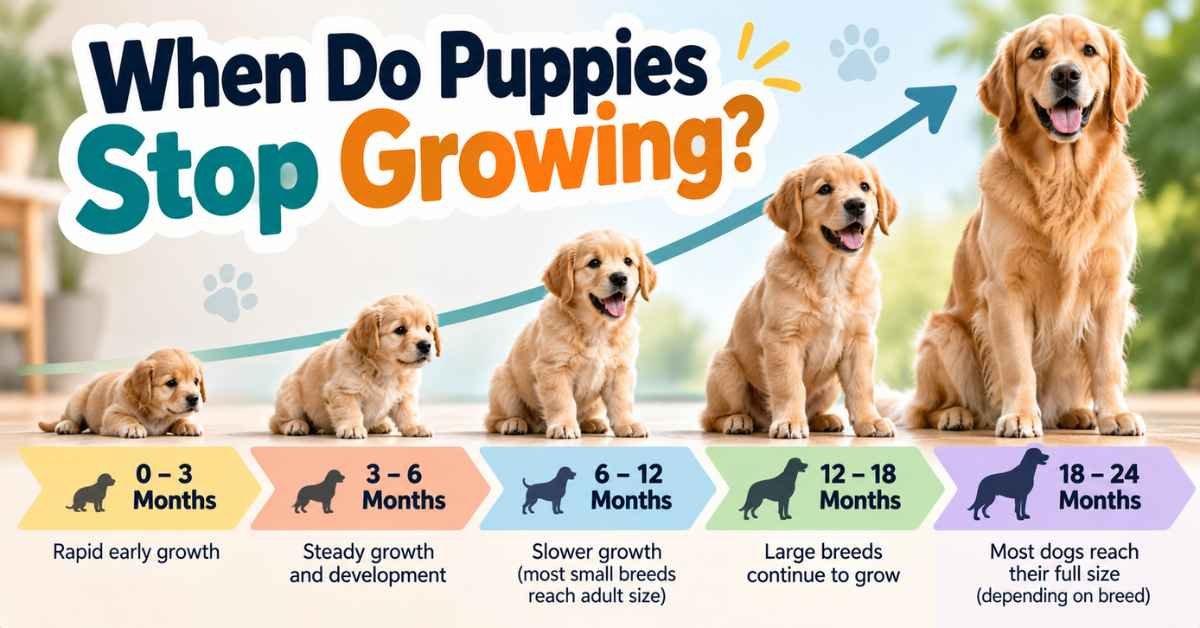
Most puppies stop growing between 6 and 18 months, depending mainly on their breed, size, and genetics.
Knowing when do puppies stop growing helps you plan meals, exercise, training, and veterinary care. Small dogs may reach adult size before their first birthday, while giant breeds can keep growing for two years or more. This guide explains the signs, growth stages, feeding needs, and health factors that shape a puppy’s final size.
When do puppies stop growing?
Most puppies stop growing in height between 6 and 18 months. However, their bones, muscles, and body shape may continue to develop after they reach their full height.
A useful guide is:
• Toy and small breeds often stop growing at 6 to 10 months.
• Medium breeds often stop growing at 10 to 12 months.
• Large breeds often stop growing at 12 to 18 months.
• Giant breeds may stop growing at 18 to 24 months.
These are general ranges, not strict rules. A mixed-breed puppy may mature at a different rate from either parent. Genetics, nutrition, illness, exercise, and spaying or neutering can also affect the pace of growth.
When asking when do puppies stop growing, it helps to separate height from overall maturity. A dog may stop getting taller but still gain muscle and fill out across the chest for several months.
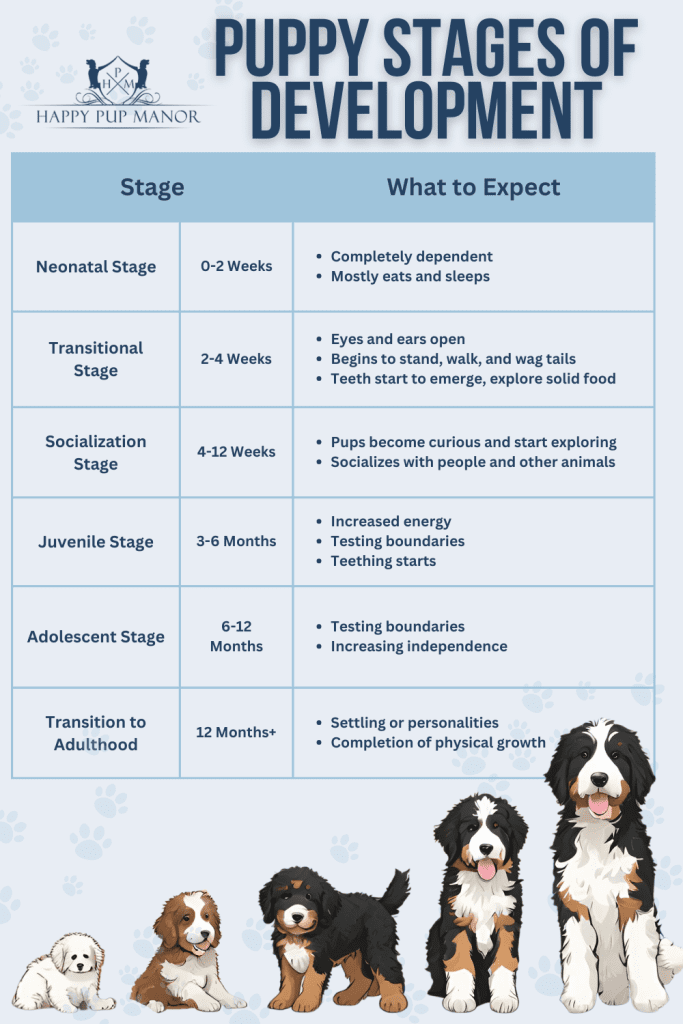
Puppy growth stages by age
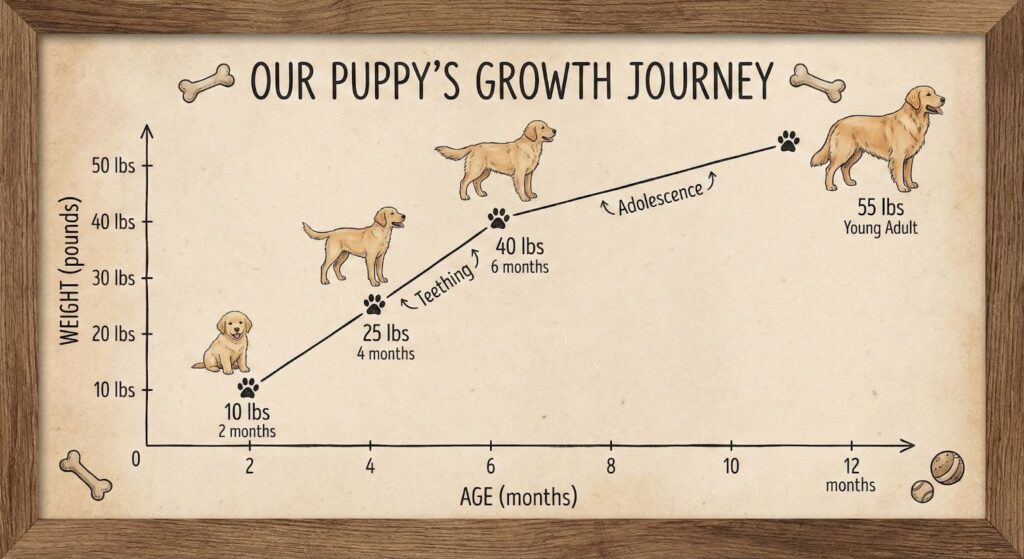
Puppies grow in clear stages, though the exact timing varies by breed. Their first year is like a fast construction project. The skeleton forms quickly, then the muscles and adult body shape catch up.
Birth to 8 weeks
Newborn puppies depend fully on their mother. They gain weight quickly and develop basic movement, hearing, vision, and social skills.
By 8 weeks, many puppies are ready for adoption. They still have a great deal of physical and mental growth ahead.
8 weeks to 4 months
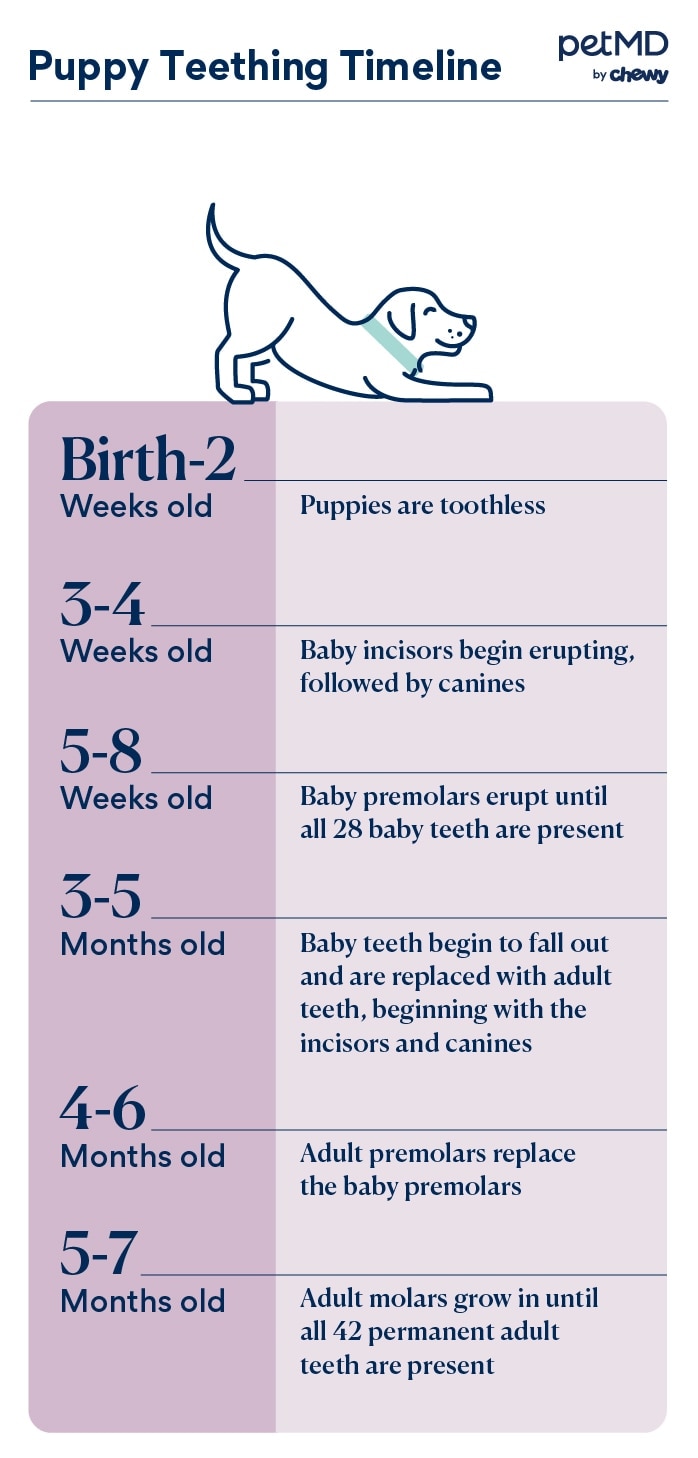
This is often a fast growth period. Puppies may gain weight each week, lose their baby teeth, and start growing their adult teeth.
Their legs may look too long for their bodies. Their paws may seem large, too. These changes are normal and do not always predict their final size.
4 to 6 months
Many puppies begin to look less round and more athletic during this stage. Large breeds may still seem awkward because their bones grow faster than their muscles can develop.
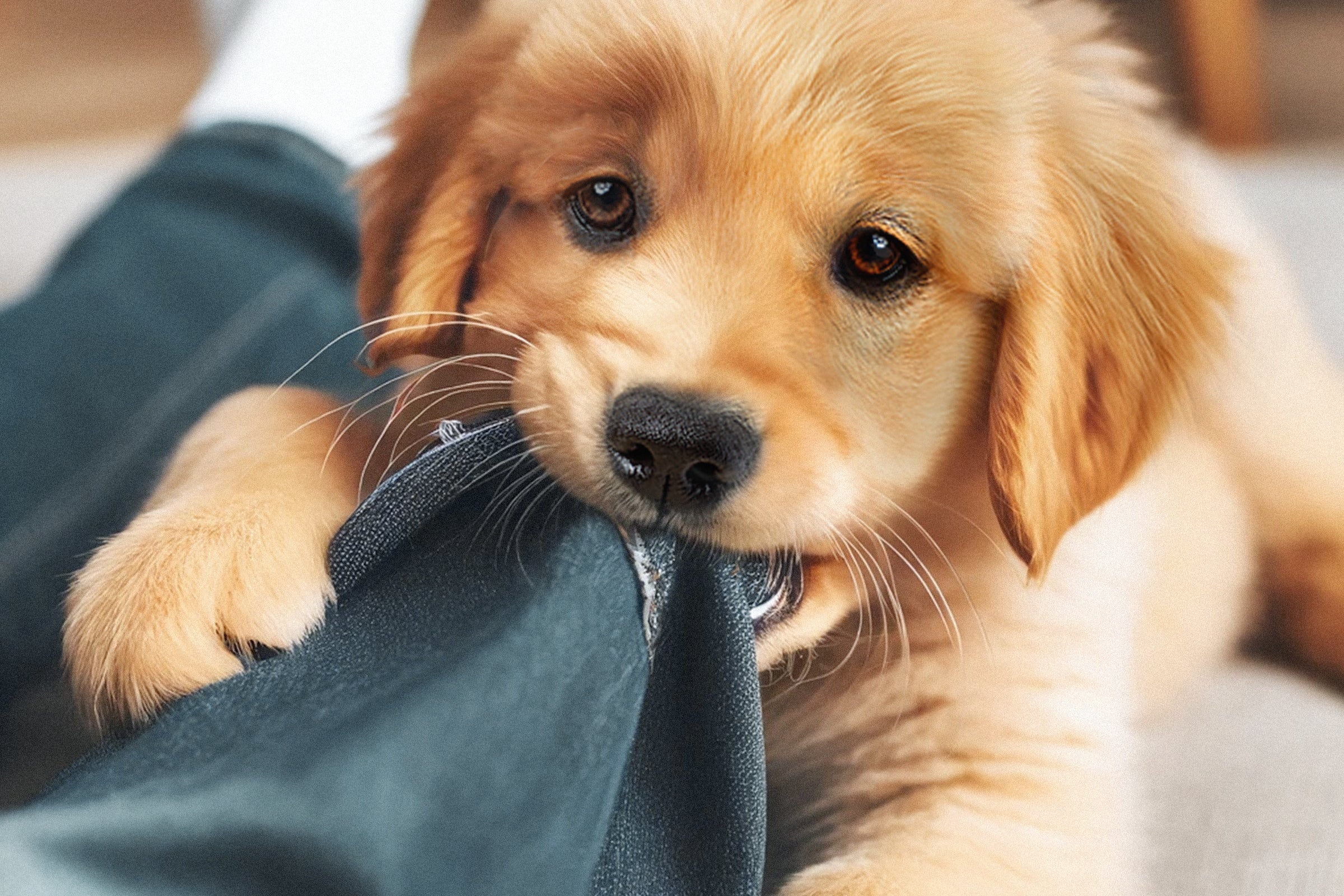
Teething, chewing, and bursts of energy are common. Safe play and short walks can support fitness without placing too much stress on developing joints.
6 to 12 months
Small dogs may reach adult size during this period. Medium and large dogs may continue growing in height, weight, and muscle.
Some puppies also reach sexual maturity during this stage. Sexual maturity does not always mean the dog has finished physical growth.
12 to 24 months
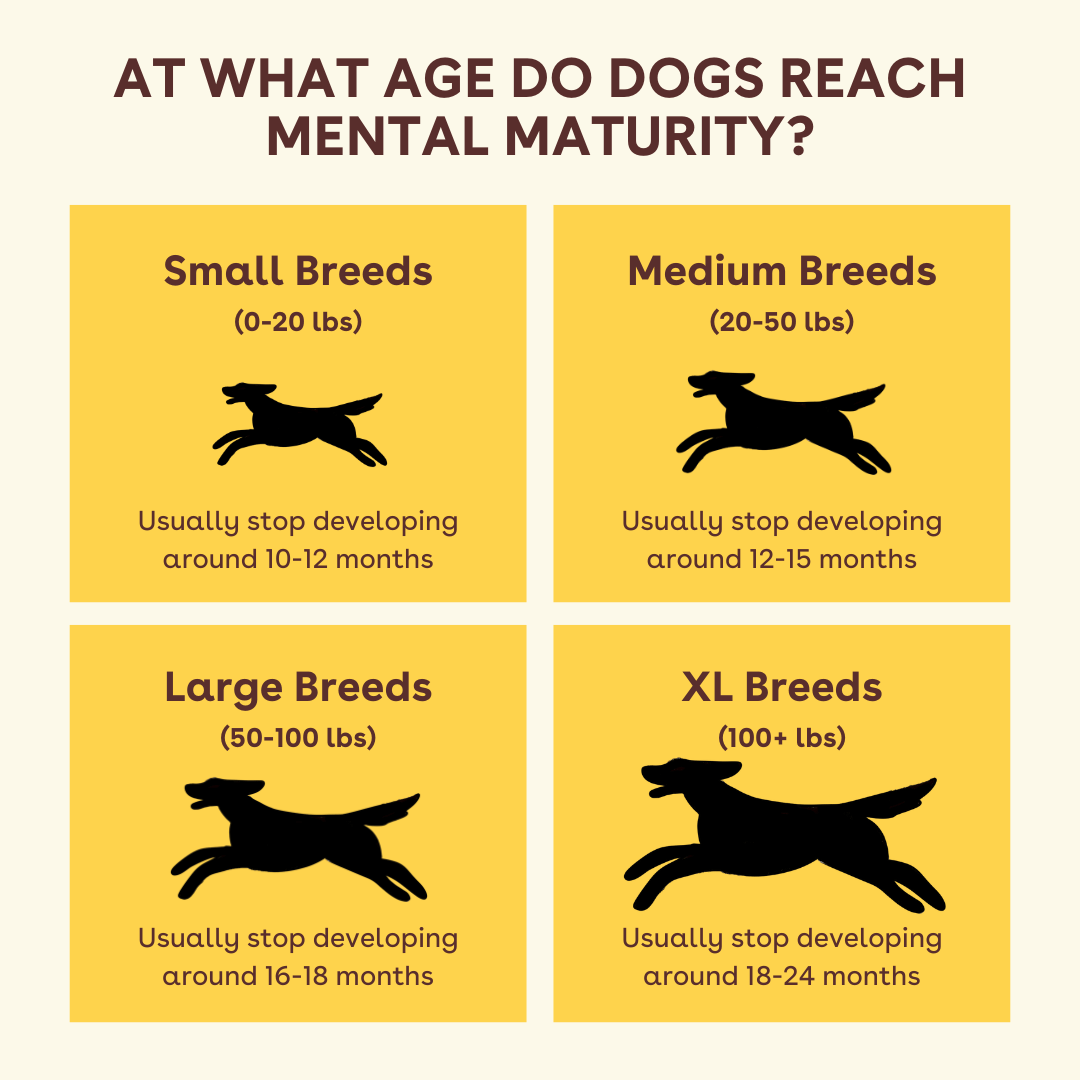
Many large and giant breeds continue to gain muscle and body width after their first birthday. Their behavior may also become calmer as the brain matures.
This is why the answer to when do puppies stop growing is not the same for every dog. A 10-month-old Chihuahua may be nearly finished, while a 10-month-old Great Dane may still have significant growth ahead.

Puppy growth chart by breed size
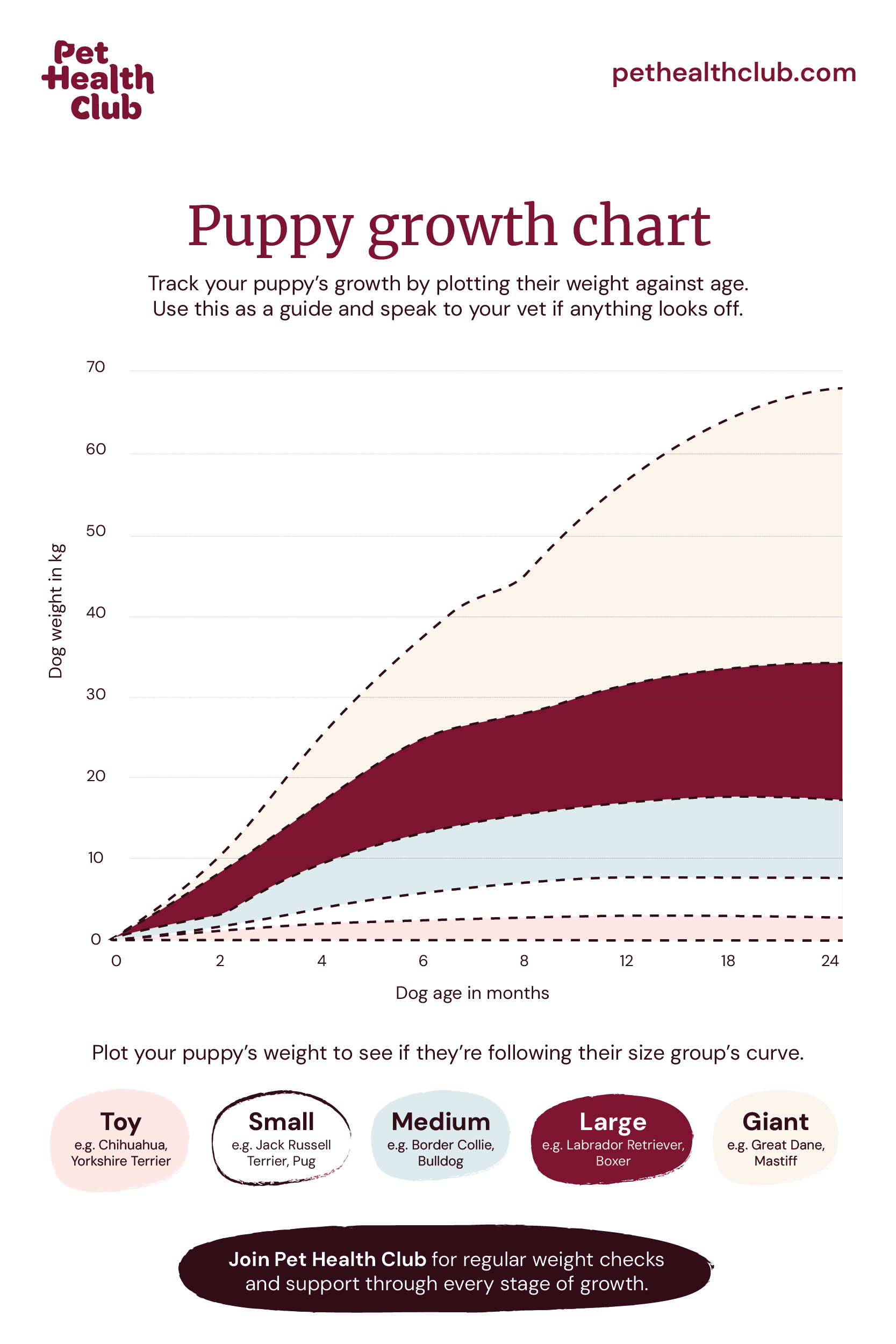
Breed size is one of the best clues when estimating when do puppies stop growing. Still, a growth chart should be used as a guide rather than a promise.
| Dog size | Typical adult weight | Usual growth period |
|---|---|---|
| Toy | Under 12 pounds | 6 to 8 months |
| Small | 12 to 25 pounds | 8 to 10 months |
| Medium | 25 to 55 pounds | 10 to 12 months |
| Large | 55 to 90 pounds | 12 to 18 months |
| Giant | Over 90 pounds | 18 to 24 months |
Adult weight ranges differ among breeds. For example, a compact French Bulldog and a slim Whippet may weigh a similar amount but have different body shapes and growth patterns.
Mixed-breed puppies are harder to predict. Their adult size may be estimated by looking at the parents, current weight, paw size, and breed traits. Your veterinarian can also track growth over time with a body weight chart.
How to tell when a puppy has stopped growing
You cannot always tell by looking at one day’s weight. Growth slows over time, so the best method is to track several signs together.
Look for these clues:
• Your puppy’s weight stays nearly the same for several weeks.
• The legs and body appear balanced rather than lanky.
• The chest becomes broader and the muscles look more developed.
• Your puppy’s food needs begin to level off.
• Your veterinarian sees that the growth plates are closing.
Growth plates are soft areas at the ends of young bones. They allow bones to lengthen during development. Once they close, the bones cannot grow longer.
A veterinarian can use X-rays to assess growth plates when there is a medical reason to do so. Routine X-rays are not needed for every healthy puppy, and growth plate closure can vary between bones.
A practical lesson is to weigh your puppy every one or two weeks, not every day. Daily changes can reflect water, meals, or bathroom habits. A longer trend gives a much clearer answer to when do puppies stop growing.
What affects puppy growth?
Several factors influence when do puppies stop growing and how large a dog becomes.
Genetics
Genes have the strongest effect on adult size. A puppy usually grows toward the size range of its parents and close relatives.
Even puppies from the same litter may grow at different speeds. One may be nearly full size at 9 months, while another continues filling out for several more months.
Nutrition
Puppies need enough energy, protein, vitamins, and minerals to support healthy development. More food does not always mean better growth.
Overfeeding can cause fast weight gain. In large-breed puppies, excess calories may increase stress on developing joints and bones. A healthy puppy should grow steadily, not rapidly.
Health problems
Intestinal parasites, chronic diarrhea, poor digestion, hormonal disorders, and other illnesses can slow growth. A puppy that is much smaller than its littermates may need a veterinary check.
Watch for poor appetite, vomiting, ongoing diarrhea, a dull coat, weakness, or a swollen belly. These signs should not be blamed on normal puppy growth without professional advice.
Spaying and neutering
The timing of spaying or neutering may affect growth plate closure in some dogs. The effects depend on breed, sex, size, and the age of the procedure.
There is no single best age for every dog. Discuss timing with your veterinarian, especially if you have a large or giant breed.
Exercise
Gentle exercise supports coordination and muscle strength. Too much high-impact activity may place stress on growing joints.
Avoid forced running, repeated jumping, and long hikes for young puppies. Let the puppy set the pace, and increase activity slowly as the body matures.
Feeding a growing puppy
A balanced puppy diet supports steady development. Choose food labeled as complete and balanced for growth by the Association of American Feed Control Officials standards.
Large and giant breed puppies often need food made specifically for controlled growth. These diets help provide the right balance of calories, calcium, and phosphorus.
Follow these feeding tips:
• Measure meals with a standard cup or kitchen scale.
• Feed according to body condition, not only the package guide.
• Give smaller meals to young puppies if your veterinarian recommends them.
• Keep treats below about 10% of daily calories.
• Avoid giving calcium supplements unless a veterinarian prescribes them.
• Adjust portions as growth slows.
You should be able to feel your puppy’s ribs without seeing them sharply. Your puppy should have a visible waist when viewed from above and a gentle abdominal tuck when viewed from the side.
The ideal body shape differs among breeds. A Greyhound should not look like a Bulldog, so breed type matters when judging weight.

Common mistakes that can affect puppy growth
Many owners worry that their puppy is too small or too thin. Others assume a round puppy is healthier. Both ideas can lead to feeding mistakes.
Avoid these common errors:
Overfeeding to make a puppy grow faster
Fast growth does not create a stronger adult dog. It may increase the load on developing bones and joints.
Adding vitamins without advice
Extra calcium or other supplements can upset the nutrient balance in a complete puppy food. More is not always better.
Using adult food too early
Adult dog food may not provide the nutrient profile a growing puppy needs. Follow your veterinarian’s advice before changing diets.
Comparing littermates
A puppy’s growth rate can differ from its siblings. Compare your dog with a healthy body condition standard, not with the largest puppy in the group.
Exercising too hard
Puppies need play, but their joints are still developing. Short, varied activity is safer than forced endurance work.
Expecting behavior to match body size
A physically large puppy may still act immature. Mental maturity often takes longer than physical growth, especially in active working breeds.
One lesson many new owners learn is that growth is not a race. A steady, lean puppy is usually in a better position than one pushed to become large as quickly as possible.
When should you contact a veterinarian?
Your veterinarian can help answer when do puppies stop growing for your specific dog. They can review breed history, current weight, body condition, diet, and growth trends.
Make an appointment if your puppy:
• Stops gaining weight for several weeks.
• Loses weight without a clear reason.
• Has repeated vomiting or diarrhea.
• Has a very swollen belly.
• Seems weak, tired, or unwilling to play.
• Has painful movement, limping, or trouble standing.
• Grows much faster or slower than expected.
• Has bones or legs that look noticeably abnormal.
A growth concern does not always mean something serious. Puppies can have temporary changes during teething, stress, or diet transitions. Still, early advice can prevent a small issue from becoming a larger one.
Veterinary visits also help with vaccines, parasite control, dental care, and diet changes. These basic steps support healthy growth just as much as the number on a scale.
Does puppy size predict adult size?
Puppy size can offer clues, but it cannot give a perfect prediction. Breed, parent size, sex, nutrition, and mixed ancestry all matter.
Some owners use a rough estimate for small and medium dogs by multiplying a puppy’s 16-week weight by four. This method is only a broad guess and is less reliable for large breeds and mixed-breed dogs.
A better approach is to combine:
• Parent size.
• Breed or likely breed mix.
• Weight and body condition over time.
• Paw and bone structure.
• Veterinary growth assessments.
Do not judge adult size by paw size alone. Large paws may suggest a larger frame, but they are not a dependable measurement.
The most useful question is not only when do puppies stop growing. It is also whether the puppy is growing steadily, staying lean, and developing normally.
Frequently Asked Questions About When Do Puppies Stop Growing
When do small puppies stop growing?
Small puppies often stop growing between 6 and 10 months. Some may continue adding muscle and body width for a few more months.
When do large-breed puppies stop growing?
Large-breed puppies often stop growing in height between 12 and 18 months. Giant breeds may continue developing until 18 to 24 months.
Can puppies grow after they turn one year old?
Yes. Many dogs continue gaining muscle and filling out after their first birthday. This is especially common in large, giant, and athletic breeds.
How can I tell if my puppy is done growing?
Stable weight, balanced body shape, and a slower need for food can suggest growth is nearly complete. A veterinarian can provide a more accurate assessment and may use X-rays when medically appropriate.
Do male puppies grow bigger than female puppies?
Male dogs are often larger than females within the same breed, but this is not true for every dog. Genetics and breed standards have a greater effect than sex alone.
Does neutering make a puppy grow bigger?
Neutering may affect the timing of growth plate closure, but the result varies by breed, age, sex, and body size. Ask your veterinarian about the best timing for your individual puppy.
Should I feed my puppy more if it is growing quickly?
Not necessarily. Rapid growth can place extra stress on developing bones, especially in large breeds. Feed a balanced diet and adjust portions with guidance from your veterinarian.
Conclusion
Puppies usually stop growing between 6 and 18 months, but small dogs mature sooner and giant breeds may grow for two years. Genetics, nutrition, health, exercise, and reproductive timing all shape the process.
Track your puppy’s weight, keep meals measured, support gentle exercise, and focus on a lean body condition. If growth seems unusually slow, fast, or uneven, contact your veterinarian for a proper assessment. Share your puppy’s breed, age, and growth experience in the comments, and explore trusted veterinary resources for more guidance.