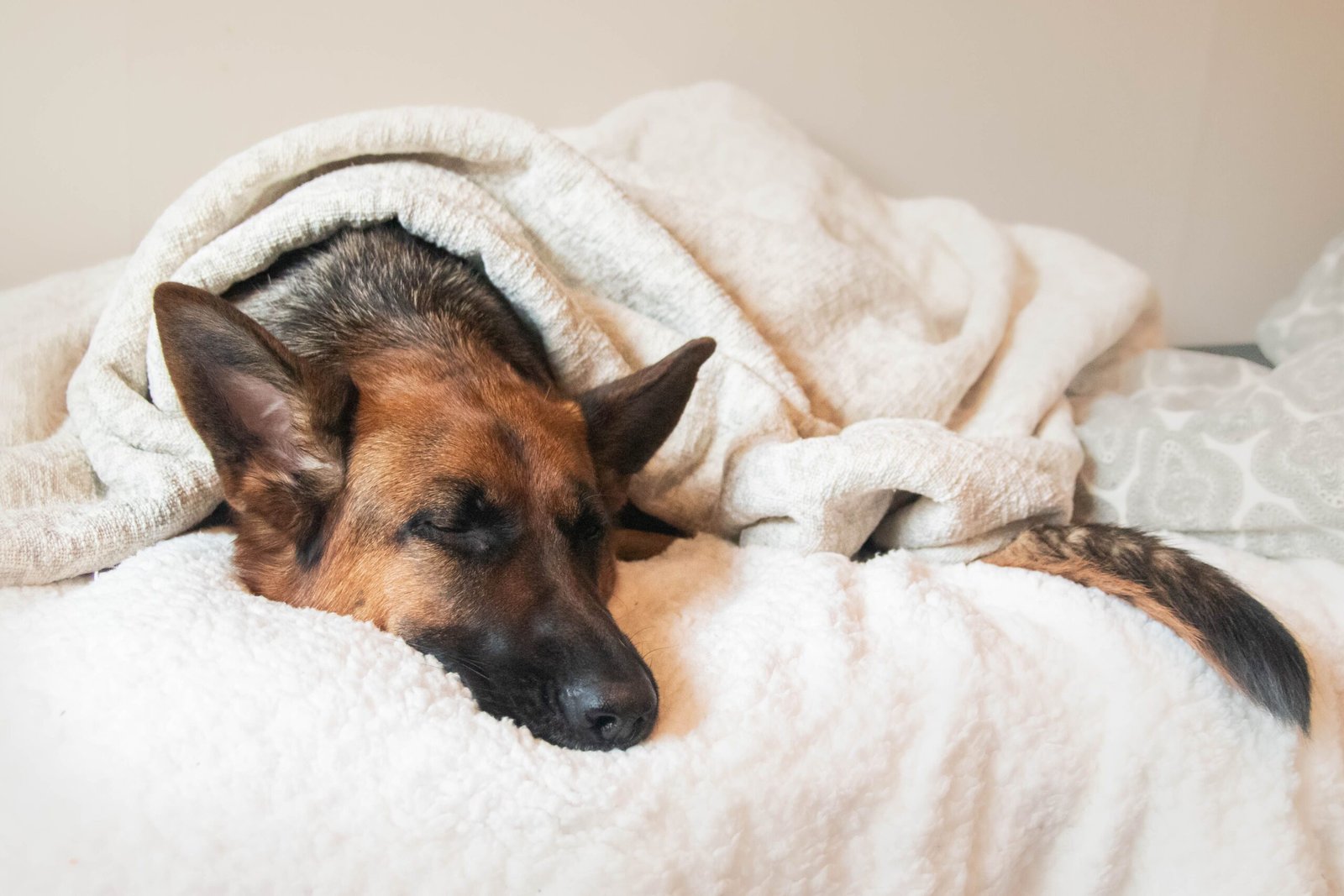
Why Do Puppies Sleep So Much: Puppy Sleep Explained
Puppies sleep so much because their bodies and brains need rest to grow, learn, and recover.
If you wonder why do puppies sleep so much, you are seeing a normal part of early development. Young dogs are not simply being lazy; they are building bones, forming brain connections, and learning how to handle a new world. This guide explains normal puppy sleep, healthy routines, warning signs, and simple ways to support better rest.
How Much Do Puppies Sleep?
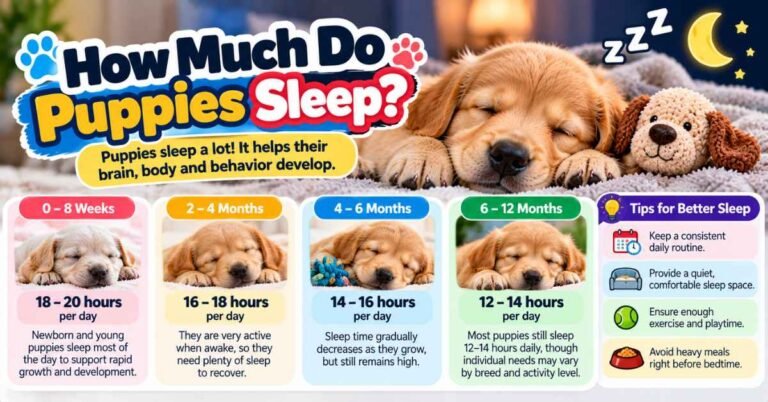
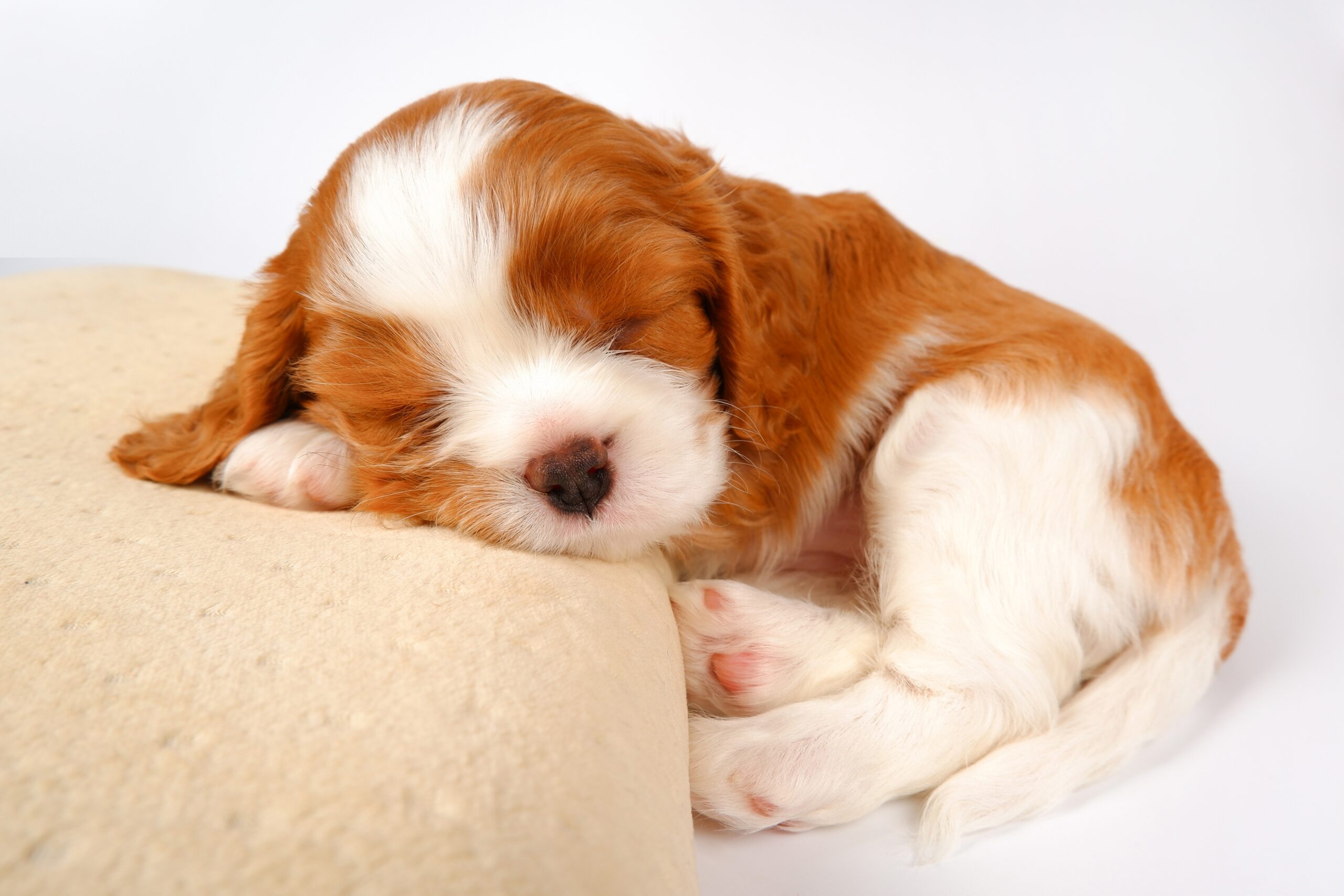
Most puppies sleep between 18 and 20 hours each day. Some may sleep a little less or more, depending on age, breed, health, activity, and daily routine.
A puppy may sleep for a few hours, wake up to eat and play, then fall asleep again. This pattern can feel surprising if you have only lived with adult dogs. Adult dogs often sleep around 12 to 16 hours per day, while puppies need much more rest.
Age also affects sleep needs:
• Newborn puppies may sleep up to 22 hours each day.
• Puppies from 8 to 12 weeks often sleep about 18 to 20 hours.
• Puppies from 3 to 6 months may sleep around 16 to 18 hours.
• Older puppies may slowly move toward an adult sleep pattern.
These are general ranges, not strict rules. A healthy puppy may have one very sleepy day after a busy outing and a more active day after a long night.
Understanding why do puppies sleep so much becomes easier when you view sleep as part of their growth plan. Their bodies work hard even when they appear still.
Why Do Puppies Sleep So Much?
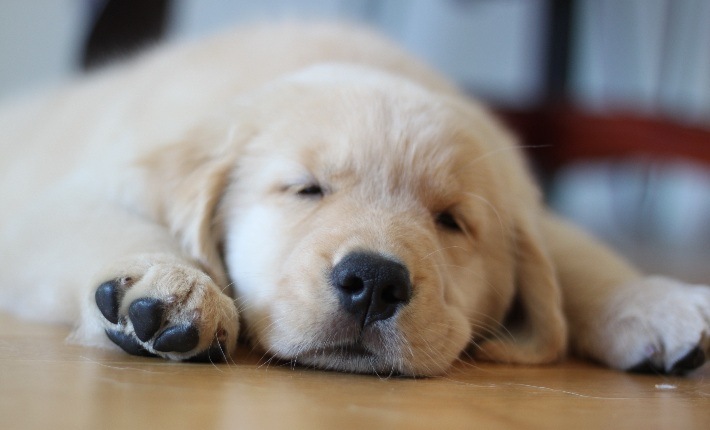
Puppies sleep so much for several important biological reasons. Growth, brain development, learning, energy use, and immune health all depend on regular rest.
Their bodies are growing fast
Puppies develop muscles, bones, joints, skin, and internal organs at a rapid pace. Growth uses a great deal of energy, so sleep helps the body repair and build new tissue.
During rest, the body supports important processes linked to growth and recovery. A tired puppy may sleep deeply after eating because digestion and development are both using energy.
Their brains are learning all day
The world is new to a puppy. A short walk may include new smells, sounds, people, surfaces, and sights. Even a five-minute training session can create a large amount of mental work.
Sleep helps the brain process and store new information. It is similar to saving a file after making changes. Without enough rest, a puppy may struggle to remember training lessons.
Puppies use energy in short bursts
Puppies often act like tiny race cars. They run, bite toys, explore, and then suddenly stop. Their energy comes in quick bursts rather than steady adult endurance.
This is one reason why do puppies sleep so much after play. Their bodies may need a full reset after only a short active period.
Rest supports the immune system
A puppy’s immune system is still developing. Good sleep supports normal immune function and helps the body handle everyday challenges.
Sleep does not replace vaccines, parasite control, safe food, or veterinary care. It is one part of a larger health plan.
Sleep helps control emotions
puppies can become cranky, wild, or mouthy when they are overtired. Many owners mistake this behavior for extra energy. In reality, the puppy may need a quiet nap.
A tired puppy can look like a child who missed a nap. They may become less patient, less focused, and more likely to nip.

Puppy Sleep Cycles and Daily Patterns
Puppy sleep is often broken into many naps rather than one long period. This is normal, especially during the first months at home.
A common day may include:
• Waking up to potty
• Eating breakfast
• Playing for 15 to 30 minutes
• Practicing a short training session
• Taking a one- to two-hour nap
• Waking for another potty break
• Exploring or chewing a safe toy
• Sleeping again
Puppies may twitch, whimper softly, move their paws, or make small sounds during sleep. These movements often occur during active sleep, a stage linked with brain activity and dreaming.
Do not wake a puppy every time they move or make a quiet noise. If breathing appears easy and the puppy settles again, let them rest. Waking them too often can make them more tired and unsettled.
A predictable sleep pattern may take time. New homes, litter separation, travel, and new sounds can change a puppy’s sleep for several days.

The Benefits of Healthy Puppy Sleep
Knowing why do puppies sleep so much can help you protect their rest instead of feeling worried about it. Sleep supports nearly every part of early life.
Healthy sleep may help with:
• Physical growth and tissue repair
• Memory and early training
• Emotional control
• Normal immune function
• Better focus during play
• Safer interactions with people and pets
• Lower risk of overtired biting and rough behavior
Rest also helps puppies learn how to settle. A puppy that never gets quiet time may become dependent on constant play or attention.
Think of sleep as training for calm behavior. Each good nap teaches the puppy that the home is a safe place to relax.

How to Create a Healthy Puppy Sleep Routine
A calm routine makes it easier for a puppy to sleep well. You do not need a perfect schedule, but you should offer regular chances to rest.
Try these steps:
-
Take your puppy outside to potty before a nap.
-
Offer a few minutes of gentle play or training.
-
Guide the puppy to a quiet, comfortable sleep area.
-
Remove unsafe items, loose wires, and small objects.
-
Keep the room cool, calm, and free from harsh noise.
-
Let the puppy sleep without constant handling.
-
Take the puppy out again soon after waking.
A crate can help with sleep when introduced slowly and kindly. It should feel like a safe bedroom, not a punishment area. Never use a crate for excessive periods without potty breaks, movement, and social contact.
Some puppies sleep better with soft background noise. Others need near silence. Watch your puppy and adjust the space based on what helps them settle.
A useful lesson I have learned from helping new dog owners is that many puppies need scheduled naps, not just bedtime. When owners wait until a puppy becomes frantic, the puppy may already be too tired to relax.

How Exercise and Training Affect Puppy Sleep
Exercise can improve sleep, but too much activity can create stress and overtired behavior. Puppies need short, age-appropriate activity rather than long, forced exercise.
Good activities include:
• Gentle play with a soft toy
• Short walks on safe surfaces
• Simple scent games
• Food puzzles made for puppies
• Name training and reward-based practice
• Calm handling of paws, ears, and mouth
Avoid long runs, repeated jumping, and intense stair use while a puppy’s bones and joints are developing. The right activity level depends on age, breed, size, health, and veterinary advice.
Mental work can tire a puppy as much as physical play. Five minutes of reward-based training may be enough for a young puppy. Stop while the puppy is still focused.
This balance explains why do puppies sleep so much after training. Learning is tiring, even when the activity looks small to us.
/beacondogtraining/30643309-2d8f-446f-a2d9-d819bde9beec.jpeg)
When Puppy Sleep May Signal a Problem
Most puppy sleep is normal, but sudden or extreme changes deserve attention. The key is to look at the whole puppy, not sleep time alone.
Contact a veterinarian if your puppy sleeps more than usual and also shows signs such as:
• Refusing food or water
• Repeated vomiting or diarrhea
• Coughing, labored breathing, or nasal discharge
• Pale, blue, or gray gums
• Weakness, collapse, or trouble standing
• Fever or unusual body heat
• Severe pain or crying when touched
• Confusion or difficulty waking
• A sudden change in behavior
A puppy who wakes easily, eats well, plays normally, and has healthy bathroom habits will often be fine, even if they sleep for many hours.
Still, puppies can become ill quickly. Young dogs have small bodies and limited reserves. When your instincts say something is wrong, call your veterinarian rather than relying on sleep charts.
Some breeds and individual puppies naturally rest more than others. A veterinarian can assess weight gain, hydration, vaccination status, parasites, and other health factors.
:strip_icc()/why-dogs-sleep-so-much-4178938-Hero-40846cefb5274079be03d4ef03aba9b0.jpg)
Common Puppy Sleep Mistakes to Avoid
New puppy owners often worry about sleep, then accidentally make rest harder. A few simple changes can help.
Avoid these mistakes:
• Waking a sleeping puppy for frequent play
• Assuming every burst of wild behavior means the puppy needs more exercise
• Keeping the puppy awake all day
• Using punishment when the puppy wakes at night
• Giving unsafe chew items in the sleep area
• Expecting a young puppy to hold urine all night
• Changing the sleep location every night
• Leaving a puppy alone for long periods without support
One mistake I often see is confusing an overtired puppy with a high-energy puppy. The owner adds more games, the puppy becomes more frantic, and everyone ends the day exhausted. A quiet nap would have solved more than another round of fetch.
Consistency matters more than perfection. A calm bedtime routine repeated each day can make a noticeable difference within a week or two.
Helping a Puppy Sleep Through the Night
Young puppies often wake at night because they need to urinate, feel lonely, or are still adjusting to a new home. Night waking is common and usually improves with maturity and routine.
Before bedtime, offer a calm potty trip and avoid exciting games. Keep nighttime trips quiet and brief. Use low lights, gentle handling, and a simple return to bed.
Do not expect every puppy to sleep through the night right away. Bladder control develops with age. A very young puppy may need one or more nighttime potty breaks.
You can place the sleep area near your bed at first. Your presence may reduce crying and help you notice when the puppy truly needs to go outside. Later, you can move the bed gradually if you prefer another location.
If crying continues, check basic needs first. The puppy may need to potty, feel too hot or cold, or be uncomfortable. Avoid turning every wake-up into a long play session, because this can teach the puppy that nighttime brings exciting attention.
What Does Healthy Puppy Sleep Look Like?
Healthy sleep is not measured by hours alone. Look for a balanced pattern across the day.
A well-rested puppy usually:
• Wakes easily for food, play, and potty trips
• Shows interest in people and surroundings
• Has short periods of playful activity
• Settles after activity
• Eats and drinks normally
• Gains weight at an expected rate
• Has regular bathroom habits
• Returns to normal behavior after a nap
A puppy may sleep deeply after a busy day and still be completely healthy. On the other hand, a puppy that is difficult to wake or uninterested in everything should be checked.
Keep a simple note if you are concerned. Record sleep changes, meals, water intake, stool, urine, play, and other symptoms. This information can help a veterinarian see the pattern more clearly.
Frequently Asked Questions About Why Do Puppies Sleep So Much
Why do puppies sleep so much after playing?
Puppies use a lot of energy during short periods of play and exploration. Sleep helps their muscles recover and allows the brain to process what they learned.
Is it normal for a puppy to sleep 20 hours a day?
Yes, many young puppies sleep about 18 to 20 hours daily, and newborns may sleep even more. The puppy should still wake for food, potty breaks, gentle play, and normal social contact.
Should I wake my puppy from a nap?
Usually, you should let a healthy puppy sleep. Wake them only when needed for a scheduled potty break, feeding plan, medication, or veterinary instruction.
Why do puppies sleep so much but act wild when awake?
An overtired puppy may become mouthy, noisy, or unable to settle. These behaviors can look like extra energy, but a quiet nap may be what the puppy needs.
When should I worry about my puppy sleeping too much?
Worry when extra sleep comes with poor appetite, weakness, vomiting, diarrhea, breathing problems, pain, fever, or difficulty waking. Contact a veterinarian promptly if these signs appear.
Can too much sleep harm a puppy?
Normal puppy sleep is healthy and needed for growth. The concern is not sleep itself but a sudden change in sleep combined with illness, poor feeding, or unusual weakness.
[CodeImg?] Need no after FAQ. Don't include.
Conclusion
Why do puppies sleep so much? They sleep because growth, learning, energy recovery, and emotional balance require plenty of rest. Most puppies need 18 to 20 hours of sleep each day, often divided into several naps.
Give your puppy a safe sleep space, short periods of suitable play, regular potty breaks, and a steady routine. Watch behavior, appetite, and health signs rather than judging sleep hours alone. If your puppy seems unusually weak or sick, contact a veterinarian.
Protecting sleep now can support better learning and calmer behavior later. Use these tips this week, track your puppy’s routine, and explore more trusted puppy-care resources as your new companion grows.