Are Puppies Born With Teeth: Puppy Teething Facts
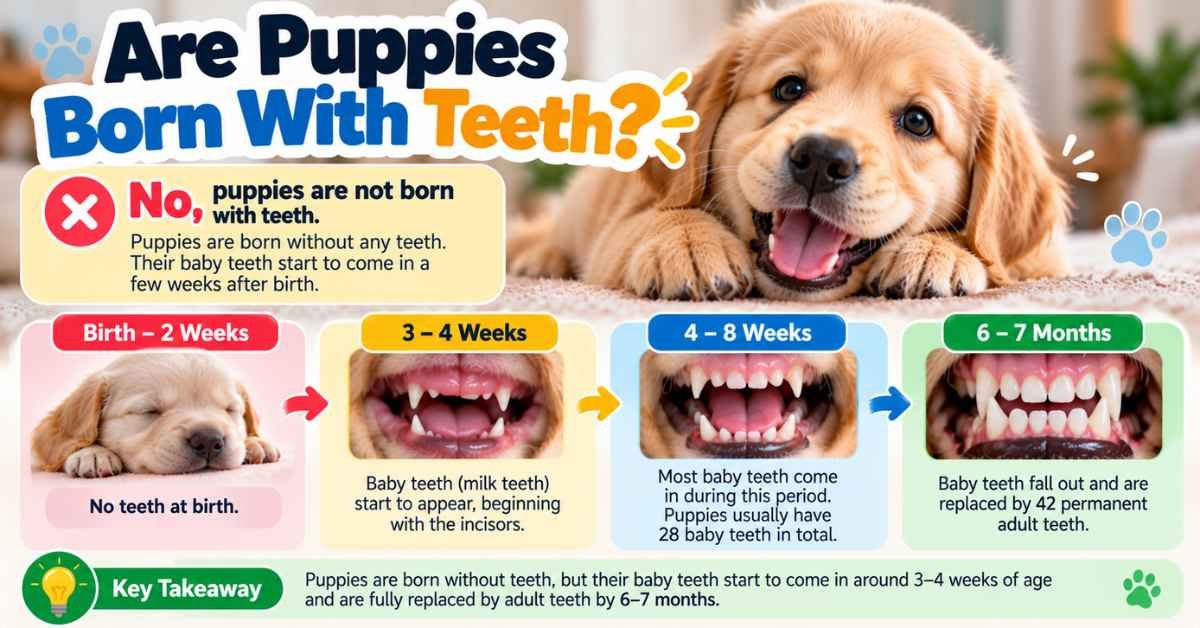
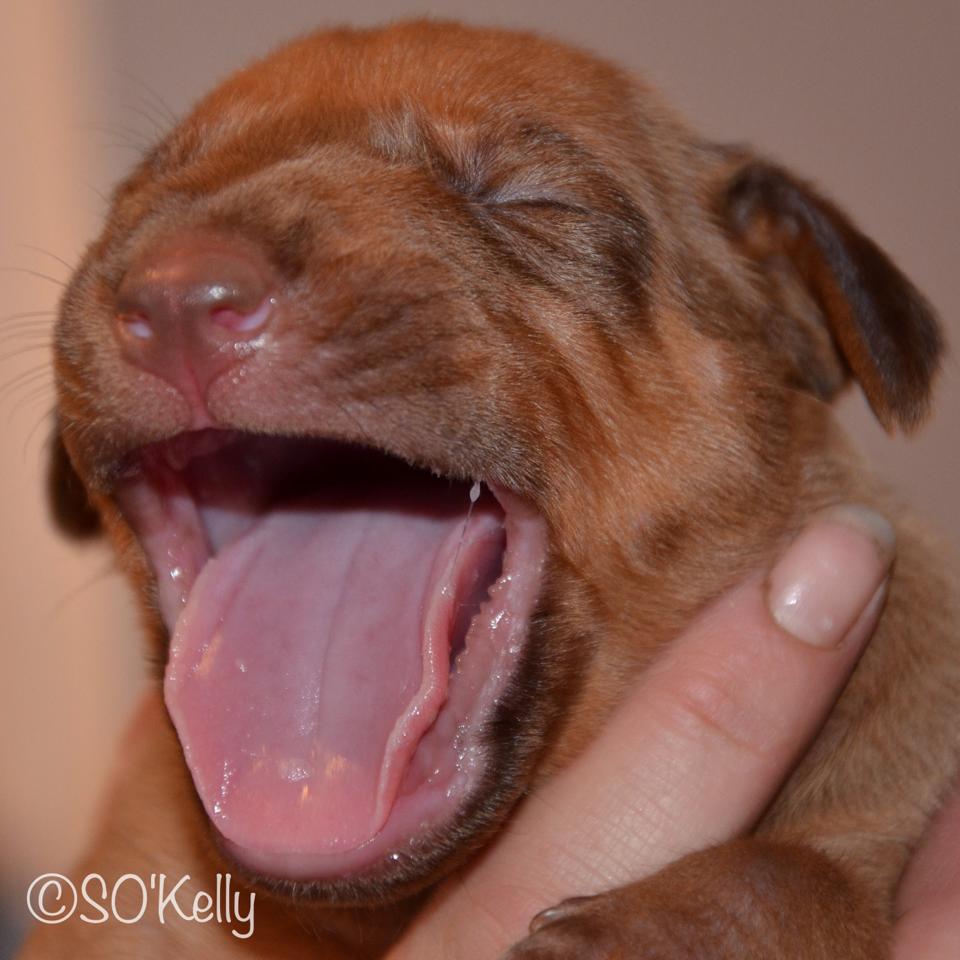
No, puppies are usually not born with teeth; their first baby teeth emerge during the second or third week.
Understanding whether are puppies born with teeth helps you care for a young dog safely. Most puppies follow a predictable teething timeline, but rare problems can cause early or retained teeth. This guide explains what to expect, how to ease teething pain, and when a veterinarian should check your puppy’s mouth.

Are puppies born with teeth?
No, puppies are not usually born with visible teeth. Like human babies, they arrive with developing tooth buds hidden under the gums. These baby teeth, also called deciduous teeth, begin to push through as a puppy becomes more active and starts exploring food.
So, are puppies born with teeth in rare cases? A few puppies may have a tooth present at birth. These are called natal teeth. They are uncommon and may be loose, sharp, or poorly placed.
Most newborn puppies nurse without teeth. This protects the mother’s nipples from injury and allows the puppies to feed safely. At first, a puppy depends fully on the mother’s milk or a suitable milk replacer if a veterinarian recommends one.
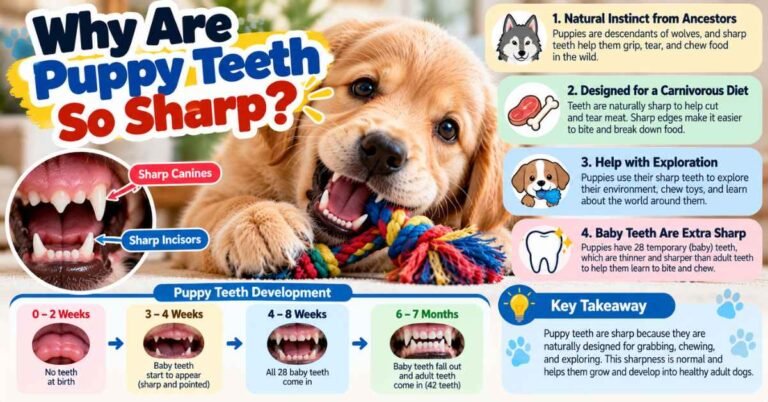
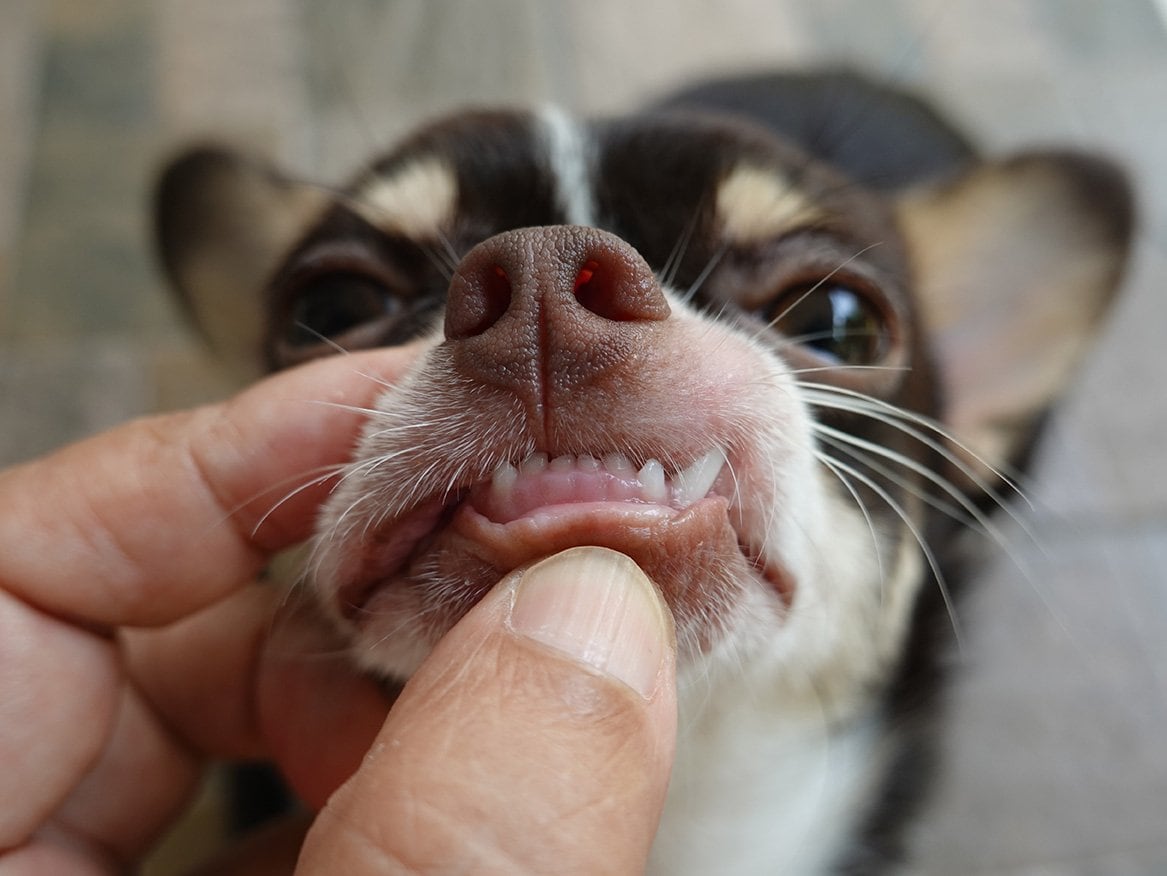
A puppy’s first teeth are small but sharp. They can feel like tiny needles when the puppy starts to bite during play. This behavior is normal, but it still needs gentle guidance.
When do puppies get their first teeth?
Most puppies begin growing baby teeth at about 2 to 3 weeks of age. The timing can vary by breed, size, genetics, and general health.
The front teeth usually appear first. Canine teeth and premolars follow over the next few weeks. By about 6 to 8 weeks, many puppies have most or all of their 28 baby teeth.
Here is a simple puppy teeth timeline:
- Birth to 2 weeks: Puppies usually have no visible teeth.
- 2 to 3 weeks: Small front teeth, called incisors, may start to erupt.
- 3 to 5 weeks: Canine teeth often begin to appear.
- 4 to 6 weeks: Premolars may erupt.
- 6 to 8 weeks: Most puppies have their full set of 28 baby teeth.
- 3 to 4 months: Baby teeth may begin to loosen as adult teeth develop.
- 6 to 7 months: Most dogs have their complete set of 42 adult teeth.
The answer to are puppies born with teeth is usually no, but the next question is often about how fast those teeth appear. The change can seem quick because puppies grow rapidly during their first eight weeks.
Why are puppies born without teeth?
Puppies are born without teeth because nursing is their main job during the first weeks of life. A toothless mouth makes nursing safer and reduces the chance of painful injury to the mother.
Newborn puppies also cannot chew solid food. Their early digestive system is designed for milk. Their eyes and ears open gradually, and their teeth develop as their bodies prepare for weaning.
Baby teeth serve several purposes:
• They help a puppy learn to bite and chew.
• They support the transition from milk to soft and solid food.
• They help shape the jaw and mouth.
• They guide the position of developing adult teeth.
• They teach bite control during play with littermates.
Puppies learn bite control when their siblings react to hard bites. A puppy that bites too hard may hear a sharp yelp and lose its playmate for a moment. This social lesson is one reason early, gentle interaction with littermates is valuable.

How many teeth do puppies have?
Puppies usually have 28 baby teeth. They do not have the same full tooth count as adult dogs.
Adult dogs generally have 42 permanent teeth. These include incisors, canines, premolars, and molars. Molars do not form part of the normal baby tooth set, which is why adult dogs have more teeth.
A puppy’s baby teeth include:
• 12 incisors at the front of the mouth
• 4 canine teeth, often called fangs
• 12 premolars behind the canines
When adult teeth begin to grow, they push against the roots of the baby teeth. The baby tooth root then breaks down, allowing the tooth to loosen and fall out. Many puppies swallow these tiny teeth, and this is usually harmless.
You may find a small tooth on the floor, in a toy, or in a food bowl. You may also find none at all. Both situations are normal.

What does puppy teething look like?
Puppy teething often causes a strong urge to chew. Your puppy may chew furniture, shoes, toys, blankets, or anything else within reach.
Common signs include:
• More chewing than usual
• Drooling
• Mild gum swelling
• Pink spots on toys
• A small amount of blood on a toy
• Fussiness during meals
• Pawing at the mouth
• A mild drop in appetite
A little blood can occur when a baby tooth falls out. However, heavy bleeding is not normal. A puppy that seems very sick, refuses all food, or has major mouth swelling needs prompt veterinary care.
Teething can make a puppy seem restless. Think of it as a child with a sore mouth who wants to bite a cool teether. Safe chewing gives the puppy comfort and protects your home.

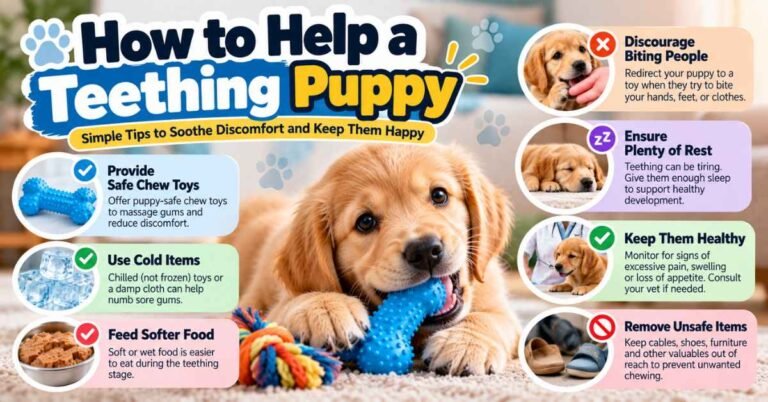
Safe ways to help a teething puppy
The best approach combines safe chewing, good supervision, and calm training. Give your puppy several suitable items instead of allowing random household objects.
Helpful options include:
• Puppy-specific rubber toys
• Flexible toys made for teething
• Chilled, not frozen, soft rubber toys
• Food puzzle toys approved for puppies
• Clean toys that are too large to swallow
Cold toys may soothe sore gums. Avoid toys that become rock hard when frozen. Very hard objects can damage young teeth.
Always check toys before and after use. Throw away any toy that breaks, sheds pieces, or becomes small enough to swallow. Supervise chewing, especially with a new product.
A practical lesson many new puppy owners learn is that “edible” does not always mean safe. Bones, antlers, hooves, and very hard nylon items can fracture teeth or cause choking and intestinal problems. Ask your veterinarian to recommend chews based on your puppy’s size, age, and chewing style.
Never punish a puppy for chewing. Calmly trade the wrong item for a safe toy, then praise the correct choice. This teaches the puppy what to do instead of creating fear.
:max_bytes(150000):strip_icc()/puppy-smiling-teeth-482166716-2000-866c00718b964357a482fb3fdb988b1b.jpg)
Puppy teeth and feeding
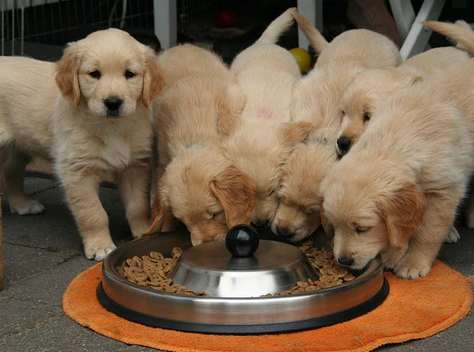
Young puppies usually begin weaning at about 3 to 4 weeks. They may start with soft puppy food mixed with water or an appropriate milk replacer. The exact plan should match the puppy’s age, breed, health, and veterinary advice.
By the time a puppy goes to a new home, it often eats a complete puppy diet. Puppies need food made for growth because their bones, muscles, teeth, and brain are still developing.
Use these feeding tips:
• Offer a complete and balanced puppy food.
• Follow the feeding guide, but adjust with veterinary advice.
• Provide fresh water once the puppy is weaning.
• Avoid sudden food changes.
• Feed small meals at regular times.
• Do not give cow’s milk unless a veterinarian specifically advises it.
Puppies can eat despite sore gums, but some may prefer softened food for a short time. A puppy that refuses food, vomits, develops diarrhea, or loses energy needs medical advice.

Caring for puppy teeth
You can begin dental care before all adult teeth arrive. Early practice makes brushing less stressful later.
Start by touching the puppy’s lips gently. Then rub a clean finger along the gums. Once the puppy accepts this, introduce a soft pet toothbrush and veterinary toothpaste.
Never use human toothpaste. Some products contain ingredients that can harm dogs when swallowed. Human toothpaste may also contain xylitol, a sweetener that is highly toxic to dogs.
Keep early sessions brief:
- Touch the lips for a few seconds.
- Reward calm behavior.
- Rub the gums gently.
- Introduce the toothbrush.
- Brush only a few teeth at first.
- Slowly increase the time.
Daily brushing is ideal, but several times per week is still helpful. Brushing removes plaque before it hardens into tartar.
Dental chews can support oral care, but they do not replace brushing or veterinary examinations. A chew may clean some surfaces while missing others.
When should a veterinarian examine puppy teeth?
A veterinarian should examine your puppy’s mouth during routine wellness visits. These visits help track tooth eruption, bite alignment, growth, vaccines, parasites, and general health.
Schedule a dental check if you notice:
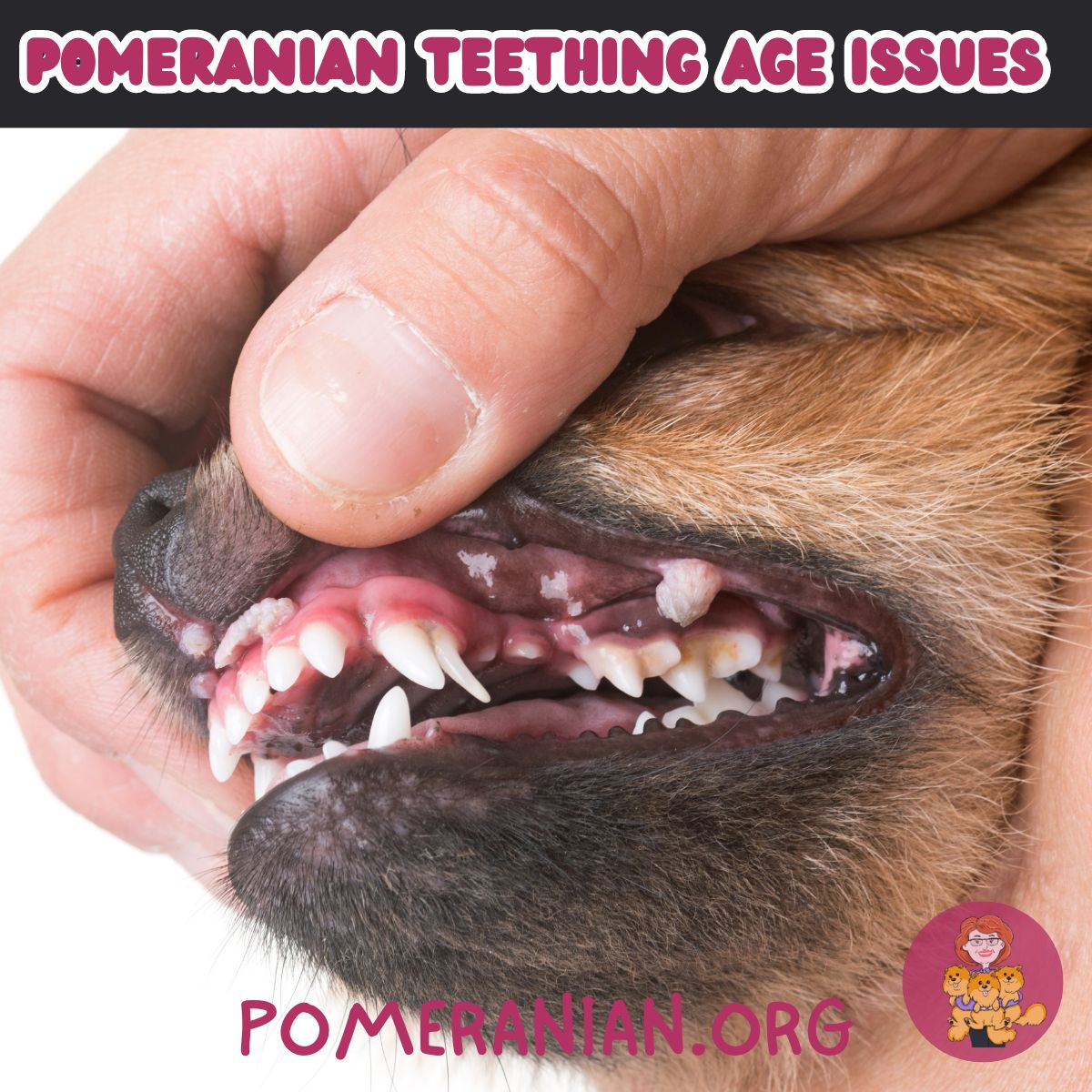
• A tooth that is loose but will not fall out
• Two teeth occupying the same position
• A canine tooth pressing into the gums
• A strong or unusual mouth odor
• Swollen or bleeding gums
• Trouble eating
• Facial swelling
• Persistent mouth pain
• A tooth that appears broken
Retained baby teeth are common in small breeds, although they can occur in any dog. A retained tooth may force the adult tooth into an abnormal position. This can trap food, irritate the gums, and increase the risk of dental disease.
Do not pull a puppy tooth at home. The tooth may have a deep root, and force can injure the gum or break the tooth. A veterinarian can decide whether removal is needed and choose the safest timing.
Natal teeth in newborn puppies
If are puppies born with teeth is your concern because you see a tooth at birth, do not panic. A natal tooth is present at birth, while a neonatal tooth appears during the first month of life. Both are unusual but possible.
A veterinarian should examine any tooth seen in a newborn puppy. The tooth may be stable and harmless, or it may be loose and likely to fall out.
A natal tooth can cause problems if it:
• Injures the mother during nursing
• Cuts the puppy’s tongue
• Moves easily
• Creates a wound in the mouth
• Interferes with feeding
• Is located in an abnormal position
Do not try to remove it yourself. A professional can check the tooth, the gums, and the puppy’s ability to nurse safely.
Common mistakes to avoid during puppy teething
Good intentions can still cause problems. Avoid these common mistakes:
• Giving bones or antlers that are harder than the puppy’s teeth
• Using ice cubes as chew toys
• Letting a puppy chew electrical cords
• Pulling on a loose tooth
• Using human toothpaste
• Ignoring severe bleeding or swelling
• Punishing normal chewing
• Offering toys with small parts
• Giving table scraps as a regular diet
• Assuming bad breath is always normal
A puppy should explore the world, but supervision is essential. Use baby gates, a safe crate, and a puppy-proof room when you cannot watch closely.
Redirecting is more effective than scolding. If your puppy grabs a shoe, offer a toy and praise the swap. With repetition, the puppy learns that safe toys are rewarding.
Frequently Asked Questions About Are Puppies Born With Teeth
Are puppies born with teeth?
Most puppies are not born with visible teeth. Their baby teeth usually begin to erupt when they are about 2 to 3 weeks old.
When do puppies start teething?
Puppies often start teething at 2 to 3 weeks of age. The full set of 28 baby teeth usually appears by about 6 to 8 weeks.
Do puppy teeth fall out?
Yes, puppy teeth normally fall out as adult teeth grow in. Many puppies swallow the tiny teeth, which is generally harmless.
Is it normal for a puppy’s gums to bleed?
A small amount of blood during teething can be normal. Heavy bleeding, major swelling, or ongoing pain requires a veterinarian’s advice.
Can I pull out my puppy’s loose tooth?
No, do not pull a loose puppy tooth at home. A veterinarian should remove a retained or damaged tooth because part of the root may remain below the gum.
What should I give a teething puppy to chew?
Offer soft or flexible puppy-safe toys that are too large to swallow. Avoid very hard bones, antlers, hooves, and frozen objects that may damage teeth.
Do puppies need their teeth brushed?
Yes, early brushing helps prevent plaque and builds a good habit. Use a pet toothbrush and dog-safe toothpaste, never human toothpaste.
Conclusion
Most puppies are not born with teeth. Their 28 baby teeth usually emerge during the first few weeks, then fall out as 42 adult teeth develop. Gentle chewing support, safe toys, early brushing, and routine veterinary checks can make this stage easier.
Watch your puppy’s mouth without fear, but take unusual bleeding, swelling, pain, or retained teeth seriously. Start small with dental care today, and ask your veterinarian for advice suited to your puppy’s breed and age. Share your puppy teething experience or explore more trusted puppy-care resources for the next step.